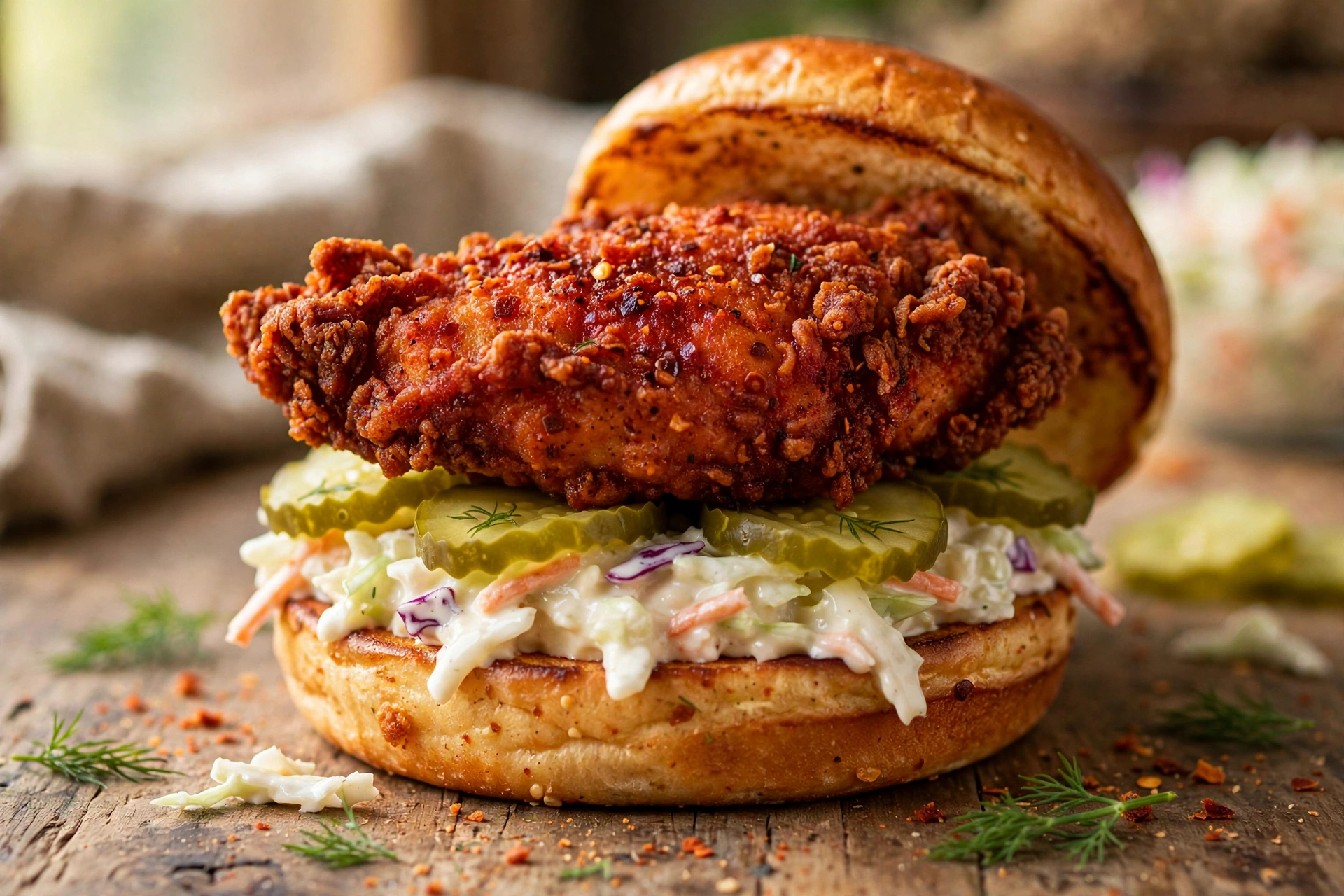
There is fried chicken, and then there is Nashville hot chicken — shatteringly crispy, burnished deep red, and lacquered in cayenne-spiked hot oil that builds with every bite. Stack it on a toasted brioche bun with cool pickles and creamy slaw, and you have a sandwich that ruins all other chicken sandwiches for you. In the best way.
This recipe nails the real deal: a tangy buttermilk brine for juicy meat, a craggy seasoned crust that stays crunchy, and the signature hot-oil brush that gives Nashville hot chicken its fiery glow. It is a weekend project worth every minute — and easier than you think.
Why This Recipe Works
- Buttermilk brine = juicy chicken. The acid tenderizes while salt seasons deep into the meat, so every bite stays moist.
- Double dredge = craggy crust. A second dip in the flour mixture creates those crunchy nooks that catch the hot oil.
- Hot oil, not hot sauce. Real Nashville heat comes from cayenne bloomed in hot frying oil, brushed on after frying — never soggy sauce.
- Pickles + slaw = balance. Cool, acidic toppings cut the richness and heat so you can actually taste the chicken.
Ingredients You’ll Need
For the buttermilk brine:
- 4 boneless, skinless chicken thighs (about 1½ lbs)
- 2 cups buttermilk
- 2 tablespoons hot sauce (such as Crystal or Frank’s)
- 1 tablespoon kosher salt
- 1 teaspoon black pepper
- 1 teaspoon garlic powder
For the dredge:
- 1½ cups all-purpose flour
- ½ cup cornstarch
- 1 tablespoon paprika
- 2 teaspoons garlic powder
- 2 teaspoons onion powder
- 1 teaspoon cayenne pepper
- 1 tablespoon kosher salt
- 1 teaspoon black pepper
For the signature hot oil:
- ½ cup hot frying oil (reserved from the fryer)
- 2–3 tablespoons cayenne pepper (adjust to your heat tolerance)
- 1 tablespoon light brown sugar
- 1 teaspoon paprika
- ½ teaspoon garlic powder
For assembly:
- 4 brioche buns, toasted with butter
- Dill pickle chips
- Creamy coleslaw (homemade or store-bought)
- Peanut or vegetable oil, for frying
The Buttermilk Brine (Don’t Skip This)
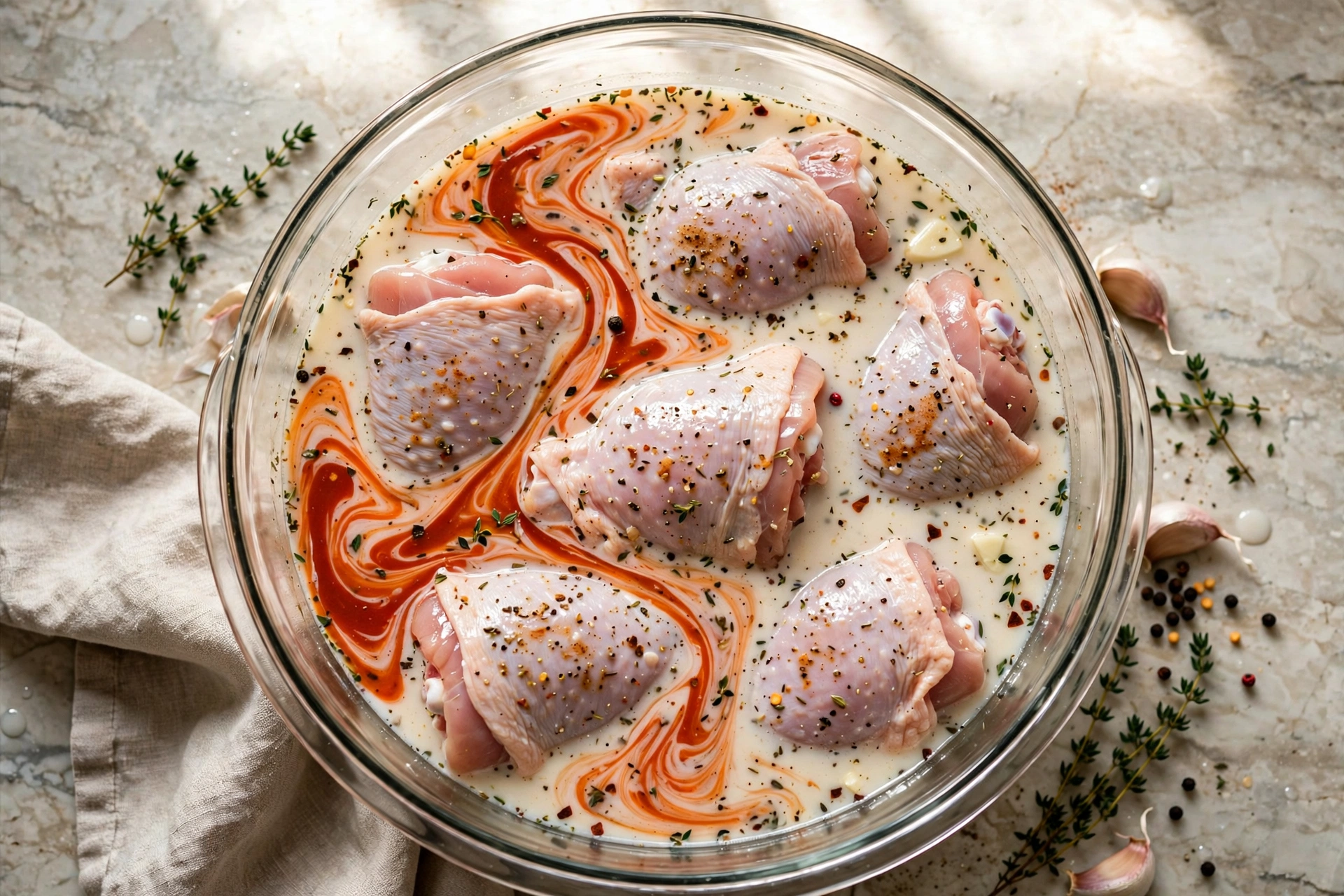
The brine is where juicy chicken is born. Whisk the buttermilk, hot sauce, salt, pepper, and garlic powder in a large bowl. Submerge the chicken thighs completely, cover, and refrigerate for at least 4 hours, ideally overnight (up to 24 hours).
Why thighs? They stay juicier than breasts through frying, and their richer flavor stands up to the bold spice. If you must use breasts, pound them to an even ¾-inch thickness and reduce fry time slightly.
How to Make Nashville Hot Chicken Sandwiches
1. Set up your dredging station. In a wide shallow bowl, whisk together the flour, cornstarch, paprika, garlic powder, onion powder, cayenne, salt, and pepper. The cornstarch is key — it fries up lighter and crunchier than flour alone.
2. Double dredge for maximum crunch. Pull a thigh from the brine, letting excess drip off. Coat in the flour mixture, pressing firmly. Dip it back into the brine briefly, then dredge a second time. Rest the coated thighs on a wire rack for 10–15 minutes.
3. Fry at 350°F. Pour oil into a heavy skillet or Dutch oven to 1½ inches deep and heat to 350°F. Fry 2 thighs at a time for 6–8 minutes per side, until deep golden brown and the internal temperature hits 165°F. Drain on a wire rack.
4. Make the signature hot oil. Carefully ladle ½ cup of the hot frying oil into a heatproof bowl. Whisk in the cayenne, brown sugar, paprika, and garlic powder until it forms a vivid red, fragrant oil.
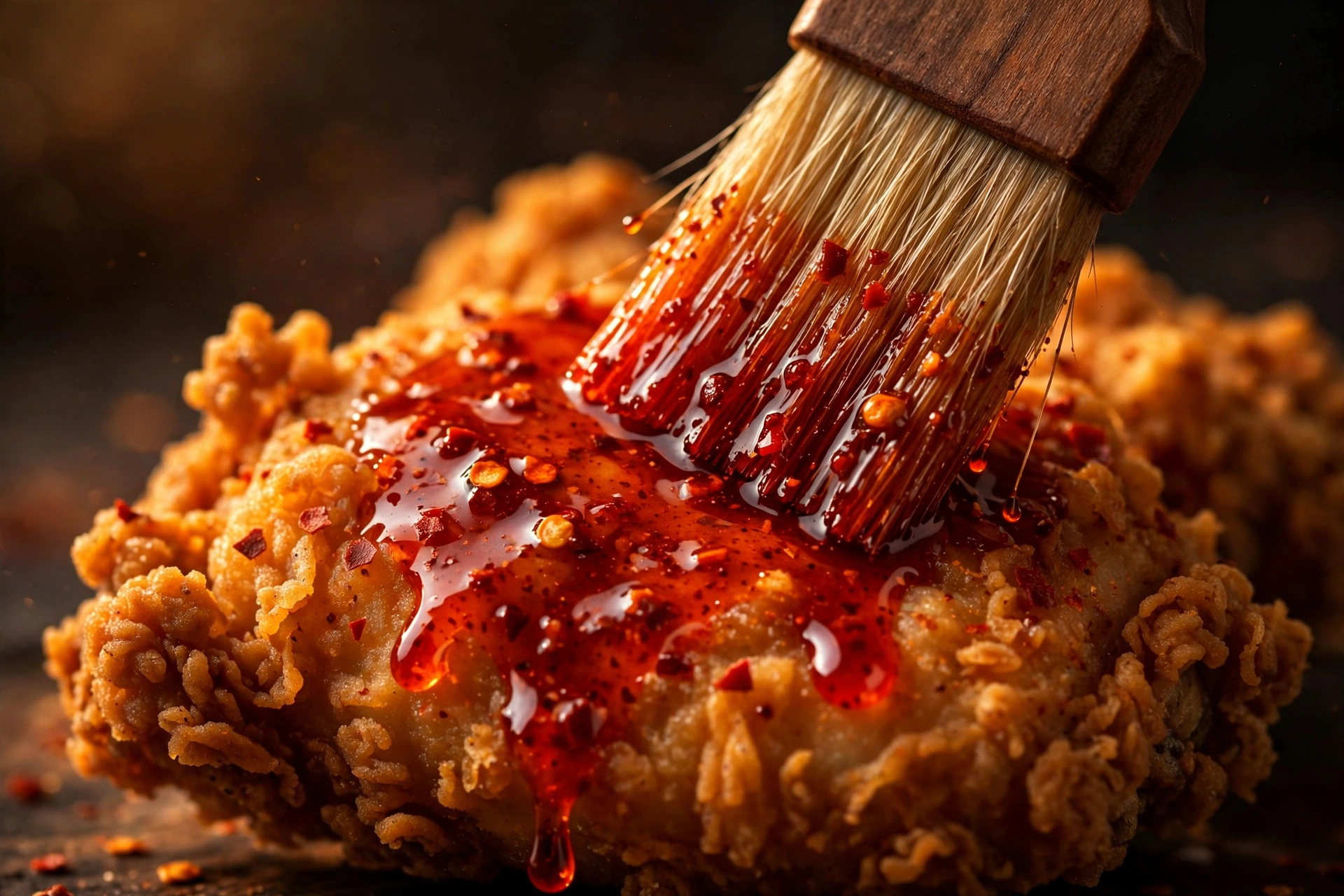
5. Brush generously. Brush the hot oil all over each fried thigh — front, back, edges.
6. Assemble the sandwich. Toast buttered brioche buns until golden. Pile on coleslaw, add the hot chicken, top with dill pickle chips, and crown with the top bun. Serve immediately.
Pro Tips for the Perfect Hot Chicken
- Control the heat. Start with 2 tablespoons of cayenne for medium heat.
- Keep oil at 350°F. Too cool = greasy. Too hot = burnt crust, raw center.
- Rest the dredged chicken. 10–15 minutes on the rack so the coating sticks.
- Work in batches. Don’t crowd the pan.
- Reheat in the oven or air fryer. 375°F for 8–10 minutes. Never microwave fried chicken.
How Spicy Is It Really?
With 2 tablespoons of cayenne, this lands at a solid medium. At 3 tablespoons, it’s genuinely hot. The brown sugar and cool slaw keep it balanced either way.
Variations to Try
- Tenders instead of sandwiches. Cut thighs into strips, same method, shorter fry time.
- Nashville hot chicken and waffles. Serve over a waffle with maple syrup.
- Lighter version. Air fry at 400°F for 18–20 minutes, then brush with hot oil.
- Extra pickles, obviously. Bread-and-butter pickles add sweetness against the cayenne.
Storage & Reheating
Store leftover fried thighs (unassembled) in the refrigerator for up to 3 days. Reheat on a wire rack in a 375°F oven for 10–12 minutes. Assembled sandwiches don’t store well.
Frequently Asked Questions
Can I use chicken breasts instead of thighs?
Yes, but pound them to even thickness — thighs are more forgiving and flavorful.
What oil is best for frying?
Peanut oil is ideal; vegetable or canola works fine too.
Can I make it less spicy?
Reduce the cayenne in the hot oil to 1 tablespoon for mild heat.
Why is my crust falling off?
Rest coated chicken 10–15 minutes, keep oil at 350°F, don’t move chicken for the first 2 minutes.
Is Nashville hot chicken supposed to be that red?
Yes! The deep red comes from the cayenne-paprika hot oil — it’s the signature look.
Where the Heat Actually Comes From
Real Nashville hot chicken is all contrast. Hot against cool. Crunch against soft bun. Rich fried crust against sharp pickles. Every step in this recipe builds one side of that contrast, and if you skip a step, you feel it.
Start with the buttermilk brine. It isn’t just a soak. The gentle acid loosens the chicken’s proteins while the salt seasons the meat all the way to the centre, so the inside stays juicy and flavourful under a very aggressive crust. Shorten the brine, or skip it, and that’s the difference between good fried chicken and great fried chicken. It’s that stark.
The crust gets its famous craggy texture from the double dredge and the rest that follows it. First pass lays down a base. A quick dip back into brine wets it again. Second pass builds the nooks and ridges that fry into shattering crunch and, just as importantly, catch and hold the hot oil. That oil is the signature. Cayenne bloomed in hot frying oil, never a bottled sauce, so the heat glazes the crust instead of soaking it. Blooming the spices in fat unlocks their full colour and flavour, and the brown sugar rounds the burn so you taste the chicken, not just the fire. Cool pickles and slaw then reset your palate between bites. That’s why you can actually finish the whole sandwich.
Brine and Coating: Ingredient Notes
Chicken thighs: Boneless, skinless thighs are the authentic and forgiving choice. Their higher fat keeps them juicy through a hard fry and stands up to the spice without flinching. Breasts work if you pound them to an even 3/4 inch, brine them the same way, and fry about a minute less per side, but watch them closely. They dry out faster.
Buttermilk: Real cultured buttermilk is best. In a pinch, stir 1 tablespoon of lemon juice or white vinegar into 2 cups minus a splash of whole milk and let it sit 10 minutes. Plain kefir also works and is naturally tangy.
Cayenne: This is the heat engine, and brands vary more than you’d expect. Standard grocery cayenne at 2 tablespoons makes a solid medium. Fresh, potent cayenne can run much hotter, so if your jar is new, start at 1 1/2 tablespoons in the hot oil and taste before brushing on more.
Frying oil: Peanut oil is the Nashville classic, clean tasting with a high smoke point. Vegetable or canola oil are perfectly fine swaps. Whatever you choose, you need the same oil for the hot oil finish, since that used oil carries fried chicken flavour straight into the glaze.
Buns and pickles: Soft brioche holds up to juicy chicken without fighting back. Potato rolls are a close second. Dill pickle chips are traditional; bread-and-butter pickles add sweetness that plays beautifully against the cayenne. For gluten-free, use a gluten-free flour blend in the dredge and gluten-free buns. The method stays identical.
Frying Without the Drama
- Press the dredge on like you mean it. After each dip, press the flour mixture firmly onto every surface with your palm. Loose, dusty coating is the coating that falls off in the fryer.
- Rest the coated chicken the full 15 minutes. The flour hydrates on the rack and bonds to the meat, forming a skin that fries into one solid, crunchy shell. This rest is the real cure for bald spots.
- Trust the thermometer, not the clock. Oil temperature drifts every time chicken goes in. Keep a clip-on thermometer in the pot and adjust the burner to hold 350°F. Fry times are just a guide.
- Don’t touch the chicken for the first 2 minutes. Early fussing tears the soft crust. Once it sets and turns pale gold, it can handle a gentle flip.
- Ladle the hot oil carefully and whisk fast. The oil foams when it meets the spices and brown sugar. Whisk immediately so the sugar dissolves and the cayenne suspends evenly instead of clumping.
- Brush the hot oil on. Don’t pour it. Two generous passes with a brush glaze every ridge. Pouring floods the crust and softens the crunch you worked so hard to build.
- Toast the buns in butter. A golden, buttered bun isn’t decoration. It’s a moisture barrier that keeps the bottom bun from going soggy under hot chicken and slaw.
Hot Chicken Mistakes
Frying at the wrong temperature. Oil below 325°F gives you greasy, pale chicken, because the crust absorbs fat instead of sealing. Oil above 375°F browns the outside before the centre cooks. Hold 350°F and fry in small batches to protect it.
Crowding the pot. Four thighs in a small skillet will crash the temperature and steam the coating. Two at a time, with room to breathe. Every time.
Skipping the rack rest after frying. Chicken set straight onto paper towels steams its own crust soft. A wire rack keeps air moving underneath so the bottom stays as crisp as the top.
Making the hot oil with cold or fresh oil. Fresh oil tastes flat here. The reserved frying oil carries the seasoned, chicken-y depth that makes the glaze taste like the real thing.
Assembling too early. Hot chicken on cold slaw wilts everything and softens the crust within minutes. Assemble at the table, right before eating. Always.
Heat Levels and Variations
Nashville hot tenders: Slice the thighs into wide strips, brine and dredge exactly the same way, and fry 3 to 4 minutes per side. Serve with ranch for dunking and watch them disappear.
Hot chicken and waffles: Set a whole fried thigh over a crisp waffle, glaze with the hot oil, then add a drizzle of maple syrup and a pat of butter. Sweet heat at its finest.
Grilled shortcut version: On nights when frying feels like too much, grill brined thighs over medium-high heat, then brush them with cayenne whisked into melted butter. No crunch, sure, but the flavour profile is all there.
Nashville hot cauliflower: Brine thick cauliflower steaks or big florets in the same buttermilk mix, dredge, rest, and fry. It’s a genuinely satisfying vegetarian take, not an afterthought.
Storing and Reheating Fried Chicken
Store leftover fried thighs on their own, never assembled, in an airtight container in the fridge for up to 3 days. Keep buns, slaw, and pickles separate, and save any extra hot oil in a small jar in the fridge as well. It’s gold brushed on reheated chicken or fried eggs.
To reheat, set the thighs on a wire rack over a sheet pan and bake at 375°F for 10 to 12 minutes until the crust crisps and the centre is hot. An air fryer does the same job at 375°F in 8 to 10 minutes. The microwave? In our kitchen it’s banned for fried chicken, it turns the crust to rubber in under a minute. Freezing is possible for the plain fried thighs, up to 2 months, well wrapped. Reheat them from frozen at 375°F for 18 to 20 minutes, then brush with fresh hot oil before serving.
What to Serve With Something This Spicy
Classic Nashville plates keep the sides simple and cooling: crinkle-cut fries, mac and cheese, or collard greens with a splash of vinegar. At home we usually go with extra slaw, pickles, and white bread under the chicken to soak up the hot oil, the way the original hot chicken joints serve it. A tall glass of sweet tea or lemonade isn’t optional either. It’s the fire extinguisher.
Hot Chicken Questions, Continued
How spicy is this, honestly?
With 2 tablespoons of cayenne in the hot oil, expect a confident medium that builds as you eat and lingers pleasantly. At 3 tablespoons it’s legitimately hot, the way Nashville locals order it. The brown sugar, slaw, and pickles are all working to keep it balanced, so the heat never fully buries the chicken flavour.
Can I bake it or air fry it instead of deep frying?
Yes. For the air fryer, spray the rested, dredged thighs generously with oil and cook at 400°F for 18 to 20 minutes, flipping and spraying again halfway. For the oven, bake on a rack at 425°F for 25 to 30 minutes. Both get a good crust, though neither matches the deep-fried shatter, so brush the hot oil on while they’re piping hot either way.
My coating keeps falling off. What am I doing wrong?
Three usual suspects: the chicken wasn’t rested after dredging, the oil was too cool, or the chicken went into the pot still dripping with brine. Shake off the excess brine, press the coating on firmly, rest it the full 10 to 15 minutes, and keep the oil at 350°F. That combination fixes it almost every time.
Can I leave the chicken in the brine longer than 24 hours?
We wouldn’t. Past about 24 hours, the acid in the buttermilk starts to make the surface of the meat mushy and chalky, even though the inside stays juicy. If dinner plans change, freeze the brined chicken in its brine and thaw it in the fridge the day before you plan to fry.