
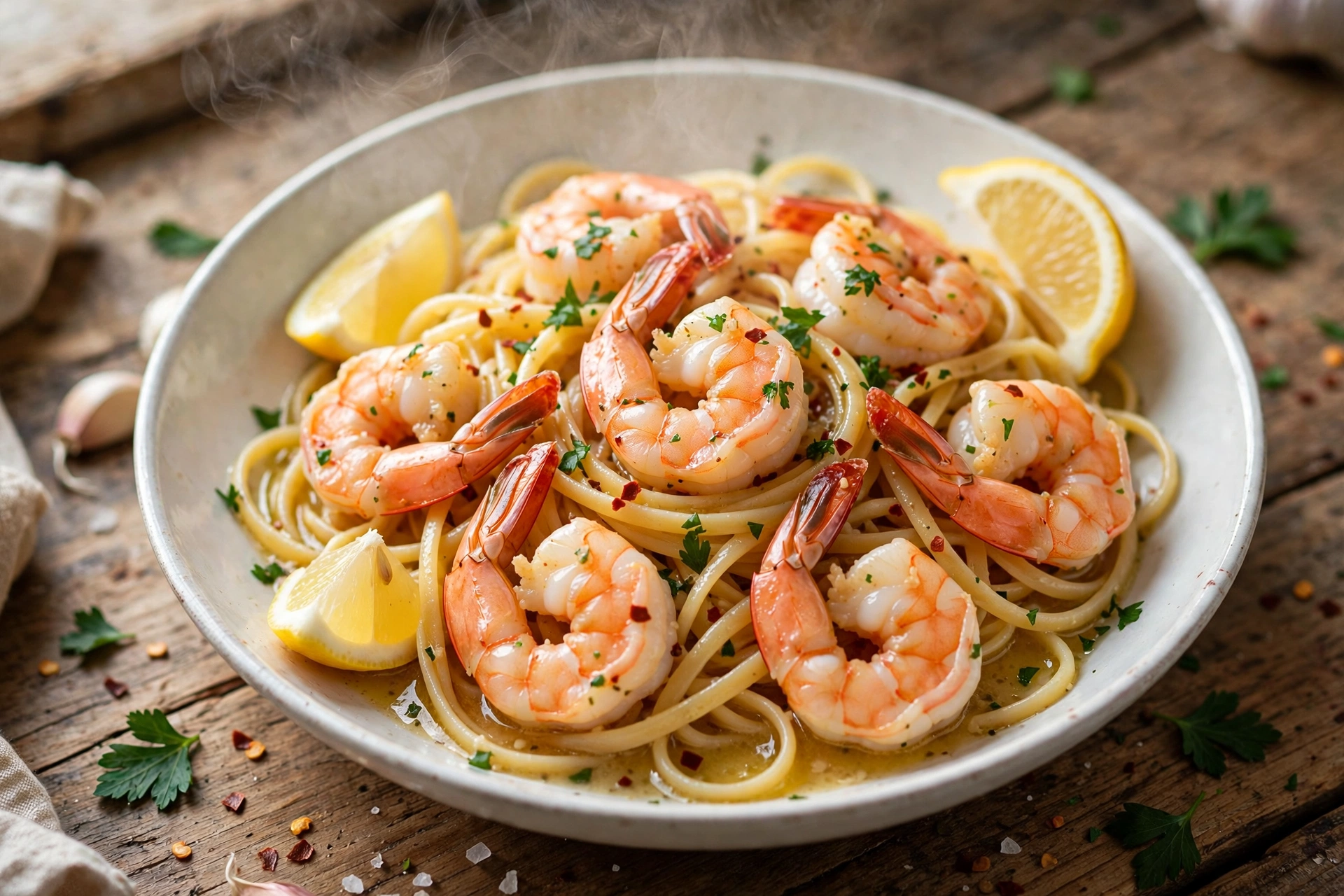
Yes — restaurant-quality garlic butter shrimp scampi really does come together in 15 minutes flat. Juicy, plump shrimp are seared until just pink, then tossed in a glossy sauce of butter, loads of garlic, a splash of dry white wine, and fresh lemon juice. Served over a tangle of linguine with a shower of parsley and parmesan, this is the kind of weeknight dinner that tastes like you spent all evening on it.
Scampi is one of those classic dishes that sounds fancy but is secretly one of the easiest things you can cook. The whole trick is timing: shrimp cook in about two minutes per side, and the sauce builds in the same pan in another three. If you can boil pasta, you can make this. Keep reading for the exact ingredients, step-by-step instructions, pro tips for the juiciest shrimp, and easy variations.
Why This Recipe Works
- Truly 15 minutes: From cold pan to plated pasta in a quarter of an hour — faster than takeout.
- One pan sauce: The shrimp sear first, then the sauce builds in the same skillet, soaking up all those caramelized bits.
- Big, bold flavor: Six cloves of garlic, real butter, white wine, and lemon create a sauce that clings to every strand of pasta.
- Flexible: Serve it over linguine, crusty bread, rice, or zoodles — it works with all of them.
- Impressive but easy: Perfect for date night, yet simple enough for a Tuesday.
Ingredients
- 12 oz linguine (or spaghetti)
- 1 1/2 lbs large shrimp, peeled and deveined (tails on or off)
- 1 teaspoon kosher salt, divided
- 1/2 teaspoon black pepper
- 1/4 teaspoon red pepper flakes (plus more to taste)
- 5 tablespoons unsalted butter, divided
- 1 tablespoon olive oil
- 6 cloves garlic, minced
- 1/2 cup dry white wine (such as pinot grigio)
- 2 tablespoons fresh lemon juice (about 1 lemon)
- 1 teaspoon lemon zest
- 1/3 cup chopped fresh parsley
- 1/3 cup freshly grated parmesan cheese, plus more for serving
Instructions
- Cook the pasta: Bring a large pot of salted water to a boil. Cook the linguine until just shy of al dente (about 1 minute less than package directions). Reserve 1 cup of pasta water, then drain.
- Season the shrimp: Pat the shrimp very dry with paper towels — this is the key to a good sear. Season with 1/2 teaspoon salt, the black pepper, and red pepper flakes.
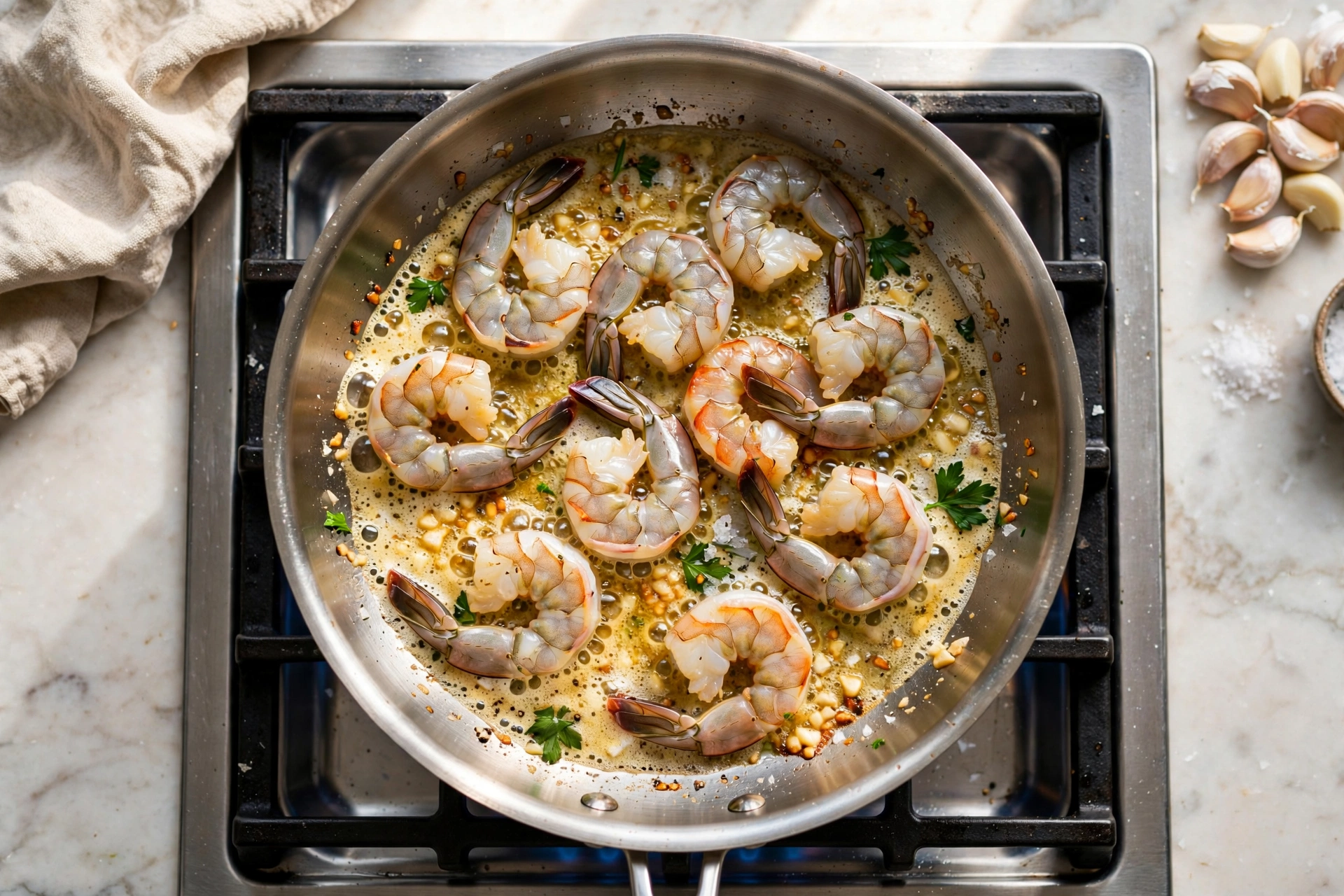
- Sear the shrimp: Heat 1 tablespoon butter and the olive oil in a large skillet over medium-high heat. Add the shrimp in a single layer and cook 1 1/2 to 2 minutes per side, until pink and just opaque. Transfer to a plate. (Work in two batches if needed to avoid crowding.)
- Build the sauce: Reduce the heat to medium. Add the remaining 4 tablespoons butter and the garlic; cook 30 seconds until fragrant but not browned. Pour in the white wine, scraping up any browned bits, and simmer 2 minutes until slightly reduced.
- Finish the sauce: Stir in the lemon juice, lemon zest, and 1/2 cup of the reserved pasta water. Simmer 1 minute until the sauce looks silky.
- Toss it together: Return the shrimp to the skillet along with the drained linguine, parsley, and parmesan. Toss for 1 minute, adding more pasta water as needed until the sauce glossily coats everything. Season with the remaining 1/2 teaspoon salt to taste.
- Serve: Divide among warm bowls, top with extra parmesan, parsley, and a pinch of red pepper flakes. Serve immediately.
Pro Tips
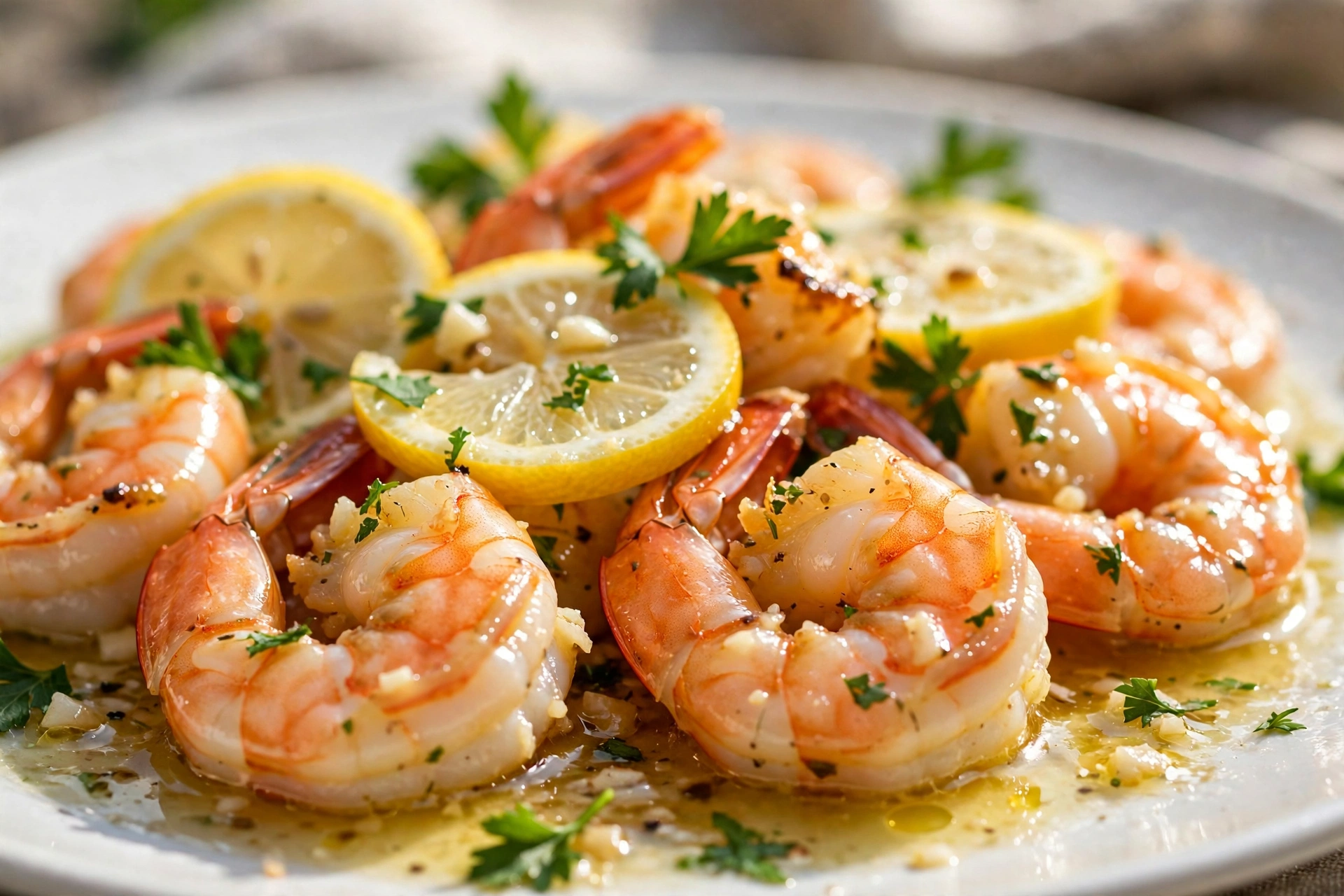
- Dry shrimp = better sear: Moisture is the enemy of browning. Pat the shrimp thoroughly dry before they hit the pan.
- Don’t overcook: Shrimp go from perfect to rubbery in under a minute. Pull them when they’re just pink with a slight translucency in the center — carryover heat finishes the job.
- Save that pasta water: The starchy water is liquid gold; it emulsifies the butter and wine into a restaurant-style sauce that clings to the pasta.
- Use real butter and fresh garlic: With so few ingredients, quality matters. Fresh lemon juice (never bottled) makes all the difference.
- Warm your bowls: This dish cools fast. Warm serving bowls keep everything hot to the last bite.
Variations
- No wine? Swap in chicken broth with an extra squeeze of lemon.
- Creamy scampi: Stir in 1/3 cup heavy cream with the lemon juice for a richer sauce.
- Add veggies: Toss in a few handfuls of baby spinach, cherry tomatoes, or asparagus tips.
- Low-carb: Serve over zucchini noodles or cauliflower rice instead of pasta.
- Extra heat: Double the red pepper flakes or add a diced Fresno chile with the garlic.
Storage
Store leftovers in an airtight container in the refrigerator for up to 2 days. Reheat gently in a skillet over medium-low heat with a splash of water or broth — microwaving tends to make shrimp rubbery. This dish is best fresh, so try to cook only what you’ll eat; the sauce comes together so fast that a second batch is no trouble. Freezing is not recommended, as the texture of the shrimp suffers.
FAQ
Can I use frozen shrimp?
Absolutely. Thaw them overnight in the fridge or under cold running water for 15 minutes, then pat very dry. The drier the shrimp, the better the sear.
What wine is best for shrimp scampi?
A dry white you enjoy drinking — pinot grigio, sauvignon blanc, or an unoaked chardonnay. Avoid sweet wines, which throw off the sauce’s balance.
Can I make it without pasta?
Yes! Serve the shrimp and sauce over rice, with crusty bread for sopping, or alongside roasted vegetables for a lighter meal.
How do I know when shrimp are done?
They curl into a loose “C” shape and turn pink and opaque. If they curl into a tight “O,” they’re overcooked.
Is shrimp scampi gluten-free?
The shrimp and sauce are naturally gluten-free — just swap the linguine for your favorite gluten-free pasta.
If you love quick seafood dinners, don’t miss our Air Fryer Salmon with Garlic Butter — another 15-minute wonder. For more pasta inspiration, try our Cottage Cheese Alfredo Pasta, or keep weeknights easy with One Pan Chicken and Rice.
Why Scampi Is All About Timing
Scampi lives or dies in about ninety seconds. That’s not drama. It’s just how shrimp cook.
The whole thing runs like a relay. Shrimp go in first, alone, in a hot pan where they actually touch the metal. That contact is where the golden edges come from, and where the flavor concentrates. Then they come straight back out. If they stayed in while the garlic and wine did their thing, they’d simmer away and toughen up, so they don’t get the chance.
The sauce needs a different kind of attention. Butter and wine, left to themselves, split. You get a greasy puddle at the bottom of the bowl and pasta that tastes oddly plain on top. Starchy pasta water fixes that. The starch grabs hold of the fat and the wine and pulls them into one glossy sauce that coats the linguine instead of sliding off it.
Garlic gets thirty seconds. No more. Cooked that briefly it stays sweet and fragrant. Give it colour and it turns bitter fast. Lemon is the opposite end of the same idea: juice goes in right at the end, off the fiercest heat, so it stays bright. Simmer lemon and it goes dull, almost flat. Toss everything together away from the hard boil and the pasta finishes cooking in the sauce itself, soaking some of it up as it goes. Fifteen minutes total sounds optimistic until you realise no single step takes long, and the pan is never sitting idle.
Shrimp, Butter, Garlic: Notes
Shrimp: Go large, around 21 to 25 per pound. A shrimp that size can take a proper sear without overcooking while you blink. Frozen shrimp are absolutely fine here, often better than the thawed ones sitting in the seafood case, to be honest. Thaw them overnight in the fridge, or in a bowl of cold water for about 15 minutes if you forgot. Peeled and deveined keeps that 15 minute promise realistic. Tails on or off? Looks only. Pick what you like.
Butter: There are so few ingredients that butter basically runs the dish. Use real butter, and use one you like the taste of on toast. European style has a little extra fat and richness if you feel like splurging. For a dairy-free version, a good plant based butter works, or go all olive oil and add an extra pinch of salt and some lemon zest to make up for what’s missing.
White wine: Pinot grigio or sauvignon blanc. Something dry. Something you’d happily pour into a glass for yourself. Skip anything labelled cooking wine, it’s salty and harsh and it will show. No wine in the house? Chicken or vegetable broth does the job, with an extra squeeze of lemon and a tiny pinch of sugar to mimic the balance wine would have given you.
Garlic: Six cloves sounds like a lot. It isn’t, once you taste the finished plate. Slice it or mince it fresh. Jarred minced garlic tastes muted here, a bit sour too, and garlic powder just isn’t a substitute in a sauce this simple. There’s nowhere for it to hide.
Linguine: Those flat strands hold sauce beautifully, which is why linguine is the usual pick. Spaghetti, fettuccine, or angel hair all work. Angel hair needs a warning though: it cooks in about 4 minutes, so start it after the shrimp sear, not before. Gluten-free linguine is fine too, but reserve extra pasta water. Those pastas release less starch, so you’ll need more liquid to get the same gloss.
Parmesan: Just a small amount, tossed in for salty depth. Add it off the heat and toss quickly. That way it melts into the sauce instead of clumping into little chewy bits.
The Details That Decide It
- Dry shrimp aren’t optional. Lay them on paper towels. Press another towel on top. Give them a minute. Wet shrimp steam in the pan and come out pale, almost boiled tasting, and no amount of heat fixes that after the fact.
- Have everything ready before the pan gets hot. Garlic minced. Lemon juiced. Parsley chopped. Pasta water reserved. This recipe moves fast once it starts, and you want to be cooking, not scrambling around with a hot skillet waiting on you.
- Sear in a single layer, in batches if you have to. Crowded shrimp dump liquid and stew in it. Two quick batches still keep you inside 15 minutes, because each side needs under two minutes anyway.
- Salt the pasta water and time the pasta to the shrimp. Start the linguine first, then pull it a minute shy of the package time. It’ll finish in the sauce, absorbing flavour instead of just water.
- Scrape the pan when the wine goes in. Those browned bits stuck after the shrimp? Concentrated flavour. Wine loosens them, they melt into the sauce, and that’s a big part of where the restaurant taste comes from.
- Toss. Don’t stir. Use tongs and lift the pasta through the sauce for a full minute. That lifting, turning action is what builds the glossy coating, especially once the pasta water starts working.
- Serve it right away, in warm bowls. Scampi waits for nobody. Run the bowls under hot water for ten seconds while you toss and the last bite will still be steaming.
Scampi Mistakes
- Overcooked shrimp. By a mile, the most common failure. A perfect shrimp forms a loose C shape. A tight O? Rubbery. Gone too far. Pull them while the centres still look barely translucent and let the carryover heat finish the job.
- Browned garlic. It goes from fragrant to bitter in seconds once it colours. Thirty seconds in the butter is plenty. If it starts to tan anyway, splash the wine in immediately to stop it.
- Skipping the pasta water. Without that starchy water, butter and wine stay separated and pool at the bottom of the bowl. Half a cup turns the whole thing silky, coating every strand.
- Dumping all the pasta water in at once. Start with half a cup and toss. You can always add a splash more. A flooded sauce can’t be unflooded. You’re aiming for glossy, not soupy.
- Cooking the lemon juice. Add lemon early and simmer it and it loses its sparkle, sometimes turning harsh. Juice and zest go in at the end, off the boil, so the sauce tastes bright and fresh.
Ways to Serve and Vary It
Creamy scampi: Stir a third of a cup of heavy cream into the sauce with the lemon juice and let it bubble for thirty seconds. The sauce turns velvety, a bit more forgiving too. In our kitchen it’s the version that gets requested when the kids pick dinner.
Tomato and spinach scampi: Add a cup of halved cherry tomatoes with the garlic and two big handfuls of baby spinach at the toss. The tomatoes slump into the sauce and add sweetness. With the spinach in there, the whole dish eats like a complete meal, no side required.
Cajun scampi: Season the shrimp with a teaspoon of Cajun seasoning instead of plain salt and pepper, then finish with sliced green onions. The garlic butter soul stays exactly where it was. What changes is the backbone: warm, smoky, a little heat underneath.
Breadcrumb topped scampi bake: Toss everything in an oven safe dish, scatter buttered panko over the top, and broil two minutes until golden and crunchy. Crisp crumbs against silky pasta. That contrast is outstanding for company.
Leftovers (If There Are Any)
Scampi is best the second it’s tossed, so in our kitchen we try to cook close to what we’ll actually eat. Sometimes there’s still a portion left. It happens.
If you do have leftovers, get them into an airtight container and into the fridge for up to 2 days, no longer. Seafood has a short window and this isn’t the dish to push it. Reheat gently in a skillet over medium-low heat with a splash of water or broth, tossing just until the shrimp are warmed through, about 3 to 4 minutes. The microwave is risky here. If you must use it, go at 50 percent power in short bursts so the shrimp heat gradually instead of seizing into rubber.
Freezing cooked scampi isn’t recommended. Thawed shrimp turn mealy and the butter sauce separates, and it’s just not the same dish anymore. Want a head start for a future dinner instead? Freeze the raw shrimp. The sauce comes together fresh in minutes anyway. And that leftover sauce soaked pasta? It makes a surprisingly good lunch the next day, warmed with an extra squeeze of lemon to wake it up.
What Goes on the Table With It
Crusty bread isn’t a suggestion. It’s the essential partner, because leaving that garlic butter sauce in the bowl should honestly be a crime. A simple Caesar or an arugula salad with lemon keeps things fresh alongside. Roasted asparagus or garlicky green beans round out the plate without competing for attention. Pour the same dry white wine you cooked with and dinner feels like a small occasion, even on a Tuesday.
Scampi Questions, Continued
What size shrimp should I get, and how many does each person need?
Look for large shrimp labelled 21/25, meaning 21 to 25 shrimp per pound. A pound and a half gives you roughly 32 to 36 shrimp, or about 8 per person in this recipe, which is generous over pasta. Jumbo shrimp look dramatic on the plate but they’re harder to time. Small shrimp disappear into the pasta and overcook before they ever get a sear.
My sauce came out thin and watery. What went wrong?
Usually the pasta water never made it in, or the sauce didn’t simmer long enough after the wine. Let the wine reduce for the full two minutes, add the half cup of pasta water, and give the toss a full minute so the starch can actually work. Still loose? Simmer one more minute and add a small knob of cold butter, swirling until it turns glossy.
Should the tails stay on or come off?
Tails on looks prettier and gives people a little handle. Tails off is friendlier eating, especially mixed through pasta where you’re not really picking anything up by hand. For a weeknight family dinner we take them off. For a date night plate, sometimes they stay on for the presentation. Either way the cooking doesn’t change at all.
Can I pull this off for a dinner party without getting stressed?
Yes, with one adjustment: do everything except the final toss ahead of time. Sear the shrimp and build the sauce up to the wine reduction, then hold them separately. Boil the pasta when guests sit down, rewarm the sauce, and toss it all together at the last minute. It tastes freshly made because, in the ways that matter, it is.
1 thought on “15-Minute Garlic Butter Shrimp Scampi”