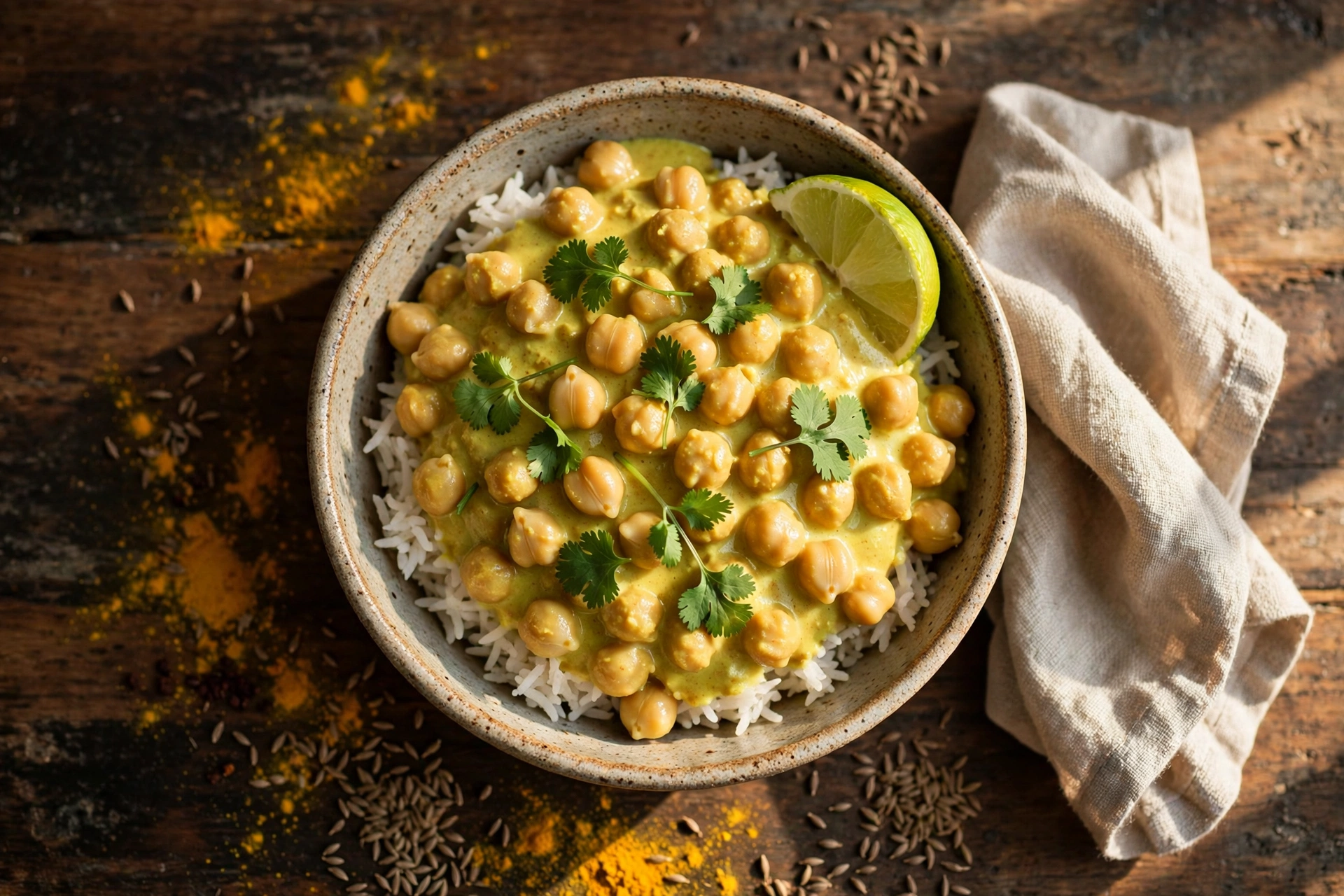
There is a particular kind of weeknight chaos that I know all too well: it is 5:45, everyone is hungry, the fridge looks uninspiring, and takeout is one tired sigh away. This vegan chickpea curry was born on exactly one of those evenings. I had two cans of chickpeas, half a can of coconut milk, and an onion that was starting to look at me funny. Forty minutes later, my family was scraping the pot clean with pieces of naan, and my husband — a committed skeptic of anything labeled “vegan” — asked if I could make it again the next week.
That was three years ago, and this curry has been in our regular rotation ever since. It is the recipe I make when friends come over and I do not know their dietary restrictions, because it happens to be vegan and gluten-free without trying too hard. It is the recipe I make when my pantry is nearly bare, because the whole thing leans on staples. And honestly, it is the recipe I make when I just want dinner to feel a little bit special without any real effort. The coconut milk turns silky, the spices bloom into something warm and deep, and the chickpeas go tender and soak up all that flavor.
Why You’ll Love This Recipe
- One pot, 40 minutes: From chopping the onion to serving bowls on the table, this whole thing takes less time than delivery.
- Pantry-friendly: Canned chickpeas, canned coconut milk, canned tomatoes, and dried spices. Nothing fancy, nothing to hunt down.
- Naturally vegan and gluten-free: No substitutions needed, no weird ingredients — it just happens to check both boxes.
- Meal-prep champion: The flavors get even better overnight, so leftovers are genuinely something to look forward to.
- Customizable heat: Mild enough for kids as written, but easy to crank up if your household likes a kick.
- Budget-friendly: This feeds four generously for just a few dollars. Your grocery bill will thank you.
Ingredients
I have made this curry more times than I can count, and I have learned exactly where you can improvise and where you should not. The coconut milk should be full-fat from a can — the carton stuff is too thin and the curry will never get that luscious body. The spice blend below is my house mix, but a good quality store-bought curry powder does most of the heavy lifting.
- 2 tablespoons coconut oil (or olive oil)
- 1 large yellow onion, diced
- 4 garlic cloves, minced
- 1 tablespoon fresh ginger, grated
- 2 tablespoons curry powder
- 1 teaspoon ground turmeric
- 1 teaspoon ground cumin
- 1 teaspoon garam masala
- 1/2 teaspoon red pepper flakes (optional, for heat)
- 2 tablespoons tomato paste
- 1 can (14 ounces) diced tomatoes
- 1 can (14 ounces) full-fat coconut milk, shaken
- 2 cans (15 ounces each) chickpeas, drained and rinsed
- 1 teaspoon fine sea salt, plus more to taste
- 1/2 teaspoon freshly ground black pepper
- 3 cups fresh baby spinach
- 1 tablespoon fresh lime juice
- 1/4 cup chopped fresh cilantro, for serving
- Cooked basmati rice or warm naan, for serving
Step-by-Step Instructions
Prep time: 15 minutes | Cook time: 25 minutes | Total time: 40 minutes | Servings: 4 | Calories: ~380 per serving (estimated, without rice)
- Sauté the aromatics. Heat the coconut oil in a large Dutch oven or heavy-bottomed pot over medium heat. Add the diced onion and cook, stirring occasionally, for 5 to 6 minutes until soft and just starting to turn golden at the edges. Do not rush this step — those lightly caramelized edges are where the deep flavor starts. Stir in the garlic and ginger and cook for 1 minute more, until fragrant.
- Bloom the spices. Add the curry powder, turmeric, cumin, garam masala, and red pepper flakes (if using) directly to the pot. Stir constantly for 45 to 60 seconds. You will smell the moment it is ready — the raw, dusty smell of the spices gives way to something warm and toasty. This step, called blooming, wakes up the fat-soluble flavor compounds and makes the whole curry taste like it simmered for hours.
- Build the base. Stir in the tomato paste and cook for 1 minute, letting it darken slightly. Pour in the diced tomatoes with their juices, scraping up any browned bits from the bottom of the pot with your spoon. Let this bubble gently for 2 to 3 minutes so the tomatoes break down a little.
- Add the coconut milk and chickpeas. Pour in the coconut milk and stir until the sauce is smooth and evenly colored. Add the drained chickpeas, salt, and black pepper. Bring to a gentle simmer — not a rolling boil, which can make coconut milk separate — then reduce the heat to medium-low.
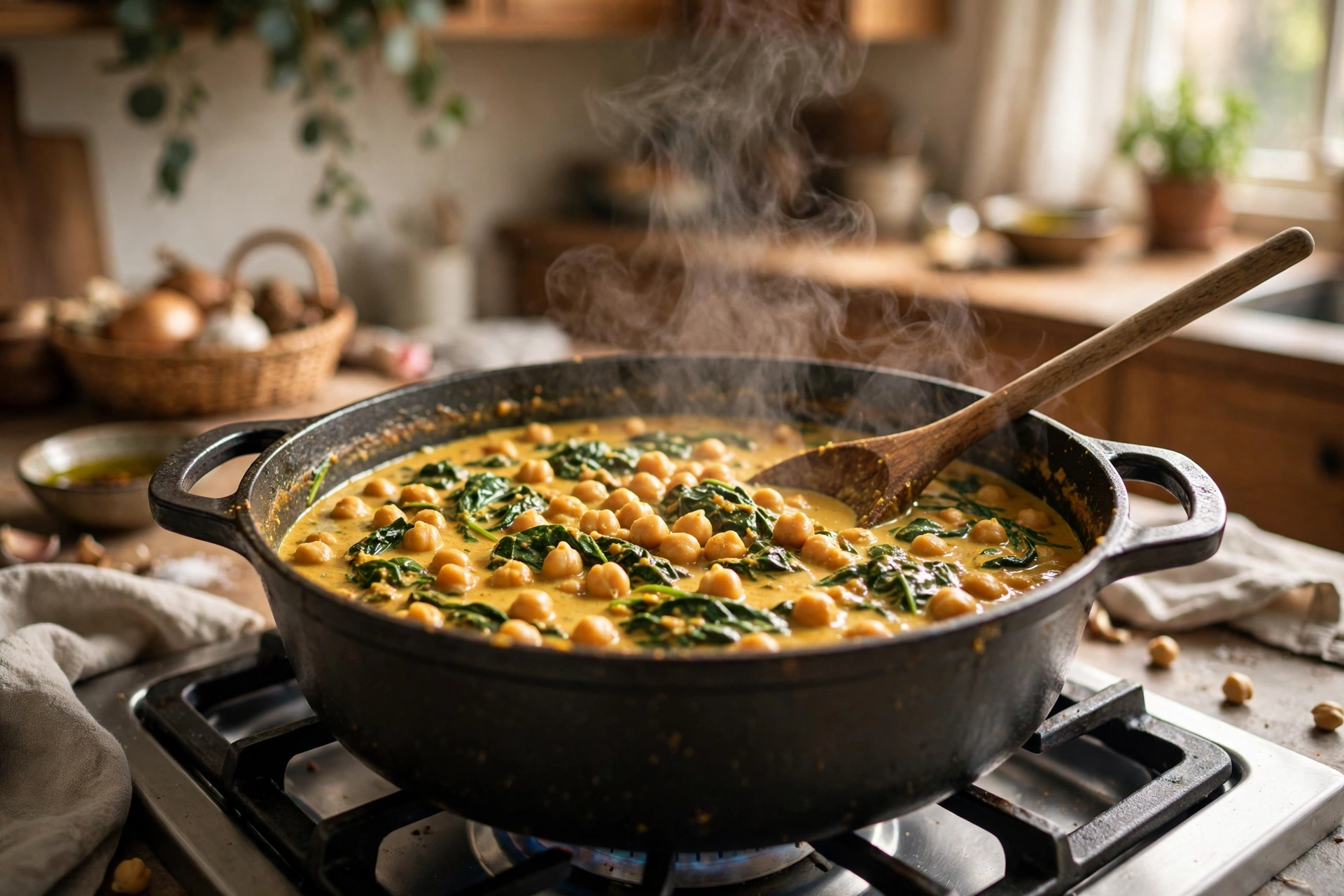
- Simmer. Let the curry simmer uncovered for 15 to 18 minutes, stirring every few minutes. The sauce will thicken slightly and turn a gorgeous golden-orange. If it gets thicker than you like, splash in a little water or vegetable broth. Taste and adjust the salt now; chickpeas are bland little sponges and they need proper seasoning.
- Wilt the spinach and finish. Stir in the baby spinach a handful at a time, letting each batch wilt before adding the next — it looks like a mountain but collapses in about 2 minutes. Squeeze in the fresh lime juice and stir. The lime is not optional in my book; it lifts the whole dish and keeps the richness from feeling heavy.
- Serve. Ladle the curry over fluffy basmati rice or alongside warm naan. Shower with fresh cilantro and serve extra lime wedges at the table. I always put the pot right in the middle of the table and let everyone serve themselves — it keeps things relaxed, and there are never leftovers when I do.
Pro Tips
- Shake the coconut milk can well before opening. The cream separates in the can, and you want it fully blended for a smooth sauce.
- Do not skip blooming the spices. It is the single biggest difference between a flat curry and a great one, and it takes under a minute.
- Taste at the end, not the beginning. The flavors concentrate as the curry simmers, so season boldly at step 5 and then fine-tune after the spinach and lime go in.
- For an extra-creamy sauce, mash about 1/4 cup of the chickpeas against the side of the pot with your spoon during the simmer. It thickens the sauce naturally without any starch.
- Use a heavy pot. Thin pots scorch coconut-milk sauces. A Dutch oven or any heavy-bottomed pot gives you insurance against hot spots.
Variations
Once you have the base method down, this curry is endlessly adaptable. Swap the spinach for chopped kale (add it a few minutes earlier since it is sturdier) or stir in a cup of frozen peas at the end. Diced sweet potato is wonderful here — add one peeled, diced sweet potato with the coconut milk and simmer until tender, about 20 minutes. For extra protein, add a block of cubed extra-firm tofu along with the chickpeas; press it first so it soaks up the sauce. If cauliflower is more your thing, add 3 cups of small florets in place of one can of chickpeas. And if you are feeding heat-lovers, mince a serrano or jalapeño and sauté it with the onion.
Storage & Reheating
Store leftovers in an airtight container in the refrigerator for up to 4 days — and I mean it when I say the flavor improves overnight. The spices meld and the chickpeas absorb even more sauce, so day-two curry is arguably better than day-one. Reheat gently on the stovetop over medium-low heat, stirring occasionally, adding a splash of water or coconut milk if the sauce has thickened too much. It also reheats well in the microwave in 90-second bursts with a stir between. For longer storage, freeze in portion-sized containers for up to 3 months; thaw overnight in the fridge before reheating. I like to freeze it without the rice and cook fresh rice on serving day.
FAQs
Can I use light coconut milk instead of full-fat?
You can, but the sauce will be noticeably thinner and less rich. If light coconut milk is all you have, simmer the curry a few extra minutes to reduce it, and consider stirring in a spoonful of coconut cream at the end to bring back some body. Full-fat is worth it here.
Is this chickpea curry spicy?
As written, it is mild and kid-friendly — warm and aromatic rather than hot. The red pepper flakes are optional. If you like heat, keep the flakes and add a minced fresh chili with the onion, or finish with a drizzle of chili oil at the table.
Can I make this curry ahead for meal prep?
Absolutely — this is one of my favorite meal-prep recipes. Make a full batch on Sunday, portion it over rice in containers, and refrigerate for up to 4 days. The flavors deepen beautifully. It also freezes well for up to 3 months.
What should I serve with vegan chickpea curry?
Fluffy basmati rice is classic, and warm naan or pita is perfect for scooping. For a lighter meal, serve it over cauliflower rice or quinoa. I also love a simple side of sliced cucumber with a pinch of salt to cut the richness — and do not forget the lime wedges.
If you are building out your plant-based rotation, browse my full collection of vegan recipes, and for easy weeknight ideas the whole family will eat, see my dinner recipes. You can read more about my cooking philosophy on my about page, and start at the homepage anytime.