I used to think of salmon as a weekend dinner. Something that required a plan, a hot oven, and at least a little bit of ceremony. Then one Tuesday night, staring into the fridge with zero energy and a pack of salmon fillets I had bought with the best of intentions, I tried the air fryer on a whim. Fifteen minutes later I was eating the most perfectly cooked salmon of my life, and it has been a weeknight staple ever since.
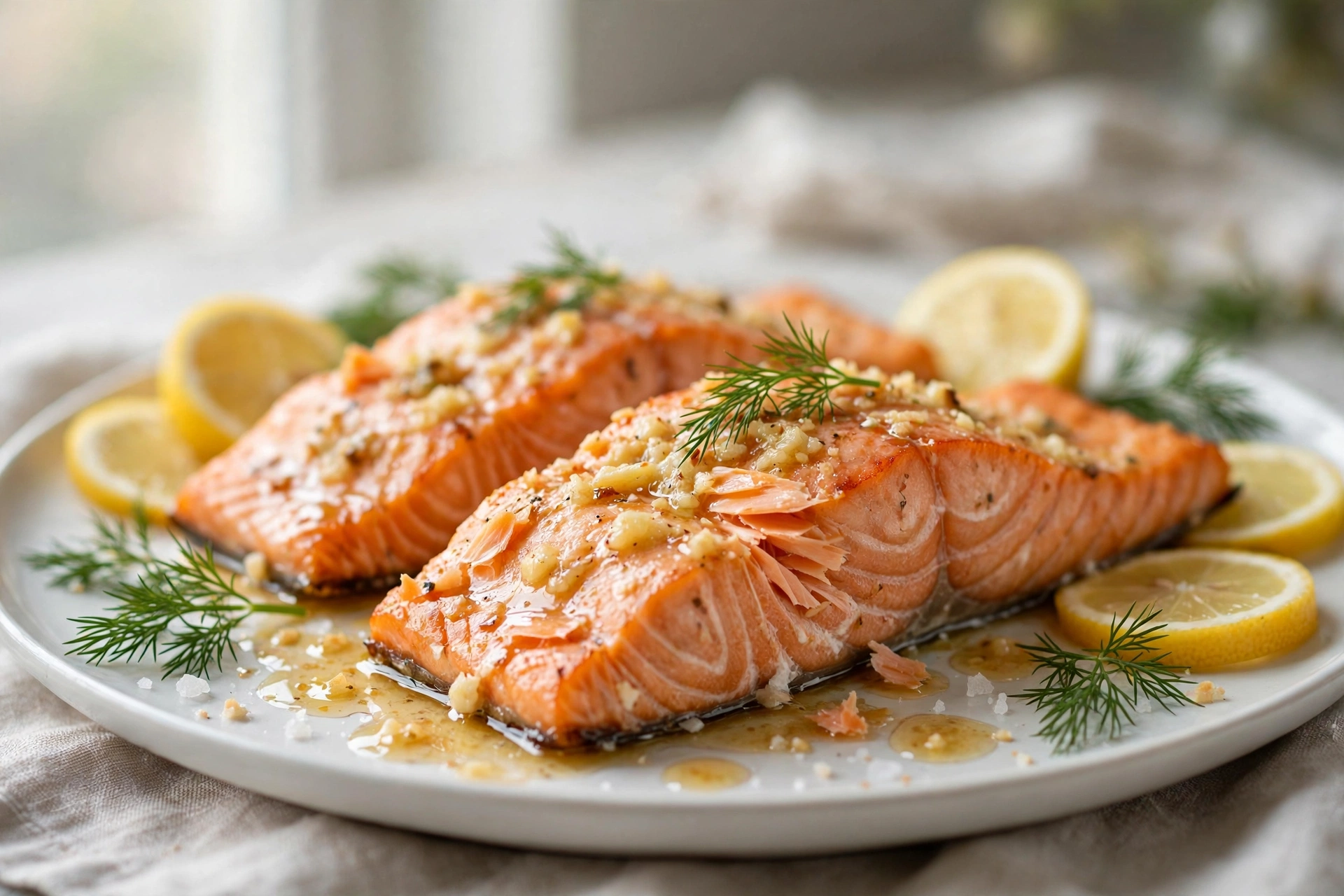
The air fryer is almost unfairly good at cooking salmon. The intense circulating heat sears the outside while the inside stays silky and moist, and the whole thing happens so fast that there is almost no window for overcooking if you pay attention. The garlic butter melts over the hot fillets and pools into every flake. It tastes like restaurant salmon, the kind you pay twenty-eight dollars for, except you made it in your pajamas.
This air fryer salmon recipe has become my answer to the eternal question of what to cook when I want something healthy but I do not want to try very hard. It is naturally gluten-free, packed with protein and omega-3s, and it pairs with literally everything. Let me show you exactly how I make it.
Why You’ll Love This Recipe
Speed is the headline here. Five minutes of prep, eight to ten minutes of cooking, and dinner is on the table in fifteen minutes flat. On nights when takeout is tempting, this is faster than delivery and about a third of the price.
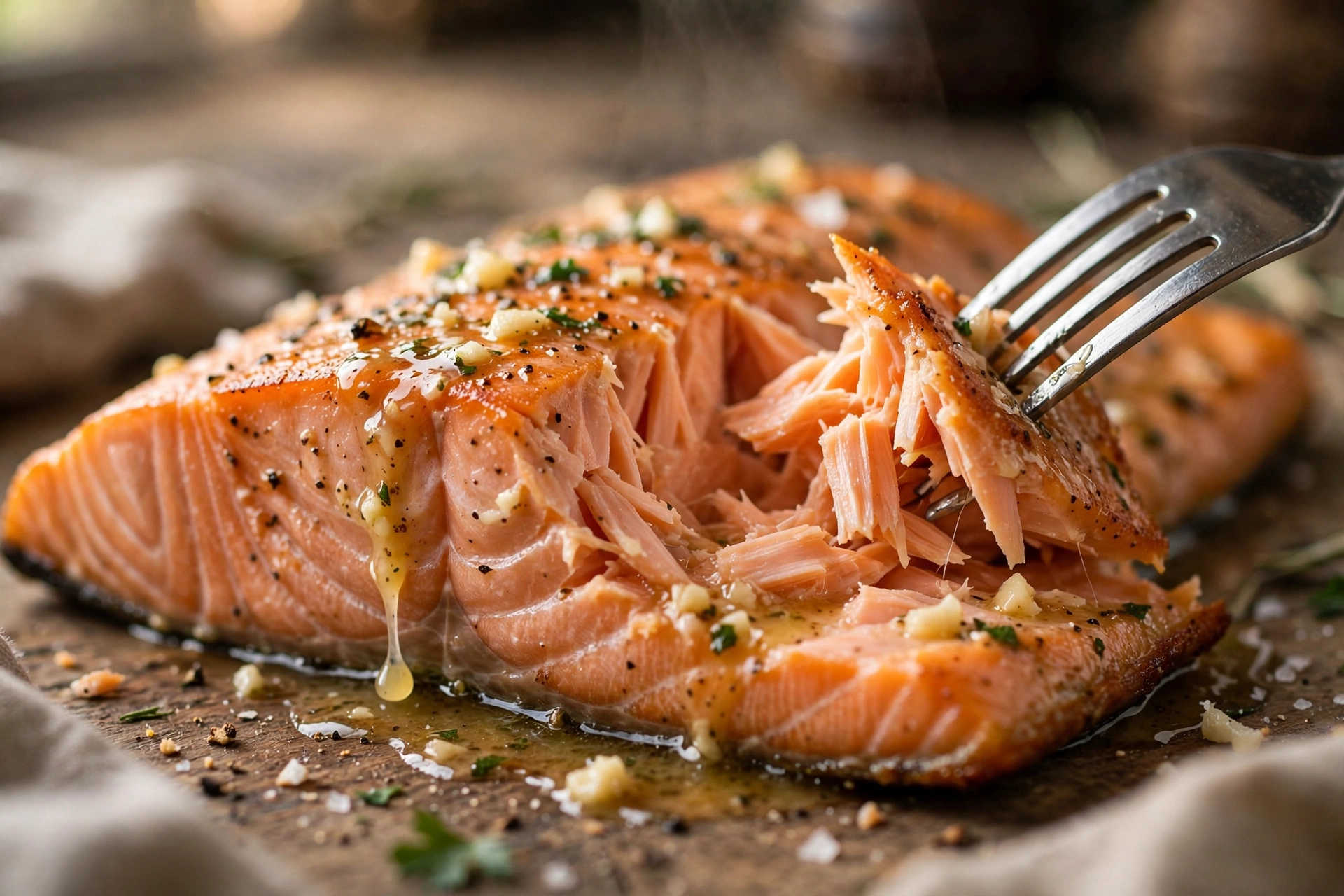
The texture is the reason you will make it again. Air-fried salmon develops a lightly crisped exterior while the center stays tender and flaky. The top gets these beautiful golden edges from the garlic butter, and when you press a fork into it, the fillet separates into perfect moist flakes.
It is also one of the healthiest dinners in my regular rotation. Salmon is rich in omega-3 fatty acids and high-quality protein, and this preparation adds nothing heavy. If you are collecting dependable healthy recipes that do not taste like a compromise, start here.
And it is endlessly versatile. Serve it over rice, flake it into tacos, lay it on a big salad, or eat it straight off the plate standing at the counter. I have done all of these. No judgment.
Ingredients
- 4 salmon fillets (5 to 6 ounces each, about 1 to 1.5 inches thick), skin-on or skinless
- 3 tablespoons unsalted butter, melted
- 3 cloves garlic, minced (about 1 tablespoon)
- 1 tablespoon fresh lemon juice, plus lemon wedges for serving
- 1 teaspoon smoked paprika
- 1 teaspoon kosher salt
- 1/2 teaspoon black pepper
- 1 tablespoon fresh dill or parsley, chopped (plus more for garnish)
- Olive oil spray or 1 teaspoon olive oil
When buying salmon, look for fillets of even thickness so they cook at the same rate. The center-cut pieces are ideal. I usually buy skin-on because the skin crisps beautifully in the air fryer and peels right off if you do not want to eat it, but skinless works exactly the same. If your fillets are thinner than an inch, start checking for doneness a couple of minutes early.
Fresh garlic makes a real difference in the butter sauce. The jarred minced kind works in a pinch, but fresh cloves give you that punchy, aromatic flavor that makes people ask what your secret is.
Step-by-Step Instructions
- Make the garlic butter. In a small bowl, stir together the melted butter, minced garlic, lemon juice, smoked paprika, salt, and pepper. This takes thirty seconds and it is the entire flavor foundation of the dish.
- Prep the salmon. Pat the fillets dry with paper towels. Drying the surface helps the top brown instead of steam. Lightly spray or rub the fillets with olive oil, then brush the garlic butter generously over the top and sides of each fillet. Save a spoonful of the butter for serving.
- Preheat the air fryer. Set it to 400°F and preheat for 3 minutes. A hot basket gives you a better sear on the bottom of the fillets.
- Cook skin-side down. Place the fillets in the basket skin-side down (or presentation-side up if skinless), leaving space between them. Cook for 7 to 10 minutes depending on thickness. I start checking at 7 minutes for thinner fillets.
- Check for doneness. Salmon is done when it flakes easily with a fork and the center is just barely translucent. For a precise read, an instant-read thermometer should show 125°F to 130°F for medium, which is how I like it, or 135°F to 140°F for medium-well. The fish will carry over a few degrees as it rests.
- Finish and serve. Transfer to plates, spoon the reserved garlic butter over the hot fillets, and shower with fresh dill or parsley. Add lemon wedges on the side. Serve immediately while the butter is still melting into the flakes.
That is the whole thing. Fifteen minutes, one bowl for the butter, one basket to rinse. Weeknight cooking does not get much easier than this, and you can find more fast ideas like it in my collection of air fryer recipes.
Pro Tips
Do not overcook it. This is the only way to ruin salmon. It goes from perfect to dry in about two minutes, so start checking early. Remember that carryover cooking will raise the temperature another 3 to 5 degrees after you pull it from the basket. When in doubt, pull it early.
Bring fillets toward room temperature. Fifteen minutes on the counter before cooking helps the salmon cook evenly from edge to center. Ice-cold centers with overcooked exteriors are the classic home-cook salmon problem, and this simple step fixes it.
Pat dry for better browning. Moisture on the surface is the enemy of that gorgeous golden top. Paper towels, thirty seconds, done.
Thickness matters more than weight. A thick 5-ounce fillet needs more time than a thin 6-ounce one. Judge doneness by thickness: roughly 7 minutes for 1 inch, up to 10 for 1.5 inches at 400°F.
Save the crispy skin. If you cooked skin-on and do not want to eat it, peel it off and chop it over a salad. Air-fried salmon skin gets wonderfully crisp, almost like a chip. My kids fight over it.
Double the garlic butter. You will want extra for drizzling over the rice or vegetables you serve alongside. I always make a double batch now because someone at my table inevitably asks for more.
Variations
Honey Garlic: Add 1 tablespoon of honey to the butter mixture. The honey caramelizes under the heat and gives the salmon a gorgeous lacquered glaze with sweet-savory balance.
Cajun Style: Replace the smoked paprika with 2 teaspoons of Cajun seasoning and skip the dill. Finish with a squeeze of lime instead of lemon. Bold, spicy, and fantastic in tacos.
Asian-Inspired: Swap the butter for a glaze of 2 tablespoons soy sauce, 1 tablespoon honey, 1 teaspoon sesame oil, and the garlic and ginger. Sprinkle with sesame seeds and sliced scallions after cooking.
Herb Crusted: After brushing with garlic butter, press a mixture of panko breadcrumbs, grated Parmesan, and chopped parsley onto the tops of the fillets before air frying. You get a golden crunchy crust that contrasts beautifully with the tender fish.
Maple Dijon: Whisk 2 tablespoons of maple syrup and 1 tablespoon of Dijon mustard into the melted butter instead of the paprika. Sweet, tangy, and very New England.
Storage & Reheating
Cooked salmon keeps in an airtight container in the refrigerator for up to 3 days. It is excellent cold the next day, flaked over salads or tucked into wraps with some greens and a squeeze of lemon.
To reheat without drying it out, warm it gently in the air fryer at 300°F for 3 to 4 minutes, just until warmed through. Avoid the microwave if you can; it tends to make salmon rubbery and brings out a strong fishy smell. Honestly, I prefer leftover salmon cold or at room temperature over reheated.
I do not recommend freezing cooked salmon from this recipe. The texture suffers on thawing and it is so fast to make fresh that there is no real reason to batch it ahead.
FAQs
Can I cook frozen salmon in the air fryer?
Yes, and the air fryer handles it better than most methods. Rinse off any ice glaze, pat dry, and cook at 400°F for 12 to 15 minutes, brushing on the garlic butter after the first 5 minutes once the surface has thawed enough for it to stick. The texture will not be quite as perfect as thawed salmon, but it is still very good. For best results, thaw overnight in the fridge.
What internal temperature should salmon be?
The USDA recommends 145°F for fish, but most chefs and experienced home cooks prefer salmon at 125°F to 130°F for medium, where it is silky and moist, or up to 140°F for medium-well. I pull mine at 130°F and let carryover cooking finish the job. If you are serving pregnant women, young children, or anyone immunocompromised, cook to the full 145°F to be safe.
Should I cook salmon skin-side up or down in the air fryer?
Skin-side down. The skin protects the delicate flesh from the direct heat of the basket and crisps up beautifully against the hot surface. If your fillets are skinless, place them presentation-side up so the pretty side gets the browning.
Why is there white stuff coming out of my salmon?
That white substance is albumin, a harmless protein that gets pushed to the surface as the fish cooks. It shows up more when salmon is cooked at high heat or cooked from a very cold start. It is completely safe to eat, though not the prettiest. Bringing the fish closer to room temperature before cooking and not overcooking both reduce it.
If this 15-minute dinner earned a spot in your rotation, you might also love my crispy air fryer chicken thighs for another fast protein, and you can read the story behind this blog on my about page.
—