
The Short Answer
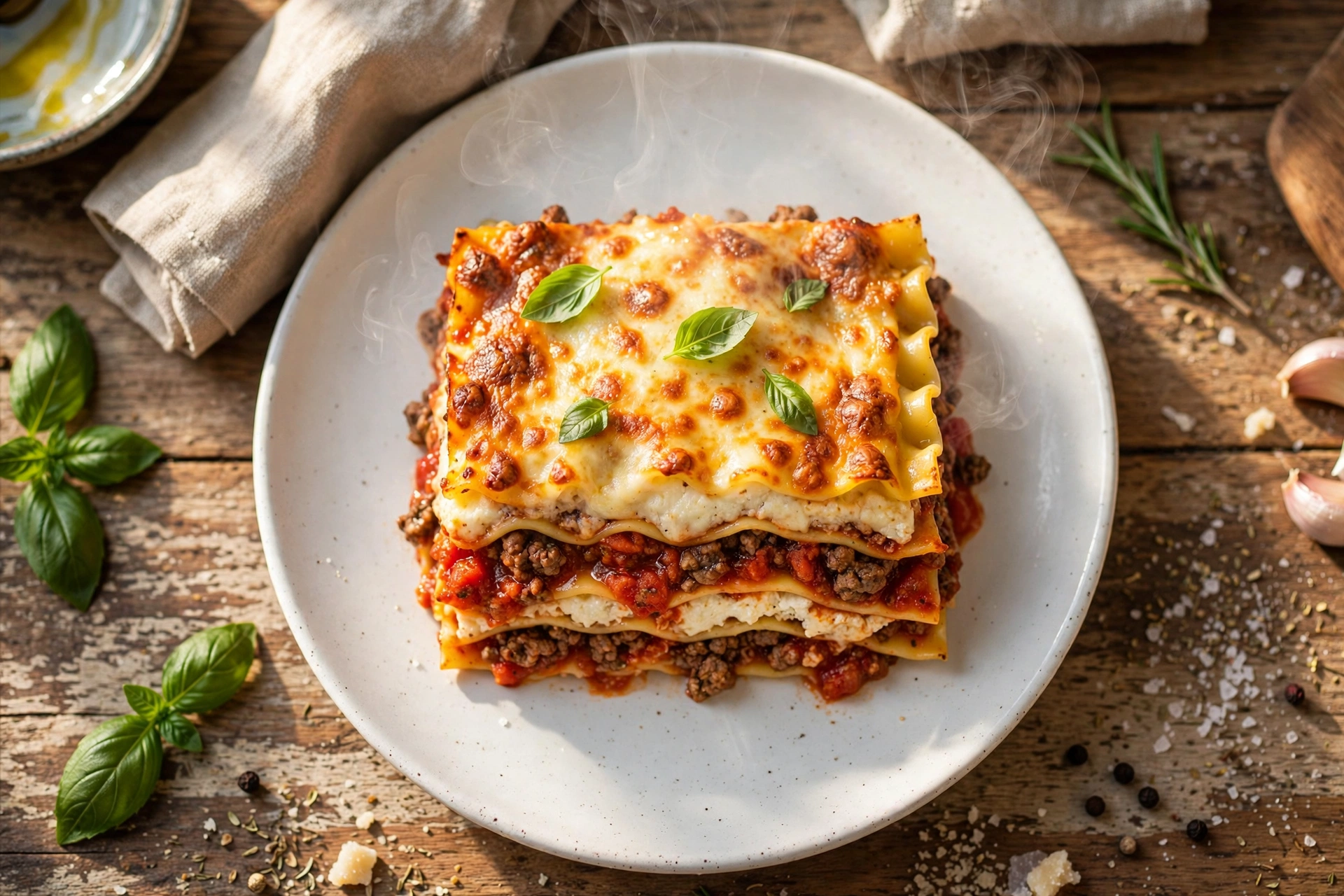
Classic beef lasagna is all about three things: a rich, meaty tomato sauce, a creamy ricotta layer, and wide lasagna noodles baked until bubbly and golden. This recipe layers those components in a 9×13-inch pan and bakes at 375°F for about 45 minutes. The result is a hearty Italian-American comfort dish that feeds a crowd and tastes even better the next day.
Why This Recipe Works
Lasagna fails for two predictable reasons: watery sauce that turns the dish into soup, and overcooked noodles that fall apart. This recipe solves both. First, the beef sauce simmers for 25 minutes so excess moisture cooks off before it ever touches a noodle. Second, the noodles go in slightly undercooked (or use no-boil noodles), so they finish in the oven without turning mushy. A blend of ricotta, egg, and parmesan in the cheese layer keeps it creamy but sliceable, and a rest of 15 minutes after baking lets everything set so you get clean, beautiful layers.
Ingredients
For the Meat Sauce
- 1 tablespoon olive oil
- 1 pound ground beef (80/20)
- 1 medium yellow onion, diced
- 4 cloves garlic, minced
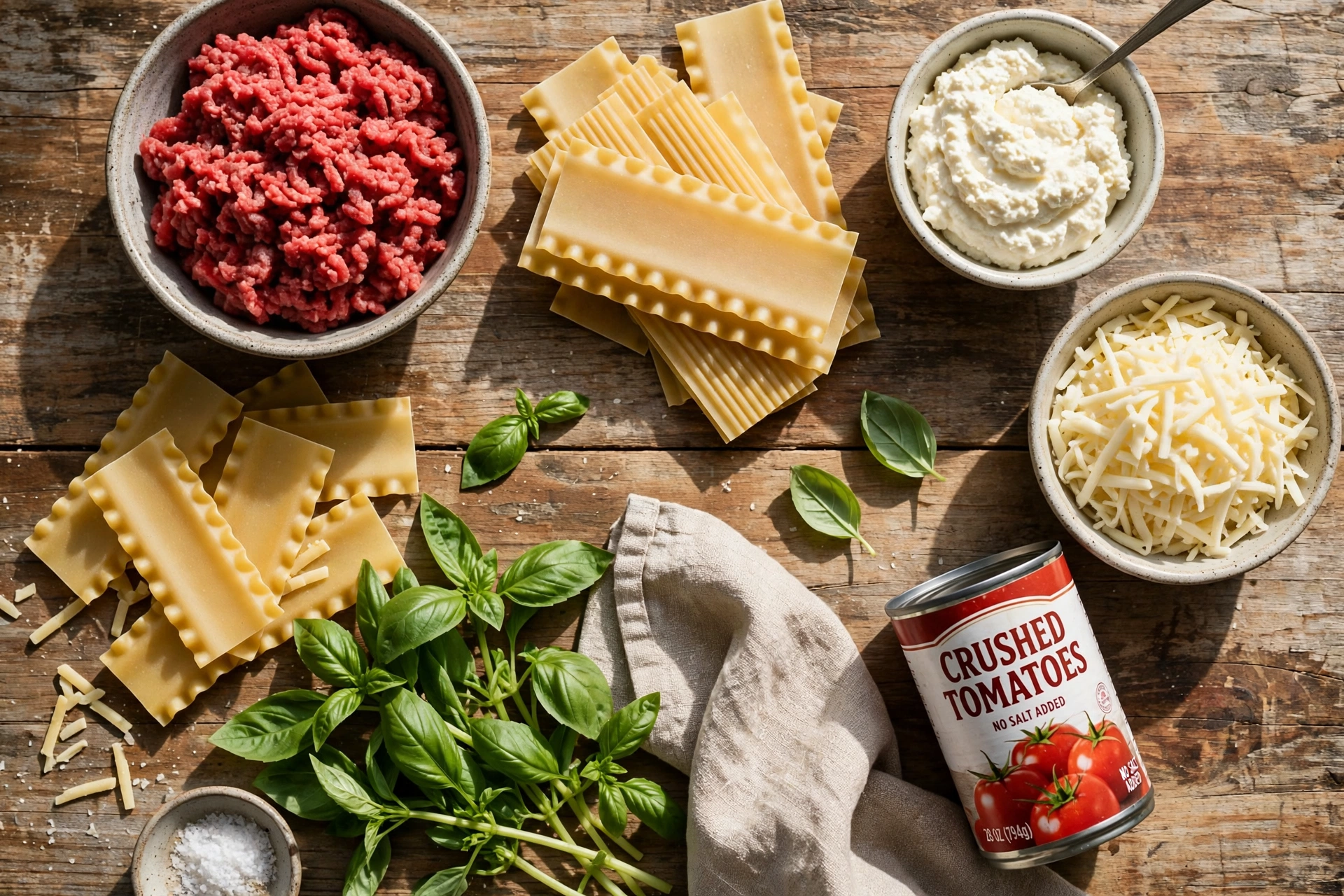
- 1 can (28 ounces) crushed tomatoes
- 1 can (6 ounces) tomato paste
- 1 teaspoon dried oregano
- 1 teaspoon dried basil
- 1/2 teaspoon red pepper flakes (optional)
- 1 teaspoon kosher salt, plus more to taste
- 1/2 teaspoon black pepper
- 1 teaspoon sugar (balances the acidity)
For the Cheese Layer
- 15 ounces whole-milk ricotta cheese
- 1 large egg, beaten
- 1/2 cup grated parmesan cheese, plus extra for topping
- 1/4 cup chopped fresh parsley
- 1/2 teaspoon salt
For Assembly
- 12 lasagna noodles (regular or no-boil)
- 1 pound low-moisture mozzarella, shredded (about 4 cups)
- Fresh basil leaves, for serving (optional)
Instructions
- Brown the beef. Heat the olive oil in a large Dutch oven or deep skillet over medium-high heat. Add the ground beef and cook, breaking it up with a spoon, until no pink remains, about 6 to 8 minutes. Drain off excess fat.
- Build the sauce. Add the diced onion to the beef and cook until softened, about 5 minutes. Stir in the garlic and cook 1 minute more until fragrant. Add the tomato paste and stir for 2 minutes so it caramelizes slightly. Pour in the crushed tomatoes, then stir in the oregano, basil, red pepper flakes, salt, pepper, and sugar.
- Simmer. Bring the sauce to a gentle simmer, then reduce the heat to low. Cover partially and cook for 25 minutes, stirring occasionally, until thickened. Taste and adjust salt as needed. The sauce should be thick enough that a spoon leaves a trail — this is the key to non-watery lasagna.
- Cook the noodles. While the sauce simmers, bring a large pot of salted water to a boil. Cook the lasagna noodles 2 minutes less than the package directions (they will finish cooking in the oven). Drain and lay flat on a baking sheet lightly coated with oil so they don’t stick.
- Mix the cheese layer. In a medium bowl, stir together the ricotta, beaten egg, parmesan, parsley, and salt until well combined.
- Preheat and prep. Heat the oven to 375°F. Spread 1 cup of meat sauce over the bottom of a 9×13-inch baking dish.
- Layer. Arrange 4 noodles over the sauce, slightly overlapping. Spread half of the ricotta mixture over the noodles, then top with 1 cup of mozzarella and 1 1/2 cups of meat sauce. Repeat: 4 noodles, remaining ricotta, 1 cup mozzarella, 1 1/2 cups sauce. Finish with the last 4 noodles, the remaining sauce, and the remaining 2 cups of mozzarella. Sprinkle extra parmesan on top.
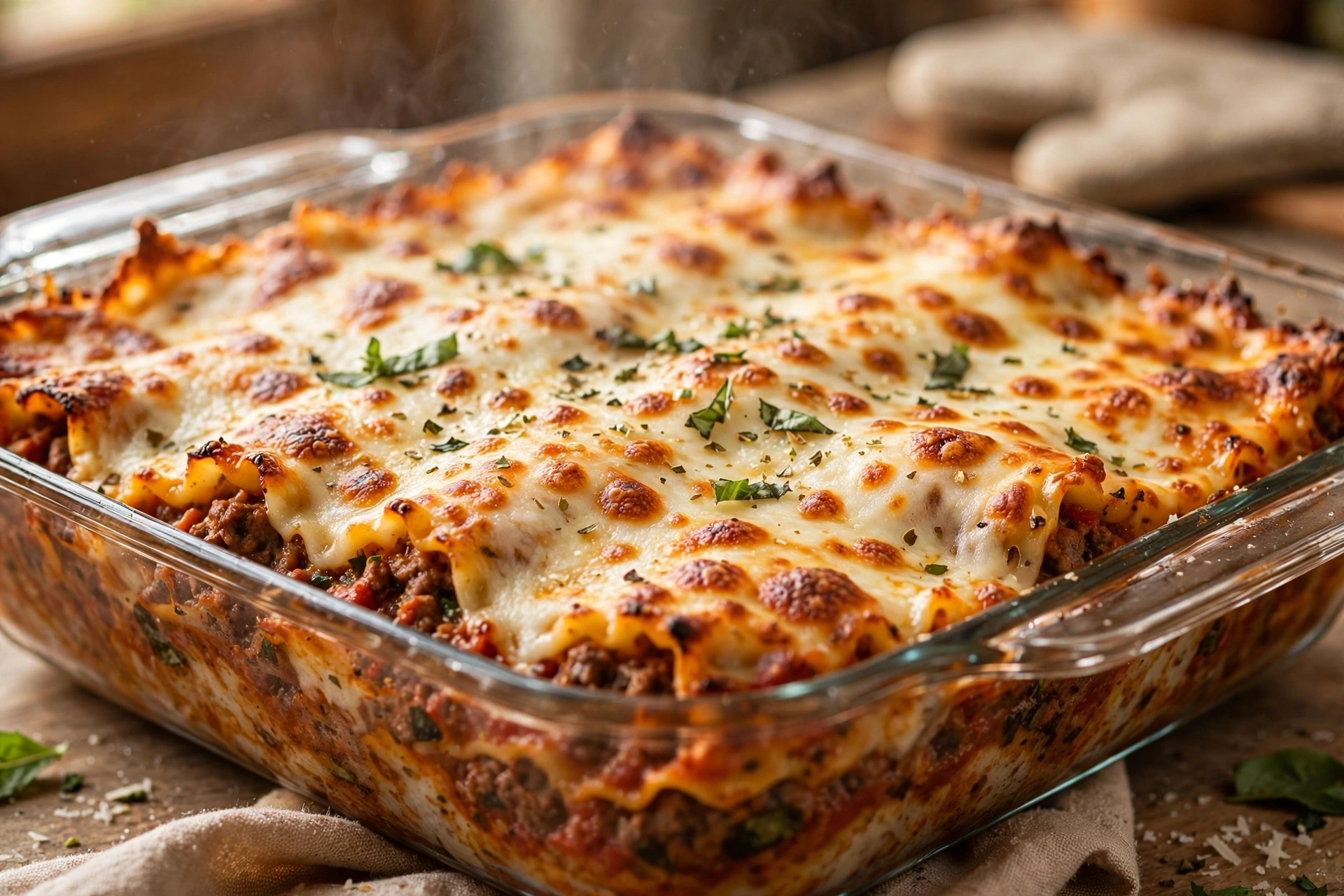
- Bake. Cover tightly with aluminum foil (tent it so it doesn’t touch the cheese) and bake for 25 minutes. Remove the foil and bake 20 minutes more, until the cheese is bubbly and golden brown.
- Rest. Let the lasagna rest for 15 minutes before slicing. This step is non-negotiable — it lets the layers set so every slice holds together.
- Serve. Cut into squares, garnish with fresh basil if you like, and serve hot.
Pro Tips
- Use low-moisture mozzarella. Fresh mozzarella releases too much water and makes lasagna soupy. The bagged low-moisture kind melts beautifully here.
- Don’t skip the egg in the ricotta. It binds the cheese layer so it slices cleanly instead of oozing out.
- Tent the foil. Spray the underside of the foil with cooking spray so the cheese doesn’t stick to it.
- Make it ahead. Assemble the lasagna up to 24 hours in advance, cover, and refrigerate. Add 10 extra minutes to the covered baking time when baking from cold.
Variations
- Half beef, half sausage: Swap half the ground beef for mild Italian sausage for extra flavor. If you love baked Italian pasta dishes, you’ll also enjoy our Easy Baked Ziti with Ricotta.
- Veggie lasagna: Replace the beef with 2 cups of sautéed mushrooms, zucchini, and spinach.
- Spicy: Double the red pepper flakes and add a pinch of cayenne to the sauce.
- White lasagna: Skip the tomato sauce and use a creamy béchamel with the beef and spinach. For another creamy pasta night, try our Cottage Cheese Alfredo Pasta.
Storage & Reheating
Refrigerate leftovers in an airtight container for up to 4 days. Lasagna freezes exceptionally well: wrap individual portions tightly in plastic wrap and foil, then freeze for up to 3 months. Thaw overnight in the fridge. Reheat covered in a 350°F oven for 20 to 25 minutes, or microwave individual slices for 2 to 3 minutes.
FAQ
Can I use no-boil noodles?
Yes. No-boil (oven-ready) noodles work great — just make sure your sauce is slightly saucier than usual since the noodles absorb more liquid. Add 1/4 cup of water to the sauce if it looks very thick.
Why is my lasagna watery?
Almost always because the sauce wasn’t simmered long enough or the lasagna wasn’t rested. Simmer the sauce until thick, and rest the baked lasagna a full 15 minutes before cutting.
Can I freeze lasagna before baking?
Absolutely. Assemble it in a freezer-safe dish, wrap tightly, and freeze for up to 3 months. Bake from frozen at 375°F, covered, for 60 to 70 minutes, then uncovered for 15 minutes.
How many does this serve?
This 9×13-inch lasagna serves 8 to 10 people generously.
Why the Layers Hold Together
Lasagna has one core problem. It’s a layered dish full of wet ingredients that somehow has to slice like a cake. This recipe solves that with patience at two points, and neither one is negotiable.
First, the sauce. It simmers a full 25 minutes before it ever meets a noodle. Crushed tomatoes straight from the can are loose and watery, and simmering drives off that excess liquid while concentrating the flavor, so the finished lasagna is rich instead of soupy. Cooking the tomato paste for two minutes before the tomatoes go in deepens everything, too. It caramelizes its sugars and takes away the raw, tinny edge canned tomato products can have.
The cheese layer is built the same careful way. The egg beaten into the ricotta sets gently in the oven and binds the layer, so it stays in its own stratum instead of oozing out of every slice. Low-moisture mozzarella helps, too. It melts without releasing the puddles that fresh mozzarella does. Then there are the noodles, slightly undercooked on purpose. They finish in the oven by absorbing sauce, which tightens the whole dish. And finally, the 15 minute rest. Residual heat equalizes, the layers firm up. Every one of those steps earns its place.
Notes on Sauce, Cheese, and Noodles
Ground beef: Eighty twenty is the right grind here. The fat carries flavor through the sauce, and you drain the excess after browning anyway, so the finished dish is rich but not greasy. Leaner beef works, the sauce just tastes a little flatter. Our favorite upgrade is half beef and half mild Italian sausage. Ground turkey or chicken both work for a lighter lasagna, too. Add an extra teaspoon of olive oil and a pinch more salt, since they’re leaner.
Crushed tomatoes and tomato paste: A 28 ounce can of good crushed tomatoes forms the base. Only have whole peeled tomatoes? Crush them by hand, or pulse them a few times in the blender. The small can of tomato paste isn’t optional filler. It’s what gives the sauce body, and that slow cooked depth, in 25 minutes.
Ricotta: Whole-milk ricotta, always. Part-skim versions release whey as they bake and can make the cheese layer grainy. Cottage cheese is a respectable swap if you blend it smooth first, and a few spoonfuls of mascarpone stirred in make the layer extra luxurious for a special occasion.
Mozzarella: Low-moisture mozzarella, the firm block or the bagged shreds, is built for jobs like this. Fresh mozzarella releases too much water and turns lasagna into soup. Provolone blended half and half with mozzarella adds a nice sharp edge, if you want it.
Noodles: Regular lasagna noodles, boiled two minutes shy of the package time, give the best texture. No-boil noodles are a fine shortcut, but they drink more sauce, so stir an extra quarter cup of water into the sauce if you use them. Gluten-free lasagna noodles work too. Handle them gently, because they crack more easily when dry.
Sugar: The teaspoon of sugar isn’t there to sweeten the sauce. It simply takes the sharp edge off the tomato acidity, the way a long Sunday simmer would.
Assembly Lessons
- Brown the beef in a wide pan, without crowding. Meat that steams in its own juices turns gray and bland. A Dutch oven or your widest skillet, with the beef spread out, gives you the browned bits that flavor the whole sauce.
- Leave a spoonful of fat behind. Drain the beef well, but don’t wipe the pan. A teaspoon or so of the seasoned fat is what the onion should soften in, and it carries flavor forward.
- Oil the sheet pan for the noodles. Lay the drained noodles flat on a lightly oiled baking sheet and they won’t glue themselves into a single pasta brick while you assemble. A drizzle of oil in the pasta water helps, too.
- Start with sauce. Always. That first cup of sauce on the bottom of the dish keeps the lowest noodle layer from baking onto the pan, and it gives it moisture to finish cooking in.
- Spread ricotta in dollops. Drop spoonfuls across the noodles and spread gently with the back of the spoon. Dragging hard tears the noodles. Dolloping keeps the layer even.
- Spray the foil. A quick coat of cooking spray on the underside of the foil means the top cheese layer stays on the lasagna, where it belongs, instead of peeling away with the cover.
- Rest it the full 15 minutes. Set a timer if you have to. Lasagna cut too soon slumps, but after a proper rest you can lift out tall, clean squares with distinct layers.
The Mistakes That Ruin Lasagna
- Rushing the sauce simmer. Fifteen minutes is not twenty five. A thin, under simmered sauce is the number one cause of watery lasagna. The sauce is ready when a spoon dragged across the bottom leaves a trail that holds for a second.
- Boiling the noodles fully. Noodles cooked to the package time turn soft and fragile after 45 minutes in the oven. Two minutes shy is the rule, and they’ll finish perfectly in the sauce.
- Skipping the egg in the ricotta. Without a binder, the cheese layer slides out of every slice and pools on the plate. The egg is invisible in the finished dish. It just holds everything together.
- Overloading the layers. More is not better here. Piling on extra sauce and cheese makes the lasagna unstable and soupy. Measured layers, repeated, bake up taller and cleaner than one giant overloaded stack.
- Cutting with a cold, dry knife. For picture worthy slices, run a long knife under hot water and wipe it between cuts. It glides through the cheese instead of dragging it down the layers.
Spin-Offs Worth Trying
Three-cheese lasagna: Keep the beef sauce, but blend the ricotta with a half cup of shredded fontina and finish the top with mozzarella and parmesan. The fontina melts right into the layer and makes it taste like a restaurant’s special.
Pesto swirl lasagna: Spoon small dollops of basil pesto over the ricotta in each layer and add a handful of baby spinach. The pesto perfumes the whole dish, and the green layers look beautiful when you slice it.
Spicy sausage lasagna: Use hot Italian sausage for half the meat, double the red pepper flakes, and stir a chopped roasted red pepper into the sauce. It’s the version to make for anyone who believes everything improves with heat.
Weeknight skillet lasagna: Break the noodles into pieces and cook everything in one deep skillet on the stove, dolloping the ricotta on top and covering for the last ten minutes. You lose the clean layers. You gain dinner in about 30 minutes on a busy night.
Freezing and Reheating Lasagna
Lasagna might be the best leftover in the entire dinner rotation. The flavors genuinely deepen overnight. Cool the pan to room temperature, cover it tightly, and refrigerate for up to 4 days. To reheat the whole dish, cover with foil and warm at 350 degrees F for 25 to 30 minutes, until the center is hot and the cheese is supple again. Single slices reheat in the microwave in 2 to 3 minutes, and a tablespoon of water sprinkled over the top keeps the noodles tender.
For freezing, individual portions wrapped tightly in plastic wrap and then foil keep for up to 3 months, and they’re perfect for lunches. A whole unbaked lasagna also freezes beautifully for up to 3 months in a freezer safe dish, wrapped in plastic and foil. Bake it from frozen at 375 degrees F, covered, for 60 to 70 minutes, then uncover for 15 minutes more. Thawed leftovers reheat best in the oven rather than the microwave when you have the time.
What to Serve Alongside
Lasagna is hearty, so the sides should bring freshness and crunch. A Caesar salad or an Italian chopped salad with a tangy dressing is the classic partner, and warm garlic knots or garlic bread are never wrong for catching extra sauce. Roasted broccoli rabe or simple green beans with lemon keep the plate balanced. A medium bodied red wine at the table makes a Sunday lasagna feel complete.
Lasagna Questions, Continued
How many layers should lasagna have?
Three noodle layers, like this recipe builds, is the classic structure for a 9 by 13 inch pan, and it’s the right ratio of pasta to filling. Two layers eats too saucy. Four layers can turn dry and dense. If your pan is deeper than two inches, you can stretch to a fourth layer by adding half again as much sauce, but three is the reliable standard.
Can I use jarred sauce to save time?
Yes, and on a busy weeknight it’s a perfectly reasonable shortcut. You’ll need about six cups of a good jarred marinara. Brown the beef with the onion and garlic, drain it, and stir it into the sauce with the herbs. Simmer it together for at least 10 minutes so the flavors merge and any excess liquid cooks off, then layer as directed.
Why does the top cheese burn before the middle gets hot?
That usually means the lasagna went in cold from the fridge, or the rack sits too high in the oven. Bake on the center rack, keep the foil on for the full first 25 minutes, and if you assembled ahead, let the dish stand on the counter for 30 minutes before it goes in, or add ten covered minutes to the bake.
How far ahead can I assemble it?
Twenty four hours ahead is the sweet spot. Assemble it completely, cover tightly, and refrigerate. The noodles absorb a little sauce as they sit, which plenty of people think improves the texture. Beyond a day the noodles can get too soft, so for longer storage, freeze the assembled pan instead and bake it from frozen.

1 thought on “Classic Beef Lasagna (Cheesy & Easy)”