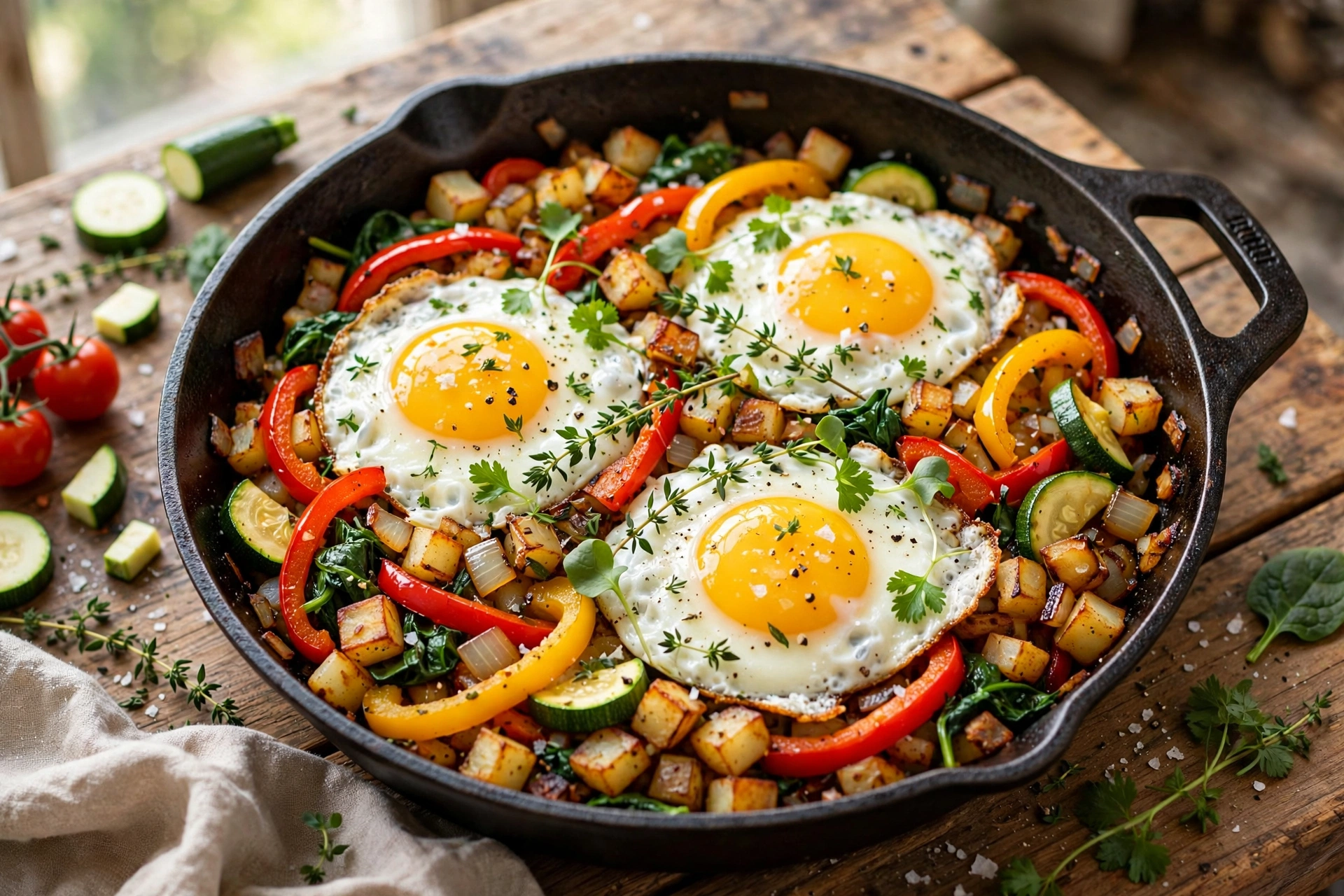
Weekend brunch just got a whole lot easier — and healthier. This skillet veggie breakfast hash with eggs piles crispy golden potatoes, sweet bell peppers, onions, and zucchini into one big cast iron skillet, then crowns it all with perfectly cooked sunny-side-up eggs. It’s a one-pan, 30-minute breakfast that’s hearty, colorful, and packed with veggies — equally at home on a lazy Saturday morning or a busy weekday.
Breakfast hash is endlessly adaptable: use whatever vegetables are hanging out in your crisper drawer, season boldly, and let the skillet do the magic. The key is giving the potatoes a head start so they turn crispy instead of steamy, then cracking the eggs right over the top so the yolks stay gloriously runny. Below: the full ingredient list, step-by-step instructions, pro tips, variations, storage, and FAQ.
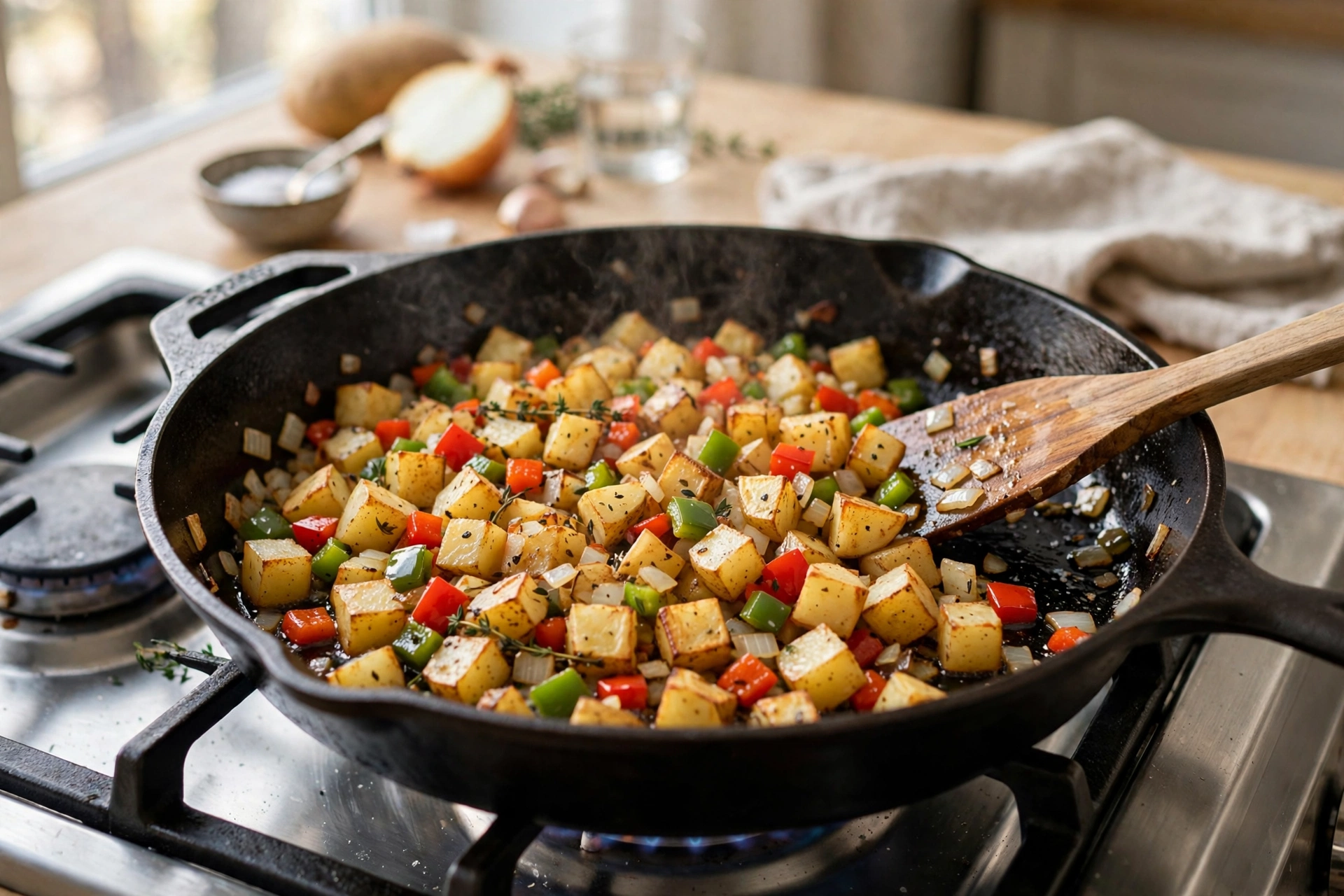
Why This Recipe Works
- One pan: Everything cooks in a single skillet — minimal cleanup, maximum flavor.
- Crispy potatoes: Par-cooking and a hot skillet guarantee golden, crunchy edges (never soggy).
- Protein-packed: Eggs on top make it a complete, satisfying meal that keeps you full for hours.
- Veggie-loaded: Peppers, onions, zucchini, and spinach sneak a rainbow of nutrients into breakfast.
- Customizable: Swap veggies, add cheese or meat, change the spices — it’s a formula, not a rule.
Ingredients
- 1 1/2 lbs Yukon Gold potatoes, cut into 1/2-inch cubes
- 2 tablespoons olive oil, divided
- 1 tablespoon butter
- 1 red bell pepper, diced
- 1 green bell pepper, diced
- 1 medium yellow onion, diced
- 1 small zucchini, halved and sliced
- 3 cloves garlic, minced
- 1 teaspoon smoked paprika
- 1/2 teaspoon ground cumin
- 1 teaspoon kosher salt, divided, plus more to taste
- 1/2 teaspoon black pepper
- 2 cups baby spinach
- 4-6 large eggs
- 2 tablespoons chopped fresh chives or green onions
- Hot sauce, for serving (optional)
Instructions
- Par-cook the potatoes: Place the cubed potatoes in a pot of cold salted water. Bring to a boil and cook 5 minutes until just barely tender. Drain well and let steam dry 2 minutes — dry potatoes crisp better.
- Crisp the potatoes: Heat 1 tablespoon olive oil and the butter in a large cast iron skillet over medium-high heat. Add the potatoes in a single layer, season with 1/2 teaspoon salt, and cook undisturbed 3-4 minutes until golden on one side. Stir and continue cooking 6-8 minutes, stirring occasionally, until crispy all over. Transfer to a plate.
- Sauté the veggies: Add the remaining 1 tablespoon olive oil to the skillet. Add the bell peppers, onion, and zucchini with the remaining 1/2 teaspoon salt. Cook 5-6 minutes until softened and lightly charred at the edges.
- Season: Stir in the garlic, smoked paprika, cumin, and black pepper; cook 1 minute until fragrant. Add the spinach and stir until just wilted.
- Combine: Return the crispy potatoes to the skillet and toss everything together. Taste and adjust salt and pepper.
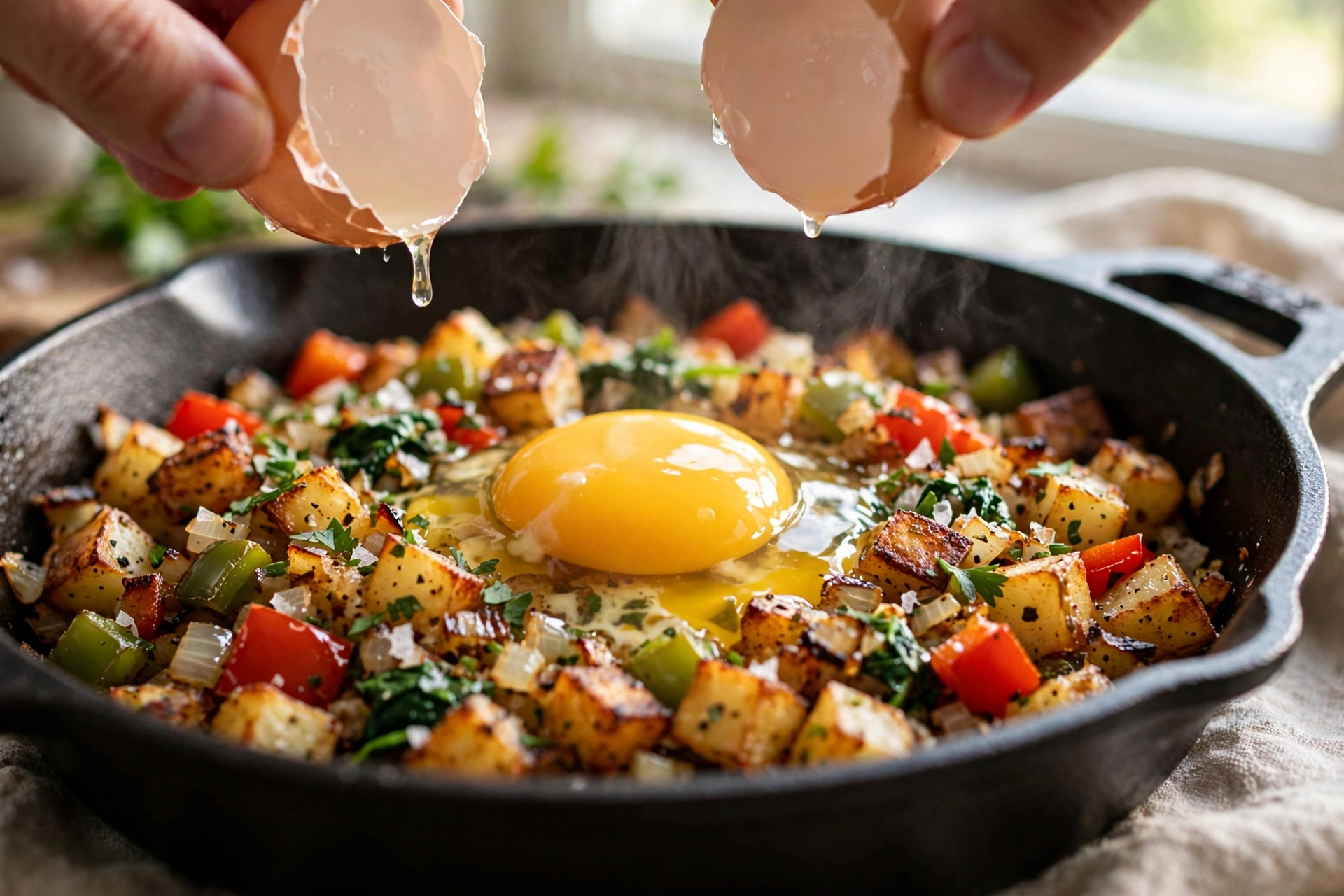
- Add the eggs: Make 4-6 wells in the hash with the back of a spoon. Crack an egg into each well. Cover the skillet and cook 3-5 minutes over medium-low heat until the whites are set but the yolks are still runny (longer for firmer yolks).
- Serve: Sprinkle with chives, add hot sauce if you like, and serve straight from the skillet while hot.
Pro Tips
- Don’t crowd the potatoes: Give them space in the skillet so they crisp instead of steam. Use a 12-inch skillet or cook in two batches.
- Par-cooking is the secret: Boiling the potatoes first guarantees a fluffy interior and crispy exterior — raw potatoes take forever and cook unevenly.
- Cast iron wins: It holds heat beautifully for maximum crispiness. A heavy stainless skillet works too.
- Room-temp eggs: Cold eggs lower the pan temperature; set them out 15 minutes before cooking for more even results.
- Cover for the eggs: A lid traps steam and sets the whites without flipping — runny yolks intact.
Variations
- Sweet potato hash: Swap Yukon Golds for sweet potatoes (no par-cooking needed; they cook faster).
- Add meat: Brown breakfast sausage, bacon, or chorizo first, then cook the veggies in the rendered fat.
- Cheesy: Sprinkle shredded cheddar or crumbled feta over the top before adding the eggs.
- Southwestern: Add black beans, corn, and a dash of chili powder; top with avocado and salsa.
- Scrambled instead: Prefer scrambled? Beat the eggs and pour over the hash, stirring gently until just set.
Storage
Store the hash (without eggs, if possible) in an airtight container in the fridge for up to 4 days. Reheat in a hot skillet to re-crisp the potatoes, then fry fresh eggs to top — reheated fried eggs turn rubbery, so it’s worth the extra 5 minutes. The veggie hash base also freezes well for up to 2 months; thaw overnight and reheat in a skillet.
FAQ
Can I make this ahead of time?
Yes — cook the veggie hash base up to 3 days ahead and refrigerate. Reheat in a hot skillet until crispy, then add fresh eggs.
What potatoes are best for hash?
Yukon Golds or red potatoes hold their shape and crisp beautifully. Russets work too but break down more easily.
How do I keep the yolks runny?
Cook covered over medium-low heat and start checking at 3 minutes. The whites should be opaque and just set while the yolks still jiggle.
Can I bake the eggs instead?
Absolutely — after combining the hash, transfer the skillet to a 400°F oven for 8-10 minutes until the whites set.
Is breakfast hash healthy?
This veggie-loaded version is full of fiber, vitamins, and protein. For more wholesome ideas, try our Healthy Baked Turkey Meatballs.
Love crispy potatoes? Don’t miss our Crispy Air Fryer French Fries, and for another veggie-packed side, try our Air Fryer Brussels Sprouts with Bacon.
Crispy Edges Are the Whole Point
Hash is not really about the eggs. It is about the potatoes. Specifically, whether they come out crisp or sad and steamed.
Par-cooking the cubes in boiling water fixes two problems at once. The water seasons them from the inside, and it gelatinizes the starch on the surface. Later, when those par-cooked, well dried cubes hit hot fat, that starchy coating fries into a golden shell while the middle stays fluffy. Skip the par-cook and you get the usual mess: raw potatoes that burn on the outside before they are done, or soften into steam before they ever crisp.
Cooking the potatoes first, on their own, matters just as much. One layer, no crowding. That way they fry instead of steaming in their own moisture, and cast iron holds the heat steady when the vegetables join later. The seasoning is layered too. Smoked paprika and cumin bloom in the hot oil with the garlic, so the flavor coats everything instead of just sitting on top in a dusty layer.
At the end, the eggs cook under a lid. Trapped steam gently sets the tops of the whites while the yolks stay runny. No flipping. No broken yolks. Everything reaches the table in one pan, which is exactly how hash should work.
Notes on Potatoes and Veg
Yukon Gold potatoes: Thin skins, creamy flesh, they are the best hash potato in our kitchen, no contest. Leave the skins on for a more rustic pan, just scrub them well first. Russets work, but they break down more, so handle them gently once they soften. Red potatoes hold their shape nicely too. Short on time? Frozen diced potatoes stand in respectably well. Thaw them and pat them very dry before they go anywhere near the skillet.
Olive oil and butter: The mix is deliberate. Oil raises the smoke point so the pan can stay hot, butter brings flavor and helps the potatoes brown deeply. For a dairy-free hash, use all olive oil or avocado oil and add a pinch more salt at the end. You need it to make up for the richness the butter would have given.
Bell peppers and zucchini: Any color pepper you have is fine. Zucchini is trickier because it holds a lot of water, so if yours are large and seedy, scoop the seedy centers out before slicing. Yellow squash swaps in one to one. Mushrooms are a great addition too, as long as they get a few undisturbed minutes to brown instead of being stirred around.
Smoked paprika and cumin: Together they give the hash that warm, almost campfire flavor. Regular paprika works if that is what is in the cupboard, you just lose the smokiness. Chili powder plus a pinch of garlic powder is another solid pantry swap.
Eggs: Four eggs makes a lighter breakfast. Six turns the same pan into a full brunch centerpiece. Farm fresh or regular grocery store eggs both work fine. The fresher the egg, the better the yolk stands up, but do not overthink it.
Spinach: Two cups looks like a lot. It is not. It cooks down to almost nothing, so do not be shy about piling it in. Kale works too, just give it two extra minutes to soften.
Skillet Notes: Heat and Patience
- Steam dry the potatoes like you mean it. After draining, leave the cubes in the hot pot or spread them on a sheet pan for two full minutes. Surface moisture is the enemy of crisp, and this tiny pause pays off more than almost anything else in the recipe.
- Heat the skillet before the fat goes in. A properly hot cast iron, about two minutes over medium-high, means the potatoes start sizzling on contact instead of soaking up oil while the pan warms up around them.
- Hands off for the first three to four minutes. The potatoes need uninterrupted contact to build their crust. Stir too early and you scrape the whole thing off before it has set. Walk away. Just for a bit.
- Make real wells for the eggs. Push the hash aside so each egg actually touches the pan in spots. Those little crispy white edges where egg meets hot skillet? Best bites in the pan.
- Season the eggs too. A tiny pinch of salt and pepper over each yolk after cracking makes the whole dish taste finished instead of like the eggs were an afterthought.
- Peek, do not steam forever. Check the eggs at three minutes. Carryover heat keeps cooking them in the hot hash, so pull the pan when the yolks still look slightly soft on top. They will not be soft for long.
- Serve it right in the skillet. Cast iron keeps hash hot through second helpings, and it saves you a serving dish to wash. Just warn everyone the handle is hot, ideally with a towel wrapped around it.
Hash Mistakes That Make It Soggy
- Crowding the pan. Piled potatoes steam in their own moisture and come out pale and soft, every time. If your skillet is smaller than 12 inches, crisp the potatoes in two batches and combine them later. Annoying, yes. Worth it, also yes.
- Skipping the par-cook. Raw cubes take forever in a skillet and cook unevenly, so some bites stay crunchy and raw while others fall apart. Five minutes in boiling water fixes the whole problem before it starts.
- Adding the zucchini too early. Zucchini dumps water as it cooks. Add it with the peppers, after the potatoes are already crisp and out of the pan, and that water stays away from your crust where it belongs.
- Blasting the eggs over high heat. The whites turn rubbery, the bottoms scorch, and the yolks go chalky, all at once. Medium-low heat and a lid give you tender whites and runny yolks instead.
- Underseasoning the base. Potatoes are bland. Eggs are bland. Salt in layers to fix it: in the potato water, during the crisping step, and again with the vegetables. Taste the hash before the eggs go on and adjust then, while you still can.
Variations for the Weekend
Southwestern hash: Stir a cup of black beans and a cup of corn in with the spinach, swap the cumin for a teaspoon of chili powder, and finish with avocado slices, salsa, and a squeeze of lime. Pepper jack cheese melted over the top is very welcome here, we will just say that.
Mediterranean hash: Trade the paprika and cumin for dried oregano and a pinch of cinnamon, then finish with crumbled feta, halved cherry tomatoes, and a handful of olives. A spoonful of tzatziki on the side makes the whole thing feel like a cafe brunch, in a good way.
Fall harvest hash: Use sweet potatoes and butternut squash for half the potatoes, add a diced apple in the last few minutes, and season with sage instead of cumin. It is the version we make the first cool weekend of October, almost without thinking about it.
Loaded potato hash: Go full diner style. Shredded cheddar melted over the top, a dollop of sour cream on each serving, chives doubled. Crispy bacon crumbles are optional, but nobody has ever complained when they show up.
Leftovers and Reheating
The hash base keeps far better than the finished eggs, so plan leftovers around that. Refrigerate the cooked vegetable and potato hash, without eggs, in an airtight container for up to 4 days.
To reheat, spread it in a hot skillet with a teaspoon of oil over medium-high heat and leave it alone for a few minutes so the potatoes can crisp back up. Then top it with freshly cooked eggs. The microwave works in a pinch, about 90 seconds per portion, but the potatoes lose their crunch, and that crunch was the point. For freezing, the hash base freezes well for up to 2 months in a freezer bag with the air pressed out. Thaw it overnight in the fridge and re-crisp it in a skillet. Cooked fried eggs do not reheat well at all, they go rubbery, so always make the eggs fresh. For meal prep, we portion the base into containers on Sunday and breakfasts all week are ten minutes away.
What to Serve With Hash
This hash can carry brunch on its own, but a few simple sides round it out nicely. Thick slices of buttered sourdough or English muffins are perfect for chasing runny yolk around the plate. A big bowl of fresh fruit salad balances the savory richness. Crispy bacon or breakfast sausage on the side keeps the meat lovers happy. Coffee is non-negotiable at our table, and a small glass of orange juice makes a weekend spread feel complete.
Hash Questions, Continued
Can I par-cook the potatoes in the microwave?
Yes, and it is a useful weekday shortcut. Toss the salted cubes with a teaspoon of oil in a microwave safe bowl, cover, and microwave 4 to 5 minutes, stirring once, until the edges look slightly translucent. Spread them on a towel for a minute to shed steam, then crisp them in the skillet as directed. The crust ends up nearly as good as the boiled version. Nearly.
How do I make this for a crowd?
Double the hash base and spread it on a large sheet pan instead of a skillet. Roast at 425 degrees F for about 25 minutes, stirring once, until the potatoes are crisp. Make shallow wells, crack in 8 to 10 eggs, and return the pan to the oven for 7 to 9 minutes. It serves a table full of people with one pan to wash, which feels like a small miracle on a Sunday morning.
Why do my yolks always end up firm?
Almost always it is time, plus carryover heat. Start checking at 3 minutes, and pull the skillet off the burner while the yolks still jiggle generously, because they keep setting in the hot hash after the pan leaves the heat. A tight fitting lid matters too. Steam sets the whites faster, so the yolks spend less time cooking overall.
Can I add cheese?
Definitely. Sprinkle a cup of shredded cheddar, pepper jack, or crumbled feta over the hash right before the eggs go on, or scatter it over the eggs for the last minute under the lid so it melts in place. Sharp cheddar against the smoked paprika is a favorite combination in our kitchen.