The Short Answer
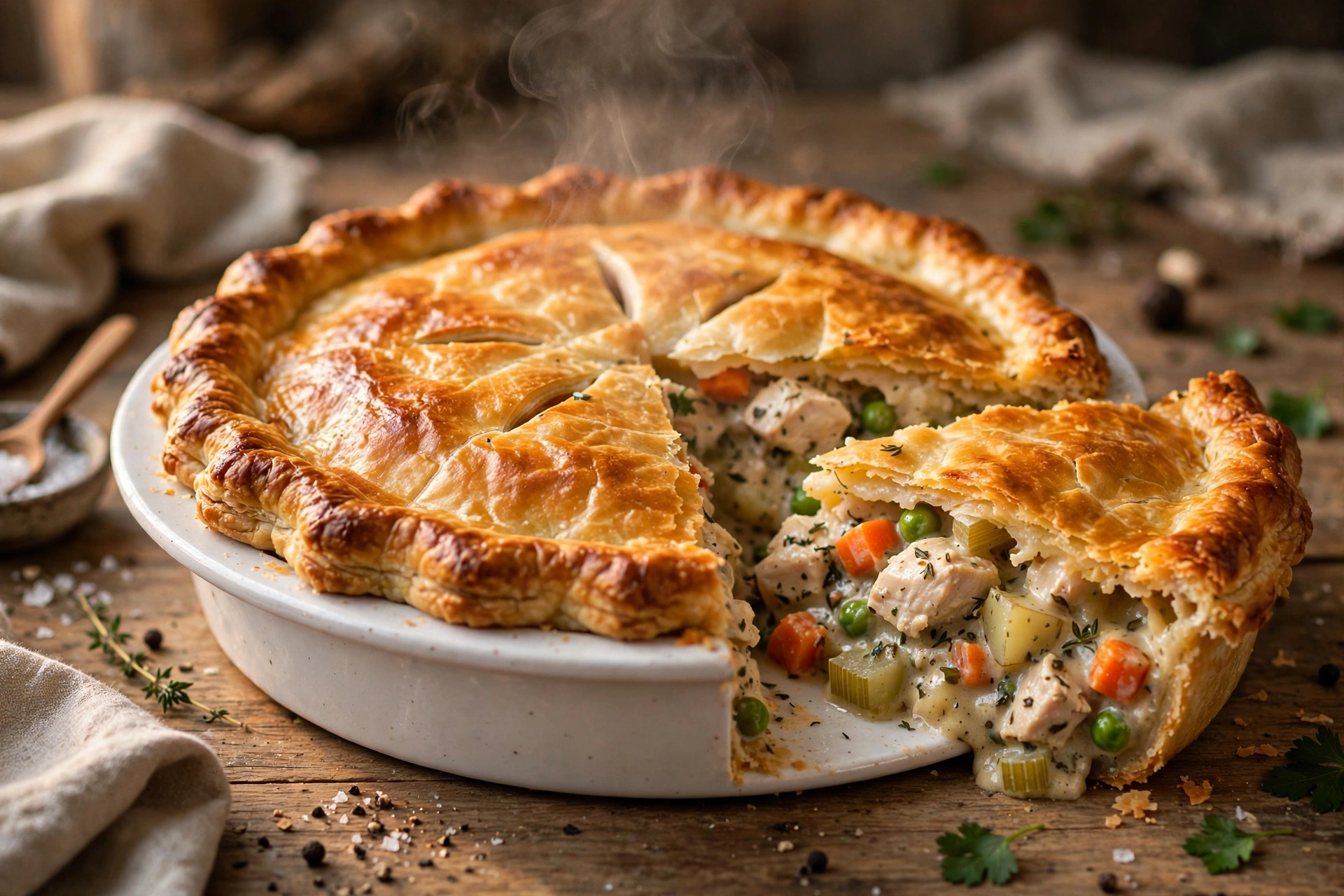
Easy chicken pot pie is a creamy chicken-and-vegetable filling tucked under a flaky golden crust. This version uses a simple homemade filling — cooked chicken, carrots, peas, celery, and onion in a savory gravy — topped with a store-bought or homemade pie crust. Bake at 425°F for 30 to 35 minutes until the crust is deep golden and the filling bubbles. It’s the ultimate comfort food dinner, ready in about an hour.
Why This Recipe Works
Most homemade pot pies suffer from one of two problems: a filling that’s too thin (so the bottom crust turns soggy) or a filling that’s bland. This recipe fixes both by building a proper roux-based gravy — butter, flour, and chicken broth cooked until genuinely thick before the cream goes in — and by seasoning aggressively with thyme, salt, and black pepper. Using pre-cooked chicken (rotisserie is perfect) keeps the whole thing weeknight-friendly, and baking the filling hot before the crust goes on guarantees a crisp bottom.
Ingredients
- 1/3 cup unsalted butter
- 1 medium yellow onion, diced
- 2 carrots, peeled and diced
- 2 celery stalks, diced
- 1/3 cup all-purpose flour
- 2 cups low-sodium chicken broth
- 1/2 cup heavy cream
- 3 cups cooked chicken, shredded or cubed (rotisserie works great)
- 1 cup frozen peas, thawed
- 1 teaspoon dried thyme
- 1 teaspoon kosher salt, plus more to taste
- 1/2 teaspoon black pepper
- 1 refrigerated pie crust (or homemade double crust)
- 1 large egg, beaten with 1 tablespoon water (egg wash)
Instructions
- Preheat. Heat the oven to 425°F. If using a bottom crust, fit one pie crust into a 9-inch deep-dish pie plate.
- Sauté the vegetables. Melt the butter in a large skillet or Dutch oven over medium heat. Add the onion, carrots, and celery. Cook, stirring occasionally, until the vegetables soften, about 8 minutes.
- Make the roux. Sprinkle the flour over the vegetables and stir constantly for 2 minutes. The flour should coat everything and lose its raw smell — this step prevents a pasty taste.
- Build the gravy. Slowly pour in the chicken broth while stirring. Bring to a simmer and cook, stirring, until the mixture thickens noticeably, about 3 to 4 minutes. It should coat the back of a spoon.
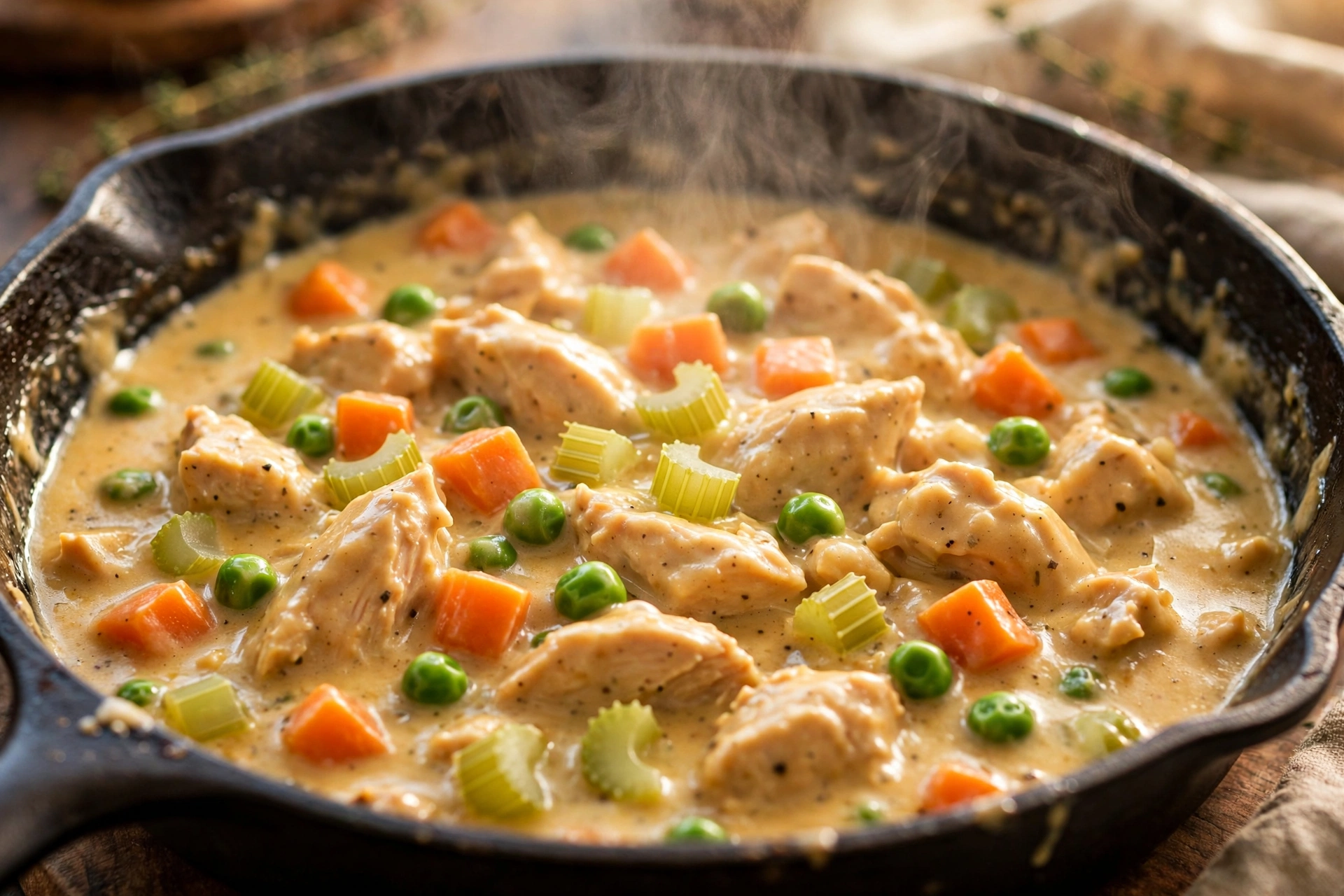
- Finish the filling. Stir in the heavy cream, cooked chicken, peas, thyme, salt, and pepper. Simmer 2 minutes more, then taste and adjust seasoning. The filling should be thick and well seasoned — remember it mellows under the crust.
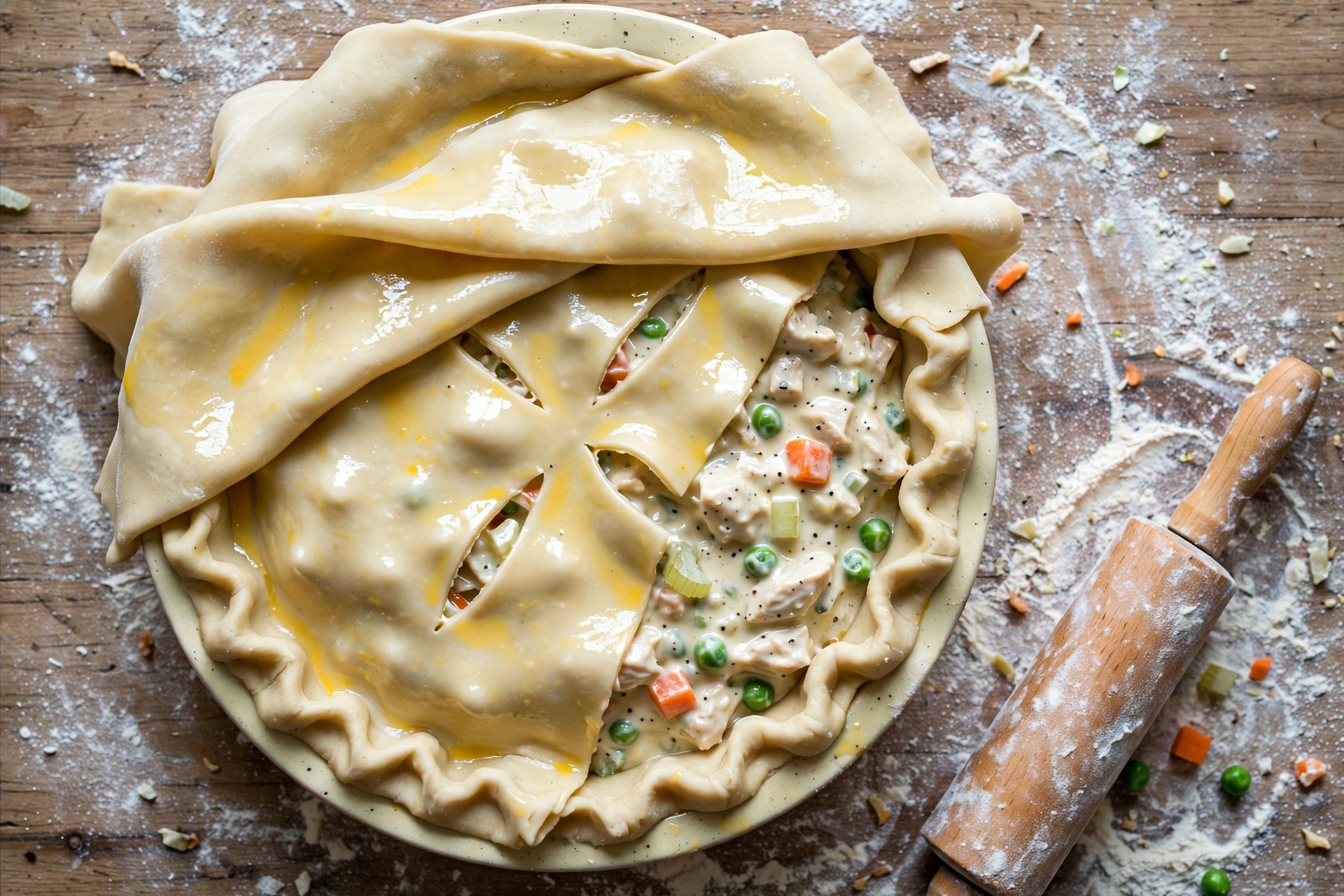
- Assemble. Pour the hot filling into the pie plate (over the bottom crust if using). Lay the top crust over the filling, trim the excess, and crimp the edges. Cut 3 to 4 slits in the top for steam to escape. Brush generously with egg wash.
- Bake. Bake for 30 to 35 minutes, until the crust is deep golden brown and the filling bubbles through the slits. If the edges brown too fast, shield them with strips of foil.
- Rest and serve. Let the pot pie cool for 10 minutes so the filling sets. Slice and serve warm.
Pro Tips
- Keep the filling thick. If your gravy looks thin on the stove, it will be soup under the crust. Simmer until it’s thicker than you think it needs to be.
- Use a deep-dish plate. A standard pie plate overflows; deep-dish gives the filling room to bubble safely.
- Egg wash matters. It gives the crust that glossy, bakery-style golden finish. Don’t skip it.
- Rotisserie chicken is your friend. One store rotisserie yields about 3 to 4 cups of meat — perfect for this recipe with zero extra cooking.
Variations
- Biscuit topping: Skip the pie crust and top with refrigerated biscuit dough for a quicker version.
- Turkey pot pie: Swap the chicken for leftover Thanksgiving turkey — a classic use-up.
- Puff pastry lid: Use a sheet of thawed puff pastry instead of pie crust for an extra-flaky top.
- Skillet pot pie: Make the filling in an oven-safe skillet and lay the crust right on top — no pie plate needed.
If you love cozy chicken dinners, don’t miss our slow cooker chicken and dumplings, one pan chicken and rice, and easy chicken tortilla soup.
Storage & Reheating
Refrigerate leftovers for up to 3 days. Reheat in a 350°F oven for 15 to 20 minutes to re-crisp the crust (the microwave makes it soggy). To freeze, assemble the unbaked pie, wrap tightly, and freeze up to 3 months; bake from frozen at 425°F for 50 to 60 minutes.
FAQ
Can I make chicken pot pie ahead of time?
Yes. Assemble the pie completely, cover, and refrigerate up to 24 hours before baking. Add 5 to 10 minutes to the bake time since it starts cold.
Why is my pot pie filling runny?
The gravy wasn’t thick enough before assembly. Make sure the flour-butter roux cooks fully and the broth simmers until it coats a spoon before you add the chicken.
Can I use frozen vegetables?
Absolutely — a bag of frozen mixed vegetables (peas, carrots, corn, green beans) works well. Thaw and drain them first so they don’t water down the filling.
Do I need a bottom crust?
It’s optional. A single top crust is easier and still delicious; a double crust is more traditional. If you skip the bottom crust, serve the filling in bowls with the baked top crust on the side.
Why the Filling Tastes Like Sunday
Pot pie fails in two predictable ways: soupy filling and bland filling. This recipe was built to defeat both.
The filling starts with a true roux, butter and flour cooked together for a full 2 minutes before any liquid arrives. That short cook does two jobs. It removes the raw, pasty taste flour can leave behind, and it sets up the flour to thicken properly so the broth gels into a real gravy instead of a sauce that collapses the moment you cut a slice.
Order matters too. The broth simmers until it genuinely coats a spoon before the cream and chicken go in, so the filling going into the dish is thicker than feels necessary on the stove. Under the crust, everything loosens slightly as the vegetables release moisture. That extra thickness? Exactly right at the table.
Assembling with hot filling is the quiet trick most recipes skip. The bottom crust starts cooking on contact instead of sitting raw under cold gravy, and the top crust gets a head start toward crisp. Finish with thyme, confident seasoning, and egg wash, and you get the deep flavor and shattering golden top this dish promises.
Ingredient Notes and Honest Swaps
Chicken: Rotisserie chicken is a weeknight hero here. One store bird gives you almost exactly the 3 cups you need, already seasoned and tender. Leftover roasted chicken or turkey works the same way. Starting raw? Poach 1 1/2 pounds of breast or thigh in the broth until just cooked, then use that same broth for the gravy.
Pie crust: A refrigerated store-bought crust, the kind sold in rolls and not frozen in a pan, gives a reliably flaky result. Puff pastry makes a dramatic, extra-crisp lid. For a homemade double crust, keep everything cold and rest the dough 30 minutes before rolling, or it will shrink in the oven.
Vegetables: Fresh carrots, celery, and onion build the best base, but a 12-ounce bag of frozen mixed vegetables is a completely respectable shortcut. Thaw and drain it well. Extra water will thin your gravy, guaranteed.
Cream: The 1/2 cup of heavy cream rounds out the gravy. Half-and-half works. Whole milk makes a thinner filling, so simmer it a minute longer. For dairy-free, use olive oil in place of butter, full-fat oat milk and a splash of coconut cream, and a dairy-free crust.
Gluten-free: Swap the flour for an equal amount of a 1:1 gluten-free blend in the roux, and use a gluten-free crust or go crustless with a biscuit-style topping made from the same blend.
Crust and Filling: Where to Be Careful
- Dice the vegetables small and even. Carrots cut to about 1/4 inch cook through in the 8-minute saute. Big chunks will still be crunchy after the bake, because the filling only simmers briefly.
- Cook the roux until it smells toasty. Two full minutes of stirring after the flour goes in. Pale, raw flour is the difference between silky gravy and library paste.
- Add broth in a slow stream, stirring the whole time. Dumping it in at once creates lumps that no amount of whisking fully rescues. Slow and steady gives you a smooth base.
- Season the filling boldly, then taste again. Flavors mute under pastry and in the oven. The filling should taste slightly too seasoned on the stove. It will be perfect on the plate.
- Cut real steam vents. Three or four slits, each about an inch long, let steam escape so pressure does not force filling out the seams and soak the crust.
- Shield the edges if needed. If the rim is deep golden by minute 20, lay strips of foil loosely over the edges so the center of the crust can catch up without burning.
- Rest the full 10 minutes. Cutting in too early floods the plate. The rest lets the gravy set into a sliceable, spoonable consistency.
Pot Pie Pitfalls
Thin gravy at assembly. If the filling pours like soup when it goes into the dish, it will be soup when you serve it. Simmer until it mounds slightly on a spoon before you assemble.
Skipping the egg wash. An unwashed crust bakes up pale and dull. One beaten egg with a spoonful of water gives you that glossy, deep-golden bakery finish for almost no effort.
Overfilling the dish. Filling bubbling over the rim glues the crust down and makes a mess in the oven. Fill to about 1/2 inch below the rim, and bake the pie on a sheet pan to catch drips.
Cold filling under the crust. Starting with refrigerated filling means the bottom crust steams instead of bakes. Always assemble with the filling hot off the stove.
Cutting vents that are too small. Tiny pinholes seal themselves shut as the crust puffs. Make honest slits so the steam has somewhere to go.
Variations for Different Tables
Biscuit-topped pot pie: Skip the pastry and arrange refrigerated biscuit dough over the hot filling, brushing the tops with melted butter. Bake until the biscuits are deep golden, about 5 extra minutes.
Skillet pot pie: Build the filling in a 10-inch cast iron skillet, lay a single crust over the top right in the pan, and bake. One less dish to wash, and the skillet keeps it bubbling at the table.
Beef and mushroom: Swap the chicken for leftover roast beef or browned stew meat, add 8 ounces of mushrooms with the vegetables, and use beef broth. Earthy, rich, and a wonderful change of pace.
Curried pot pie: Stir 1 tablespoon of curry powder into the roux, swap the thyme for a pinch of turmeric and cumin, and add a handful of golden raisins with the peas for a gentle sweet heat.
Storing and Reheating Pie
Leftover pot pie keeps, covered, in the fridge for up to 3 days. The crust softens as it sits, which is unavoidable, but the oven brings most of the crisp back: reheat slices or the whole dish at 350°F for 15 to 20 minutes until the filling bubbles at the edges. Skip the microwave for reheating unless you truly do not mind a soggy crust.
Pot pie freezes beautifully before baking. Assemble the pie in a freezer-safe dish, wrap it in two layers of plastic and one of foil, and freeze up to 3 months. Bake from frozen at 425°F for 50 to 60 minutes, covering loosely with foil if the crust browns before the center is hot. Baked leftovers can also be frozen for up to 2 months and reheated from frozen at 350°F for about 30 minutes.
On the Side of the Pie
Pot pie is rich, so serve it with things that are bright and crisp. A simple green salad with a sharp vinaigrette is the classic partner, and cranberry sauce on the side is a surprisingly perfect sweet-tart bite between forkfuls. Roasted green beans or a quick cucumber salad also work. For dessert, something light like baked apples keeps the comfort theme without weighing everyone down.
Pot Pie Questions, Continued
Can I make the filling a day early?
Yes, and it is a smart way to split the work. Make the filling, cool it, and refrigerate it in a covered container for up to 24 hours. When you are ready to bake, warm it on the stove until it is hot and just simmering, then assemble with the crust and bake as directed. Starting with hot filling keeps the bottom crust crisp.
Why does the bottom crust go soggy?
Usually the filling was too thin, went in cold, or the pie sat assembled too long before baking. Thicken the gravy well, assemble with hot filling, and get the pie straight into the oven. A deep-dish plate also helps by keeping the filling layer from overwhelming a standard shell.
Can I use rotisserie chicken and the juices from the container?
Absolutely. Shred the meat while it is warm, it comes off the bone much easier, and save any juices from the container. Stir those juices into the broth for extra flavor. Just reduce the added salt slightly, since rotisserie chicken is already seasoned.
How do I keep the filling from bubbling over?
Use a deep-dish 9-inch plate, fill it to about 1/2 inch below the rim, and always set the pie on a rimmed baking sheet before it goes in the oven. Proper steam vents also help by releasing pressure gradually instead of all at once through the seams.