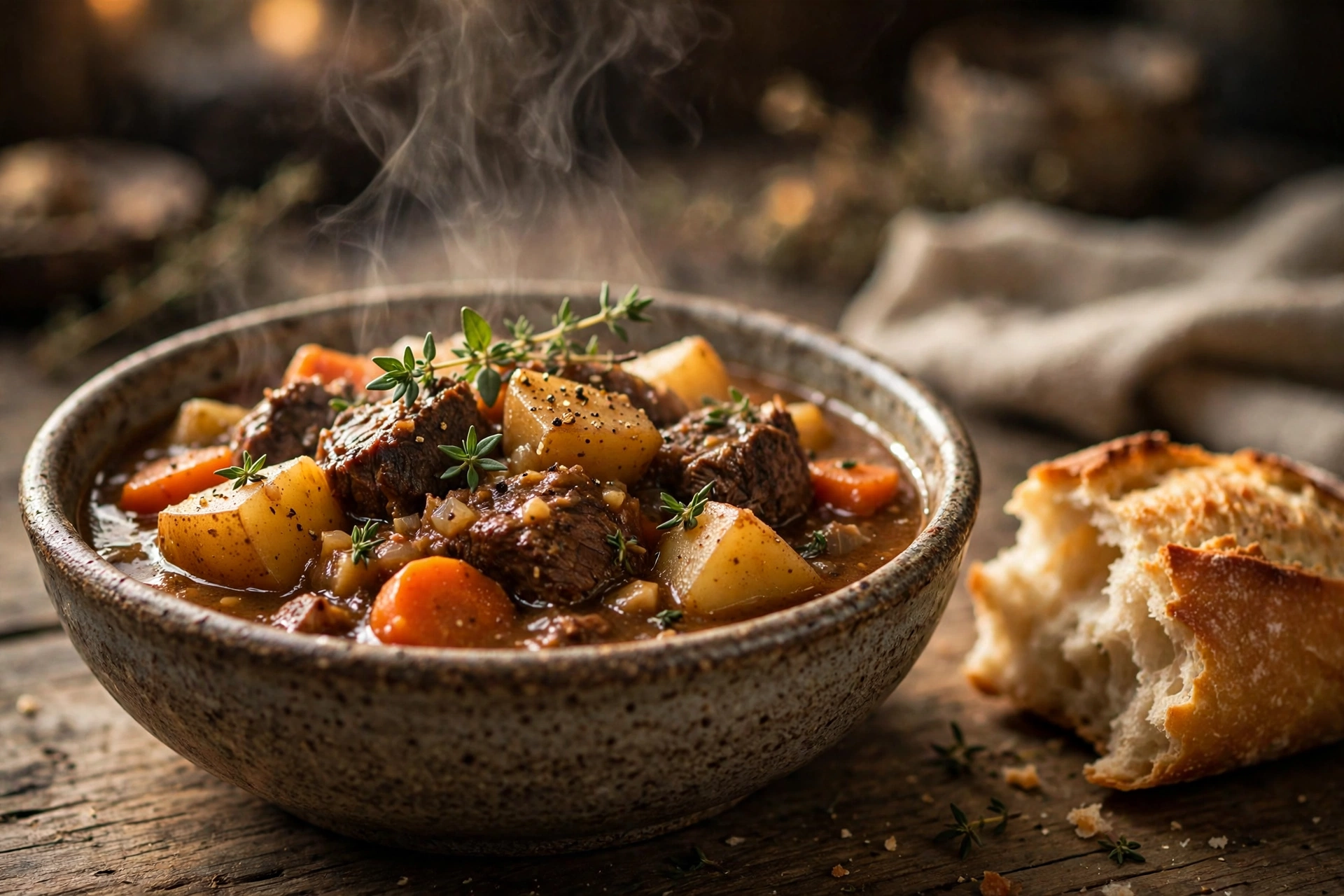
There is a particular smell that means fall has arrived in my house, and it is this stew. Onions and garlic softening in a skillet, beef browning in batches, thyme and bay leaf going into the slow cooker at seven in the morning. By five o’clock the whole house smells amazing, and the best part is the slow cooker did it all while you were at work.
I have been making beef stew for years, and I have tried every method: stovetop, oven, Dutch oven, pressure cooker. The slow cooker wins for one reason: time. Eight hours of gentle heat melts the tough connective tissue into gelatin, turning chewy chuck roast spoon-tender, while the broth thickens into a rich gravy you will want to mop up with bread.
This is the recipe I give people who say they cannot cook. If you can chop vegetables and brown meat, you can make this. Let me walk you through it, including the small steps that separate good stew from great stew.
Why You’ll Love This Recipe
The beef is the headline. After 7 to 8 hours on low, chuck roast surrenders completely, turning from a tough cut to meat so tender you can cut it with a spoon. This is what slow cooking was invented for.
The gravy is the second reason. Browning the beef first and deglazing the pan builds deep flavor, while a little flour at the start and an optional cornstarch slurry at the end give you a gravy that coats the spoon instead of a thin broth.
It is also the ultimate set-it-and-forget-it dinner. Twenty minutes of morning prep, then you walk away for eight hours and come home to dinner. On the coldest, darkest weeknights of the year, that feeling is priceless. This is comfort food in its purest form, and it anchors my whole collection of slow cooker recipes.
And it feeds a crowd or stocks your freezer. This recipe makes six generous servings, and the leftovers are somehow even better the next day. I always make the full batch.
Ingredients
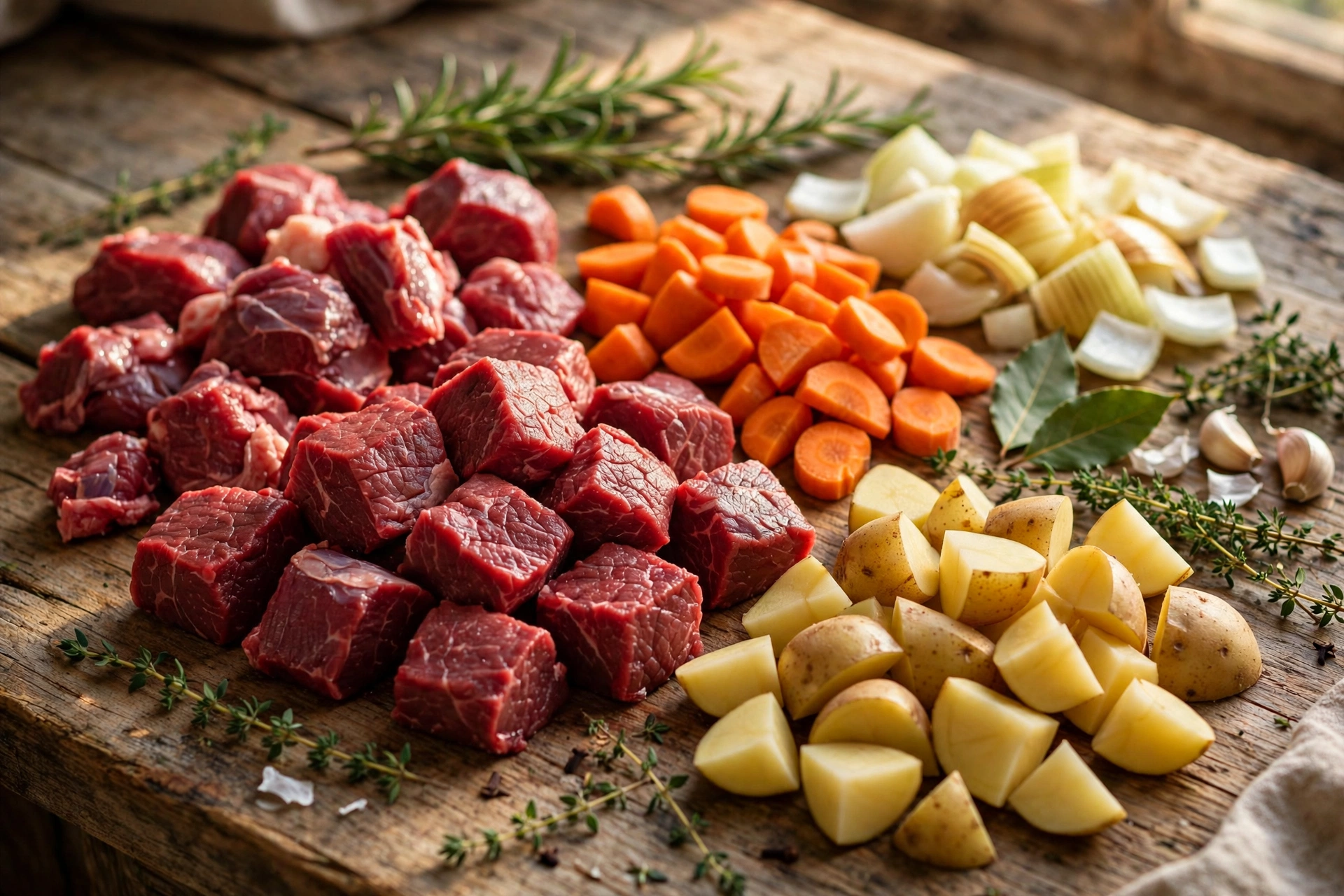
- 2.5 pounds beef chuck roast, cut into 1.5-inch cubes
- 1/3 cup all-purpose flour
- 1 teaspoon kosher salt, plus more to taste
- 1 teaspoon black pepper
- 3 tablespoons vegetable oil or olive oil, divided
- 1 large yellow onion, chopped
- 3 cloves garlic, minced
- 2 tablespoons tomato paste
- 4 cups beef broth (low-sodium preferred)
- 1 tablespoon Worcestershire sauce
- 1 teaspoon dried thyme
- 1 teaspoon dried rosemary, crushed
- 2 bay leaves
- 1.5 pounds baby potatoes, halved (or 3 large russets, cubed)
- 4 large carrots, peeled and cut into 1-inch pieces
- 2 stalks celery, sliced
- 1 cup frozen peas (optional, added at the end)
- 2 tablespoons cornstarch mixed with 2 tablespoons cold water (optional, for thicker gravy)
- Fresh parsley, chopped, for serving
A word on the beef: chuck roast is the cut you want. It is well-marbled with fat and connective tissue that breaks down over long cooking. Do not substitute lean stew meat; it comes out dry no matter how long it cooks. Buy a whole chuck roast and cube it yourself rather than pre-cut stew meat, which cooks unevenly.
For the potatoes, waxy baby potatoes hold their shape best over eight hours. If you use russets, cut them large and know they may soften more, which some people actually prefer because they thicken the stew. Carrots cut thick survive the long cook; thin coins turn to mush.
Step-by-Step Instructions
- Dredge the beef. Pat the beef cubes dry with paper towels. In a large bowl or zip-top bag, toss the beef with the flour, salt, and pepper until every piece is lightly coated. The flour does double duty: it helps the beef brown and it thickens the stew as it cooks.
- Brown in batches. Heat 2 tablespoons of oil in a large skillet over medium-high heat until shimmering. Brown the beef in two or three batches, 2 to 3 minutes per side, until deeply browned. Do not crowd the pan or the beef will steam instead of sear. Transfer each batch to the slow cooker.
- Soften the aromatics. In the same skillet, add the remaining tablespoon of oil if needed. Cook the onion for 3 to 4 minutes until softened, then add the garlic and tomato paste and cook 1 minute more, stirring constantly. The tomato paste should darken slightly, which deepens its flavor.
- Deglaze the pan. Pour in about a cup of the beef broth and scrape up every browned bit from the bottom of the skillet with a wooden spoon. Those browned bits are concentrated flavor, and leaving them behind is leaving taste on the table. Pour everything into the slow cooker.
- Load the slow cooker. Add the remaining beef broth, Worcestershire sauce, thyme, rosemary, and bay leaves to the slow cooker. Stir in the potatoes, carrots, and celery, pushing them down into the liquid. The ingredients should be mostly submerged; add a splash more broth if needed.
- Cook low and slow. Cover and cook on LOW for 7 to 8 hours, or on HIGH for 4 to 5 hours. Low is better. The gentler heat gives the connective tissue more time to break down, and the meat comes out noticeably more tender. Resist the urge to lift the lid; every peek adds 15 to 20 minutes to the cooking time.
- Finish the stew. In the last 30 minutes, stir in the frozen peas if using. If you want a thicker gravy, whisk the cornstarch slurry into the stew, turn the slow cooker to HIGH, and cook 20 to 30 minutes more until thickened. Fish out the bay leaves, taste, and adjust salt and pepper. The stew should be richly seasoned.
- Serve. Ladle into deep bowls, top with fresh parsley, and serve with crusty bread for mopping up the gravy.
From start to finish, your active time is about 20 to 25 minutes in the morning. The slow cooker does the remaining eight hours. Few dinner recipes give you this much return on so little effort.
Pro Tips
Do not skip the browning. I know it is tempting to dump everything in raw. The stew will still cook, but it will taste flat and one-dimensional compared to the browned version. Those 10 minutes of searing build the deep, savory foundation of the entire dish. This is the difference between good stew and great stew.
Cut everything large. This stew cooks for eight hours. Vegetables cut small disintegrate. Go big: 1.5-inch beef cubes, 1-inch carrot chunks, halved baby potatoes. They will be perfectly tender, not mushy, at the end.
Low beats high. If you have the time, always choose LOW. The slower, gentler cook produces more tender meat and better-developed flavor. HIGH works when you are in a pinch, but LOW is the gold standard.
Season at the end. Long cooking concentrates flavors as liquid evaporates, so stew that tastes perfectly seasoned at hour two can taste overseasoned at hour eight. Salt lightly at the start and adjust at the end when you can taste the finished dish.
Make it a day ahead. Beef stew is one of those magical dishes that tastes better the next day. The flavors meld overnight, the gravy thickens further, and reheating is effortless. If I am serving this for company, I always make it the day before.
Variations
Guinness Beef Stew: Replace 1.5 cups of the beef broth with a bottle of stout beer. The dark beer adds incredible malty depth. This is my St. Patrick’s Day version and it disappears every time.
Red Wine Stew: Replace 1 cup of broth with a dry red wine like Cabernet or Merlot, added during the deglazing step. The wine adds complexity and a beautiful color. Let it simmer in the skillet for 2 minutes to cook off the raw alcohol edge.
Root Vegetable Stew: Swap the potatoes for a mix of parsnips, turnips, and rutabaga cut into large chunks. Earthier, slightly sweeter, and wonderful in late fall.
Mushroom Beef Stew: Add 8 ounces of quartered cremini mushrooms with the vegetables and a teaspoon of soy sauce with the broth. The mushrooms add savory depth that makes the stew taste even meatier.
Storage & Reheating
Refrigerate leftover stew in airtight containers for up to 4 days. It reheats beautifully on the stovetop over medium-low heat, stirring occasionally, or in the microwave in 2-minute intervals. The gravy may thicken in the fridge; thin it with a splash of broth when reheating if needed.
This stew freezes exceptionally well, which makes it perfect for batch cooking. Cool completely, portion into freezer-safe containers or bags, and freeze for up to 3 months. Thaw overnight in the refrigerator before reheating. I always freeze at least two portions because future me is always grateful.
One note on freezing: potatoes can turn slightly grainy after thawing. The stew is still delicious, just hold back some potatoes if you want perfect texture.
FAQs
Why is my beef tough instead of tender?
It almost always needed more time, not less. Tough beef means the connective tissue has not finished breaking down, usually from cooking on HIGH or lifting the lid too often. Give it another hour or two on LOW. Also confirm you used chuck roast; lean cuts never get tender no matter how long they cook.
How do I thicken my beef stew?
You have three options. The flour dredge at the start provides baseline thickening. For a thicker gravy at the end, whisk 2 tablespoons of cornstarch with 2 tablespoons of cold water and stir it in, then cook on HIGH for 20 to 30 minutes. Or mash a few of the cooked potato pieces against the side of the slow cooker and stir them in; the starch thickens the stew naturally with no added ingredients.
Can I cook this on HIGH instead of LOW?
Yes. Cook on HIGH for 4 to 5 hours until the beef is tender. It will still be good. But LOW for 7 to 8 hours gives you more tender meat and deeper flavor, so choose LOW whenever your schedule allows. Avoid cooking longer than 9 to 10 hours even on LOW, as the vegetables will eventually break down too far.
Can I add the vegetables later so they don’t get mushy?
You can add the vegetables after 4 to 5 hours for firmer results, but cut large as directed, they hold up fine for the full cook time. The whole point of this recipe is walking away for the day, so I add everything at the start.
This is my go-to stew when the weather turns. Find more cozy ideas in my slow cooker recipes, and read the story behind this blog on my about page.
—