Five ingredients. No added liquid. A stick of butter sitting right on top of a chuck roast like it owns the place. The first look at this recipe makes most people pause, and honestly, that reaction makes sense. It reads wrong. It cooks right.
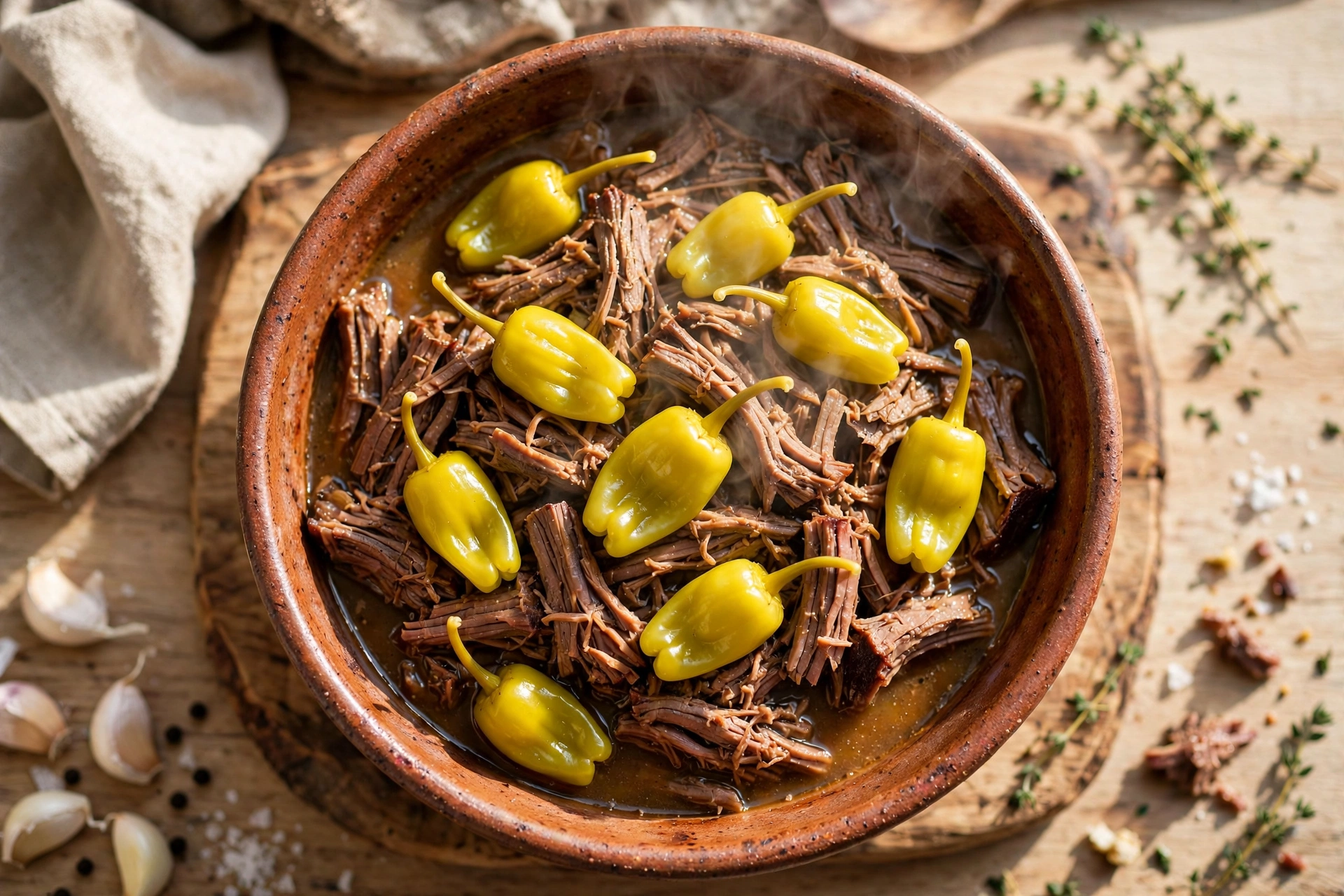
Set it up in the morning and the slow cooker does the slow, quiet work all day. By late afternoon the house smells savory and a little tangy, the kind of smell that drifts into other rooms and makes people ask what time dinner is. The meat comes out soft enough to pull apart with a spoon. Not stringy. Not dry. Just tender, peppery at the edges, and rich from its own juices. In our kitchen we keep coming back to it on packed weeks because there is almost nothing to get wrong, and that is rare for something that tastes like it took real effort.
Five Ingredients, Zero Fuss
Chuck roast earns its place here. It has marbling running through it and plenty of connective tissue, and over a long, gentle cook that tissue melts down into gelatin. That is where the silky texture comes from. A lean cut in the same pot for the same hours would tighten up and dry out, no matter how good the seasoning is.
The two packets do concentrated work. Ranch seasoning and au jus mix bring salt, dried herbs, garlic, and deep beefy flavor in a small amount, so the whole surface of the roast gets seasoned without measuring out eight little jars. The butter melts slowly over the top and bastes as it goes, carrying seasoning down into the cracks. Then the pepperoncini step in. They add acid, and a long braise needs acid, otherwise all that richness sits heavy after three bites. A splash of brine sharpens everything just enough. And no, you do not need to add water or broth. The roast releases plenty of liquid on its own, and cooking in that concentrated juice is exactly why the flavor lands so deep.
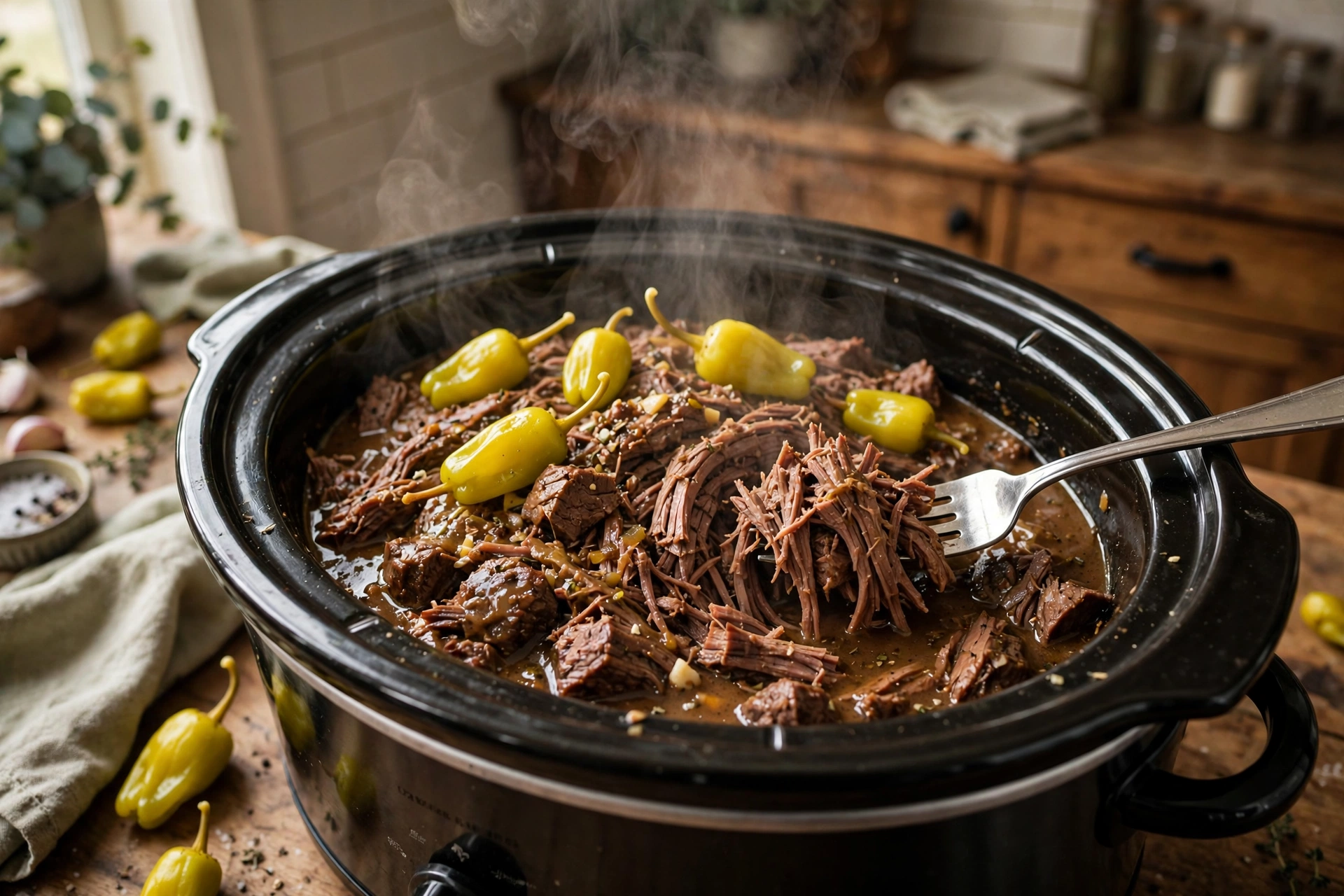
What You Need and Why
That is the whole list. Short enough to memorize, and most of it waits in the pantry without going bad.
- 1 beef chuck roast, 3 to 4 pounds
- 1 packet (1 ounce) ranch seasoning mix
- 1 packet (1 ounce) au jus gravy mix
- 1 stick (1/2 cup) unsalted butter
- 6 to 8 whole pepperoncini peppers, plus 1/4 cup of the brine from the jar
A few notes before you shop. Pick a roast with marbling you can actually see and a fairly even thickness, so one end does not finish an hour before the other. Found a bigger one? Fine. Just plan on adding an hour. Any brand of ranch or au jus packet works here, so buy what is on the shelf. Unsalted butter is the smarter pick because the packets already bring a lot of salt, and you can always add more at the end. You cannot take it back out. Whole pepperoncini give tang and gentle warmth, not real heat, since the seeds stay tucked inside. Worried about spice? Do not be. The brine is technically optional. We would not skip it. It is a small amount and it wakes the whole pot up. Kosher salt and black pepper for the meat itself are the only extras worth reaching for.
Into the Slow Cooker
- Pull the chuck roast out of the refrigerator 20 to 30 minutes before cooking so the center is not ice cold. Pat it dry all over with paper towels, then give it a light sprinkle of salt and black pepper on every side.
- Set the roast in the bottom of a 6-quart slow cooker. If one side has a thick fat cap, put that side up so it bastes the meat as it slowly melts.
- Pour the 1/4 cup of pepperoncini brine around the roast. Scatter the ranch seasoning evenly across the top, then scatter the au jus mix the same way, covering the surface as well as you can.
- Set the stick of butter right in the center of the roast. Arrange the pepperoncini peppers on top and tucked around the sides.
- Put the lid on and cook on LOW for 8 hours, or on HIGH for 4 to 5 hours. Leave the lid alone while it cooks. Every peek lets heat escape and adds time back on.
- You will know it is done when the meat shreds with gentle pressure from a fork. If it fights back, it is not ruined and it is not tough. It is just not finished yet. Give it another 30 to 45 minutes and test again.
- Move the roast to a cutting board or platter and shred it into large chunks with two forks, pulling out and discarding any big pieces of fat. Skim fat off the surface of the cooking liquid if you want a cleaner finish.
- Return the shredded beef to the slow cooker and toss it through the juices. Let it sit on warm for 10 to 15 minutes so the meat soaks the flavor back in, then taste and adjust the salt.
- Serve hot over mashed potatoes, egg noodles, or rice, with plenty of the juices spooned over the top and a pepper or two on each plate.
Small Choices, Better Roast
- Low and slow wins. High works when the day gets away from you, but 8 hours on low gives noticeably more tender meat. If the schedule allows it, choose low.
- Sear it if you have time. Browning the roast in a hot skillet with a little oil for 4 minutes per side before it goes into the cooker builds a deeper, beefier crust. Not required. Worth it on a weekend.
- Skip the water. It feels wrong the first time. Trust it anyway. The roast makes more than enough liquid, and extra water only thins out the flavor that makes this dish what it is.
- Shred, then soak. Always toss the shredded meat back through the cooking liquid before serving. Roast that looks dry is usually just roast that got plated too soon.
- Watch packet sizes. Most ranch and au jus packets run around 1 ounce. If you end up with a larger family-size packet, use roughly the same 2 to 3 tablespoons or the finished roast can turn too salty.
Ways People Make It Their Own
The method travels well to other proteins. Swap the chuck for 3 pounds of boneless, skinless chicken thighs and cook on low for 4 to 5 hours, and the same five-ingredient setup works without any fuss. Pork shoulder stands in for the beef with no other changes, cooked on low for 9 hours, and it shreds beautifully. Want actual heat this time? Use sliced pepperoncini instead of whole ones and add a pinch of red pepper flakes, so the seeds and brine spread through the meat instead of staying in one spot. To stretch the meal further, slide baby potatoes and thick carrot chunks under the roast for the last 4 hours on low. They cook in the juices and come out deeply flavored. In summer, banana pepper rings work in place of the pepperoncini and give a similar tang with a fresher, brighter bite. None of these changes break the recipe. That is kind of the point.
Leftovers That Are Almost Better
Store leftovers in their cooking juices in an airtight container in the refrigerator for up to 4 days. Day two might honestly taste better than day one, once everything has had a night to settle together. The beef freezes very well too. Portion it into freezer bags with some of the juices, press out the air, and freeze for up to 3 months. Thaw overnight in the refrigerator before reheating. To reheat, warm it gently in a covered saucepan over low heat with a splash of water or broth until steaming, about 10 minutes, or let the slow cooker handle it on low for an hour. For a single serving, the microwave works fine at 50 percent power, which warms the meat through without tightening it up. Pile leftovers onto sandwiches, tuck them into quesadillas, or serve them over fresh rice and nobody will treat it like a repeat dinner.
Pot Roast Questions
Is Mississippi pot roast spicy? No, not in the way most people mean spicy. Whole pepperoncini bring tang and mild warmth rather than real heat, because the seeds stay inside the peppers. If you want heat, switch to sliced peppers so the seeds and brine spread through the meat.
Can I use a frozen roast? Better not. A frozen roast spends too long in the temperature danger zone while it thaws in the cooker, and it cooks unevenly on top of that. Thaw it fully in the refrigerator overnight for the best and safest result.
My gravy is thin. How do I thicken it? Ladle a cup of the hot cooking liquid into a small saucepan, whisk in 1 tablespoon of cornstarch mixed with 1 tablespoon of cold water, and simmer for a minute until glossy. Pour it back over the shredded beef and toss everything together.
Can I make this in the oven instead? Yes. Use a heavy Dutch oven with a tight lid and cook at 300 degrees F for 3 to 3 1/2 hours, checking at the 3 hour mark. The method and ingredients stay exactly the same, and the result is nearly identical.
The Numbers
- Prep time: 5 minutes
- Cook time: 8 hours on low
- Total time: 8 hours 5 minutes
- Servings: 8
- Calories: 480 per serving (estimated)