The Short Answer
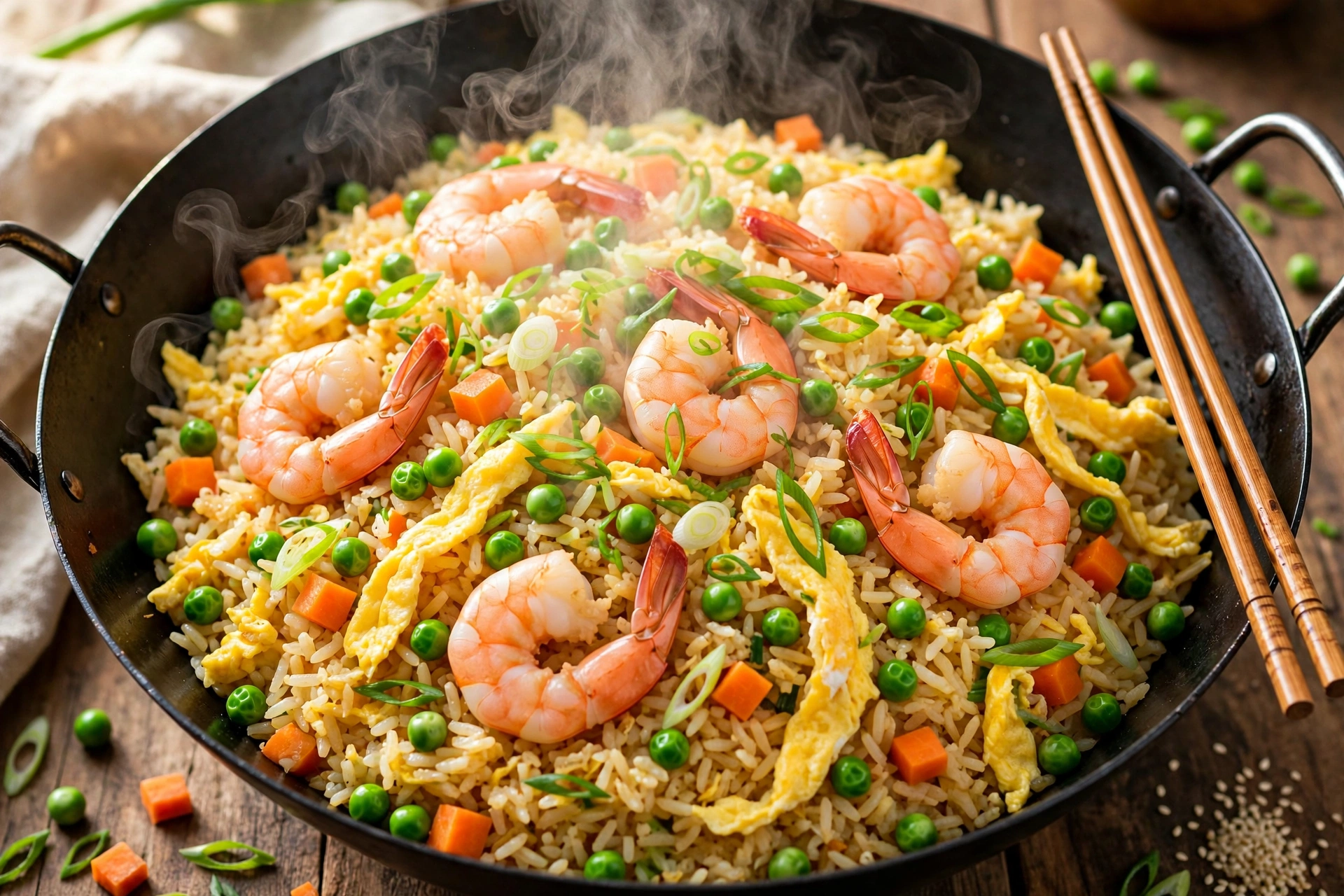
Shrimp fried rice beats takeout when you use day-old cold rice, a screaming-hot pan, and cook in stages. Toss juicy shrimp with fluffy rice, peas, carrots, scallions, and egg in a savory soy-sesame sauce — all in one pan in about 20 minutes. The secret is high heat and not crowding the pan, which gives you separate, chewy grains instead of mush.
Why This Recipe Works
Takeout fried rice works because restaurant woks run blazing hot. At home, the trick is mimicking that with a large skillet or wok over the highest heat your stove allows, plus cold leftover rice — fresh rice is too moist and steams instead of fries. Cooking the shrimp first and setting it aside keeps it juicy instead of rubbery, and scrambling the egg separately gives you distinct ribbons rather than a gluey coating. The sauce is simple — soy sauce, sesame oil, and a touch of oyster sauce — because fried rice should taste like rice, not like a sauce delivery vehicle.
Ingredients
- 1 pound large shrimp, peeled and deveined (tails off)
- 1/2 teaspoon kosher salt, divided
- 1/4 teaspoon black pepper
- 3 tablespoons neutral oil (avocado or vegetable), divided
- 4 cups cooked long-grain white rice, day-old and refrigerated
- 3 large eggs, beaten
- 1 cup frozen peas and carrots, thawed
- 4 scallions, sliced (whites and greens separated)
- 3 cloves garlic, minced
- 1 tablespoon grated fresh ginger
- 3 tablespoons low-sodium soy sauce
- 1 tablespoon oyster sauce
- 1 teaspoon toasted sesame oil
- 1/2 teaspoon sugar
- Sriracha or chili crisp, for serving (optional)
Instructions
- Season the shrimp. Pat the shrimp very dry with paper towels — moisture is the enemy of a good sear. Toss with 1/4 teaspoon salt and the black pepper.
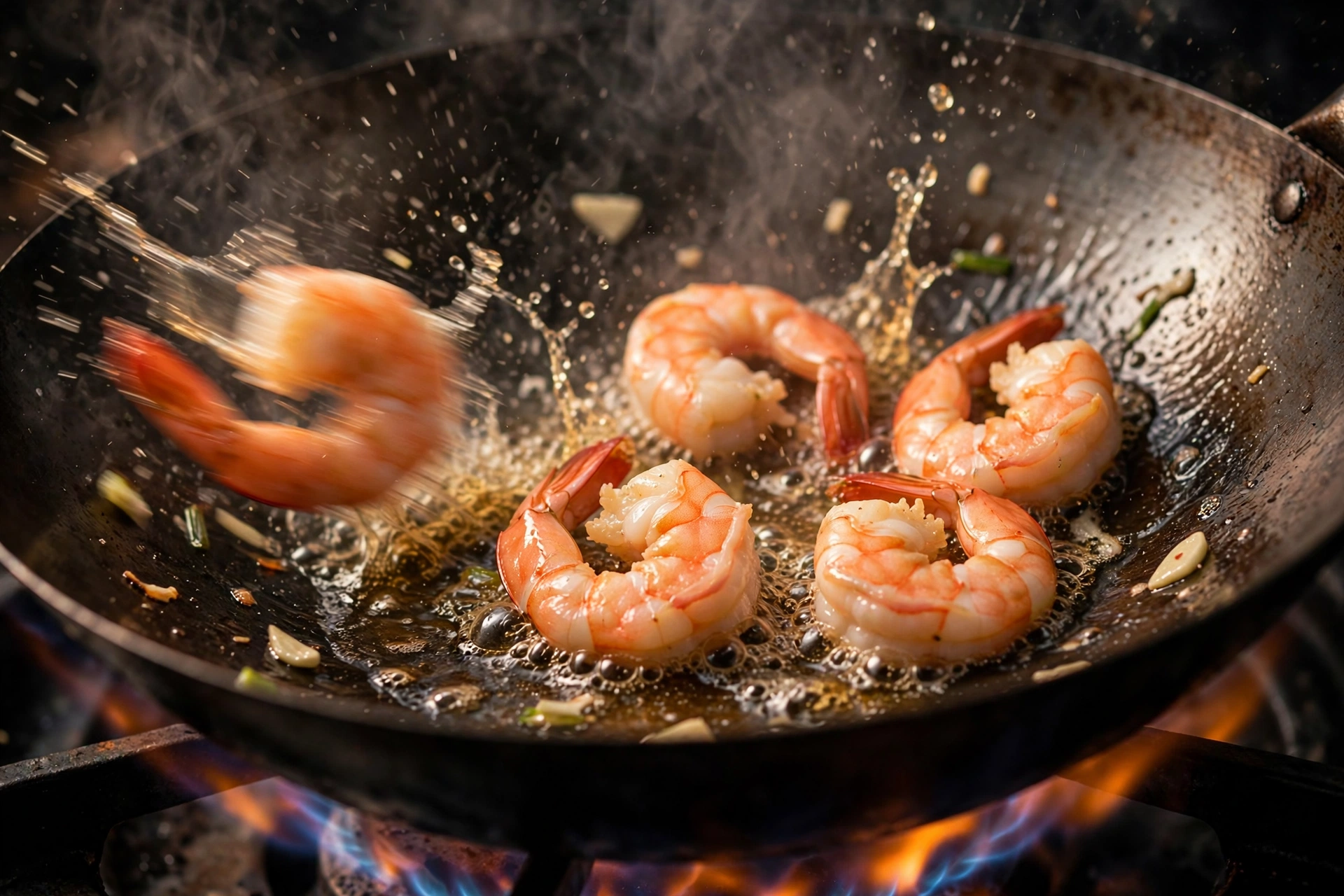
- Sear the shrimp. Heat 1 tablespoon oil in a large skillet or wok over high heat until shimmering. Add the shrimp in a single layer and cook 1 to 2 minutes per side, just until pink and curled. Transfer to a plate immediately — they will finish in the residual heat.
- Scramble the eggs. Add another 1/2 tablespoon oil to the pan. Pour in the beaten eggs and scramble quickly, breaking into small curds, about 1 minute. Transfer to the plate with the shrimp.
- Fry the rice. Add the remaining 1 1/2 tablespoons oil. Add the cold rice, breaking up any clumps with your hands or a spatula first. Spread it in an even layer and let it sit undisturbed for 1 to 2 minutes so the bottom crisps. Then stir-fry for 3 to 4 minutes until the grains are separate and lightly golden in spots.
- Add aromatics and veggies. Push the rice to the sides. Add the scallion whites, garlic, and ginger to the center and stir-fry 30 seconds until fragrant. Add the peas and carrots and toss everything together for 2 minutes.
- Sauce it. In a small bowl, whisk the soy sauce, oyster sauce, sesame oil, sugar, and remaining 1/4 teaspoon salt. Pour over the rice and toss to coat every grain evenly.
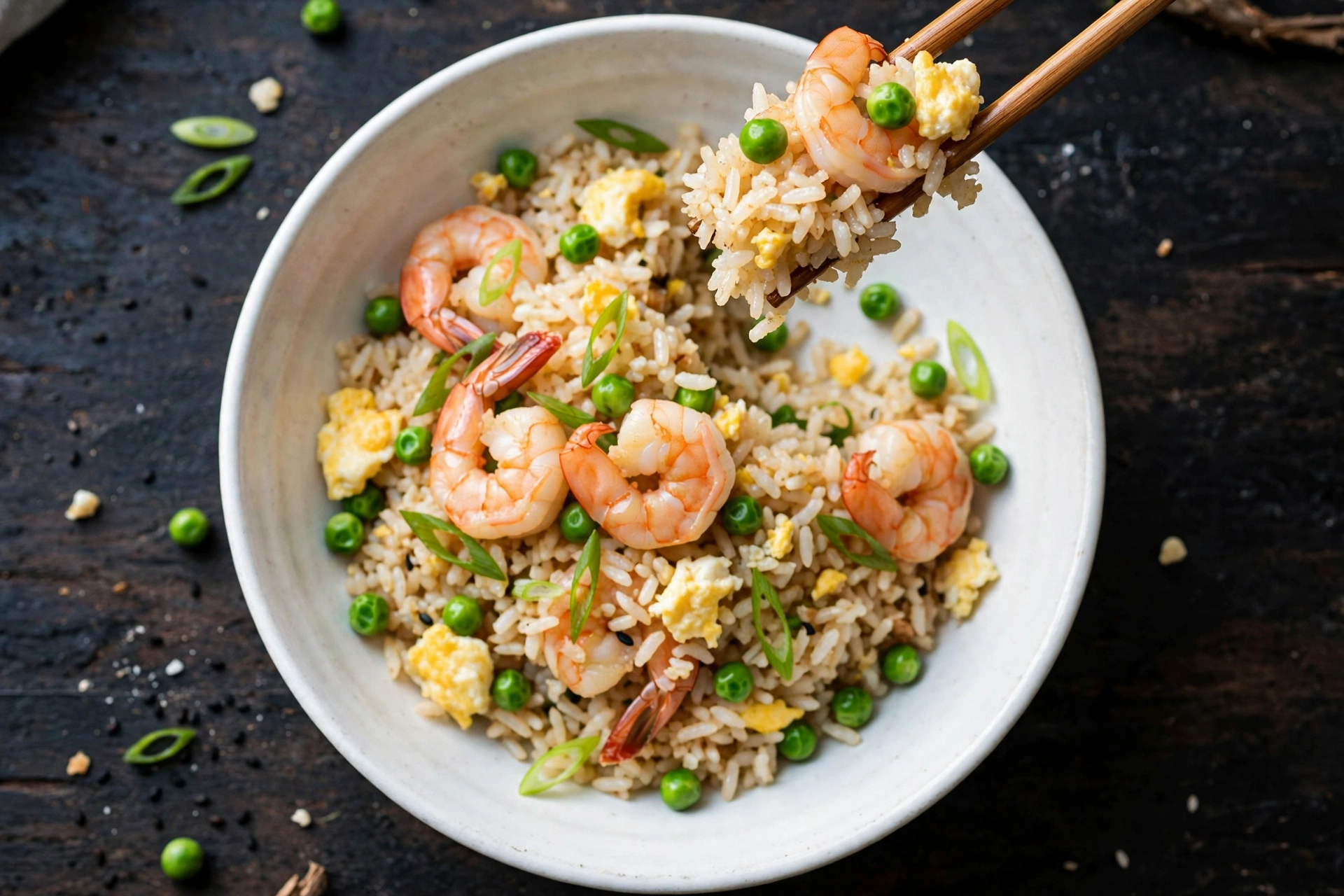
- Combine. Return the shrimp and eggs to the pan. Toss for 1 to 2 minutes until everything is hot. Shower with scallion greens.
- Serve. Dish up immediately, with sriracha or chili crisp on the side for heat lovers.
Pro Tips
- Day-old rice is mandatory. Refrigerated leftover rice dries out just enough to fry instead of steam. In a pinch, spread fresh rice on a sheet pan and refrigerate uncovered for 1 hour.
- Don’t crowd the pan. If your skillet is small, fry the rice in two batches. Crowding drops the temperature and you get steamed mush.
- High heat, constant motion — mostly. Let the rice sit to crisp, but keep aromatics moving so the garlic doesn’t burn.
- Taste before serving. Soy sauces vary in saltiness. Add the sauce, toss, taste, and adjust.
Variations
- Chicken fried rice: Swap the shrimp for 1 pound of diced chicken breast or thigh; cook through before the rice. For another quick chicken dinner, try our Cottage Cheese Alfredo Pasta.
- Veggie fried rice: Skip the shrimp, double the peas and carrots, and add diced bell pepper and edamame. For a hearty vegetarian bake, try our Easy Baked Ziti with Ricotta.
- Pineapple fried rice: Add 1 cup of diced fresh pineapple with the veggies for a sweet-savory twist.
- Kimchi fried rice: Stir in 1 cup of chopped kimchi with the rice and top with a fried egg.
Storage & Reheating
Refrigerate leftovers in an airtight container for up to 3 days. Reheat in a hot skillet with a splash of water or broth — the microwave works but the skillet restores the texture. Freezing is not recommended; the rice turns grainy and the shrimp get rubbery.
FAQ
Can I use freshly cooked rice?
It’s not ideal, but you can make it work: spread the hot rice on a sheet pan in a thin layer and refrigerate uncovered for at least 1 hour (or freeze for 20 minutes) to dry it out.
Why is my fried rice mushy?
Three usual culprits: the rice was fresh/wet, the pan was overcrowded, or the heat was too low. Cold rice, a big hot pan, and cooking in batches fix all three.
What soy sauce is best?
Low-sodium soy sauce gives you control over salt. Avoid dark soy sauce here — it’s too intense and will turn the rice muddy brown.
Can I make it gluten-free?
Yes — swap the soy sauce for tamari and check that your oyster sauce is gluten-free (or use a GF hoisin).
Why Day-Old Rice Wins
Fried rice lives or dies on water. Not sauce. Water.
Fresh rice is still steamy inside, and the second it hits a hot pan, that moisture turns to steam. You end up with clumps. Gummy ones. Day-old rice from the fridge is different because the outside of every grain has dried out, so in the pan it actually fries. The grains stay apart, with a little chew and crisp edges. That one swap matters more than anything you pour over the top.
Heat matters too, and so does elbow room. Get a wide pan as hot as your stove will go and you are close to what a restaurant wok does. Then cook in stages. Shrimp first. Eggs second. Rice last. If you dump everything in together, the temperature crashes and nothing browns properly. Give each bit its own minute against the hot metal and it shows.
The sauce stays small on purpose. Soy for salt and color. Oyster sauce for depth. Sesame oil just for aroma, plus a pinch of sugar. Fried rice should still taste like rice first, and a heavy hand buries that fast.
Ingredient Notes for the Wok
Shrimp: Go large if you can, around 21 to 25 per pound, because they have that clean snap when you bite them. Peeled, deveined, tails off is easiest, so nothing slows you down once the pan is hot. Frozen shrimp are fine. Thaw them in cold water for 15 minutes, then dry them like you mean it. Wet shrimp will not sear, they will just sit there and steam. If yours are small, cut the time down to about a minute per side.
Rice: Long-grain white or jasmine is what works best in our kitchen. Brown rice can work too, it just needs an extra minute in the pan and a splash more sauce to keep up. Whatever you pick, it has to be cold. At least a day old, or spread out and dried the way the recipe describes. Warm rice? Enemy number one.
Soy sauce: We keep low-sodium at home. Fried rice concentrates as it cooks, so regular soy can get salty in a hurry and leave you with no way back. Need it gluten-free? Tamari swaps in one-for-one. Coconut aminos work too, just add an extra pinch of salt at the end.
Oyster sauce: This is where the depth comes from, that slightly sweet, deeply savory thing soy alone cannot do. The vegetarian kind made from mushrooms is genuinely good, not a sad substitute, and it keeps the dish shellfish-free apart from the shrimp itself. Hoisin will do in a pinch, but it is sweeter, so skip the pinch of sugar if you use it.
Oil: You want something neutral that can take the heat. Avocado, grapeseed, plain vegetable oil, any of those. Save toasted sesame oil for the sauce only. If you try to fry with it at this heat, it burns and turns bitter.
The Order Matters: Cooking Notes
- Break up the rice before the pan. Cold rice sets into a solid brick. Crumble it with damp hands over the container first, otherwise you will spend your pan time prying apart lumps instead of actually frying anything.
- Listen for it. The oil should shimmer. The rice should crackle the second it lands. If you hear silence, the pan is not ready. Wait another 30 seconds. Forcing it never helps.
- Leave the rice alone for a minute or two. This is the hard part. Do not stir. That pause is how you get those crisp, golden patches underneath. Crisp first. Toss second.
- Keep garlic and ginger moving. Over this kind of heat they scorch in seconds. Clear a little space in the middle of the pan and stir constantly for about 30 seconds. That is plenty.
- Put the sauce on the pan, not just the rice. Splash it around the hot edges so it sizzles and caramelizes a bit as it coats the grains. That tiny bit of char is exactly the flavor people chase from takeout.
- Taste before the scallion greens go on. Soy brands vary a lot on salt. Fix it now with a pinch of salt or a few drops more soy, not at the table.
Fried Rice Mistakes
Starting with fresh, warm rice. This is the main reason home fried rice turns mushy. Forgot to plan ahead? Spread fresh rice thin on a sheet pan and refrigerate it uncovered for an hour, or put it in the freezer for 20 minutes. Not perfect, but close enough to save dinner.
Piling everything in at once. One big dump can drop the pan temperature by hundreds of degrees. Then everything steams in its own juices. Cook in stages, and if your pan is under 12 inches, fry the rice in two batches instead of crowding it.
Leaving the shrimp too long. Shrimp go from juicy to rubber bands in about 60 seconds, which is annoyingly fast. Pull them the moment they curl into a loose C and turn pink. They will finish when they go back in at the end.
Pouring on too much sauce. More sauce does not mean more flavor here. It means wet, salty rice. Three tablespoons of soy for 4 cups of rice is the right neighborhood to start from.
Skipping the drying step. Wet shrimp. Frosty vegetables straight from the bag. Damp rice. Every extra drop of water fights your sear, so pat things dry, drain them, let them sit a minute before anything cooks.
Variations From the Fridge
Spicy garlic shrimp fried rice: Add 4 extra garlic cloves and 1 to 2 teaspoons of chili crisp with the aromatics, then drizzle a little more chili crisp over the top at the table. This is the version we come back to most.
Hawaiian style: Stir in a cup of diced fresh pineapple and a handful of diced ham along with the peas and carrots. Sweet and salty at the same time, and very hard to stop eating once you start.
Cauliflower rice version: Swap the rice for a 20-ounce bag of cauliflower rice, thawed and squeezed dry in a clean towel. Fry it 1 minute less than regular rice. Dinner lands lighter, still filling.
XO and scallop upgrade: Replace half the shrimp with dry-packed sea scallops, seared hard so they actually brown, and stir a tablespoon of XO sauce into the sauce mix. That one is for a special-occasion bowl, not a Tuesday.
Storing and Reheating Rice Safely
Leftovers go into a shallow airtight container and should be eaten within 3 days. Cool the rice and get it into the fridge within an hour of cooking, and only reheat it once, until it is steaming hot all the way through.
The skillet is the reheat method that actually works. Hot pan, a teaspoon of oil, a splash of water, toss for 3 to 4 minutes. The water makes just enough steam to soften the grains without turning them soggy. The microwave is fine for a work lunch, 2 minutes with a damp paper towel over the bowl, but the texture will be softer. We would not freeze the finished dish. Thawed shrimp go rubbery and the rice turns grainy. Freeze plain cooked rice in flat bags instead, then make the fried rice fresh in 15 minutes.
What Else Goes on the Table
This is a full meal by itself, so anything alongside it should stay light and fresh. A quick cucumber salad with rice vinegar and sesame is perfect. So is plain steamed edamame with flaky salt. For a bigger spread, start with egg drop soup and put some garlicky green beans on the side. To drink, a cold lager or iced jasmine tea is exactly right, especially if you went with the chili crisp.
Fried Rice Questions, Continued
Can I use shrimp that are already cooked?
You can, but handle them gently. Thaw them, dry them well, and skip the searing step completely. Add them only for the final toss, about 1 minute at the end, just long enough to heat through. Cooked shrimp that sit in a hot pan for extra minutes turn tough and chalky fast, so less time really is everything here.
I do not have a wok. What pan should I use?
A large cast iron or stainless steel skillet, 12 inches or wider, is a great stand-in. On a lot of home stoves it is honestly better than a wok because it holds heat when the cold rice hits it. Try to avoid nonstick if you can. Most nonstick coatings are not rated for the screaming-hot temperatures this recipe wants, and you will not get the same crisp.
Why does my rice keep sticking?
Usually the pan was not hot enough when the rice went in, or there was not enough oil. Let the pan heat until the oil shimmers, spread the rice in an even layer, and give it that full undisturbed minute. Rice lets go much more easily once a light crust has formed. Stir it too early and it clings.
Can I throw in other vegetables?
Of course. This recipe is built for clean-out-the-fridge cooking. Diced bell pepper, corn, edamame, bean sprouts, shredded cabbage, all of them work. Keep the total added vegetables to about 2 cups so the pan stays hot. Sturdy vegetables go in with the rice. Delicate ones, like sprouts, go in during the final minute so they do not disappear.