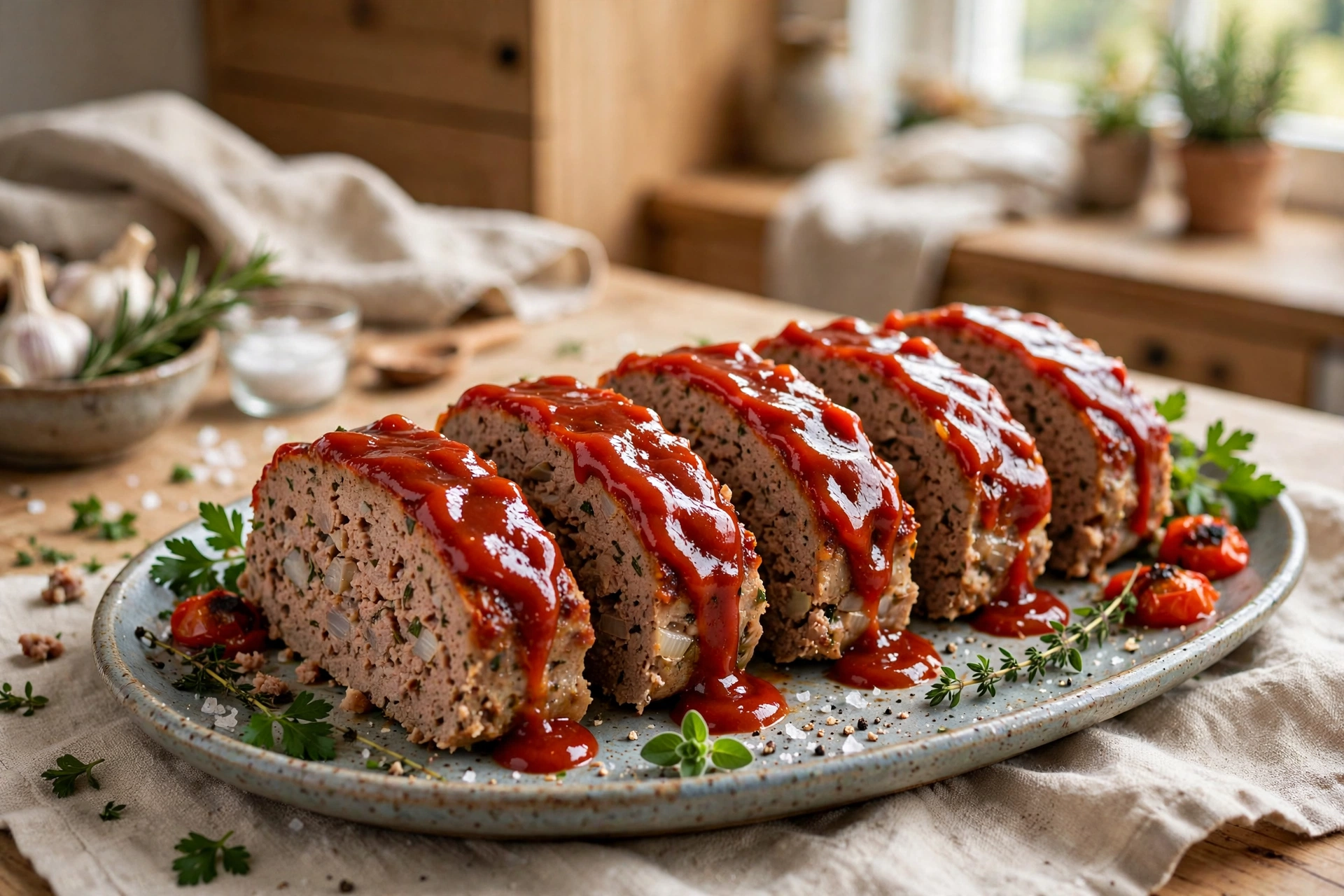
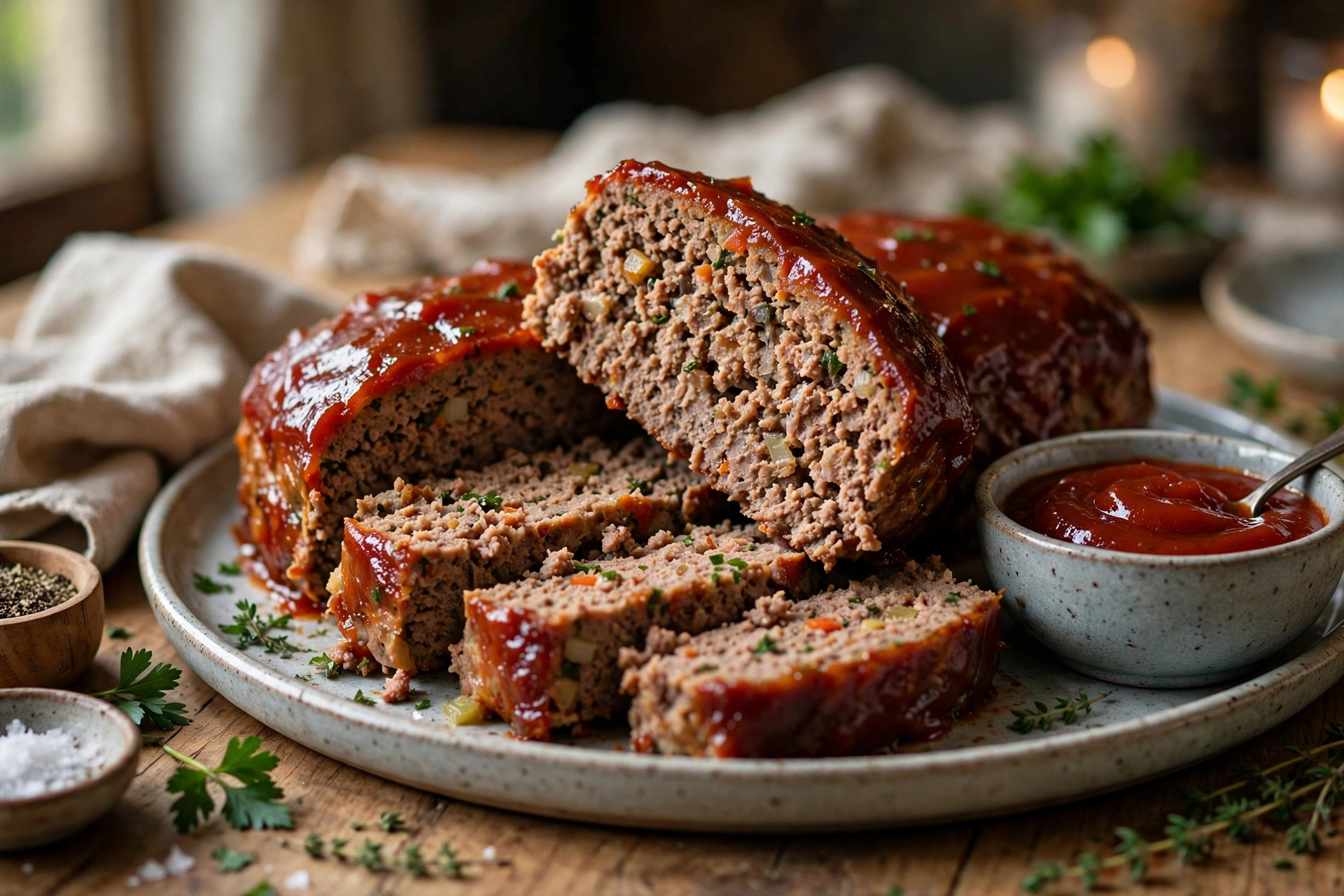
Meatloaf gets eye rolls until it is done right. Then the table goes quiet for the first few bites. The good version has a shiny, tangy glaze, slices that hold together on the plate, and an interior that still cuts soft, almost like butter. The bad version? Dense. Dry. More doorstop than dinner. In our kitchen the difference came down to a few small habits that are easy to miss: the right breadcrumb mixture, a gentler hand when mixing, and a glaze that goes on in two layers so it turns sticky instead of sliding off. That is this recipe. Humble food, yes, but the kind of humble that feels generous. And if you have leftovers, you have got the best sandwich of your week waiting in the fridge. Cold slice, toasted bread, a little extra glaze. Hard to beat.
Why This Meatloaf Holds Together
Dryness is the enemy here, and this recipe fights it in three places. First, the panade. That is just a simple paste of breadcrumbs and milk mixed into the meat, but those soaked crumbs hold moisture inside the loaf as it bakes and keep the texture tender instead of dense. Second, the mixing itself. Use a light hand, just until everything comes together. Overwork ground beef and you develop the proteins, and you get a bouncy, tight loaf. Not what we want. Third, fat ratio matters. 80/20 ground beef has enough fat to baste the loaf from the inside as it cooks, so it stays moist without tasting greasy. The glaze helps in a different way. It goes on twice, once halfway through baking and once near the end, so it sets into a sticky, caramelized layer instead of one thick coat that stays gummy. Resting counts too. Let the loaf sit before slicing and the juices redistribute, which is why patient cooks get clean, moist slices and rushed cooks get a puddle on the cutting board.
Everything That Goes Into It
Nothing fancy here, just the classic lineup. The list is split into the loaf and the glaze so you can shop at a glance.
- 2 pounds ground beef (80/20)
- 1 cup plain breadcrumbs or panko
- 1/2 cup whole milk
- 1 small yellow onion, finely diced
- 2 cloves garlic, minced
- 2 large eggs, lightly beaten
- 2 tablespoons Worcestershire sauce
- 1 tablespoon ketchup
- 1 1/2 teaspoons kosher salt
- 1/2 teaspoon black pepper
- 1 teaspoon dried parsley
- 1/2 cup ketchup (for the glaze)
- 2 tablespoons brown sugar (for the glaze)
- 1 tablespoon apple cider vinegar (for the glaze)
- 1 teaspoon yellow mustard (for the glaze)
A few notes from our kitchen. Dice the onion very fine, almost to a mince, so it melts into the loaf. Big chunks stay crunchy and can push slices apart, which is annoying when you are trying to get a clean cut. If raw onion bothers you, saute it in a teaspoon of oil for 4 minutes first and let it cool before it goes in. Ground turkey can replace half the beef for a lighter loaf, but keep at least half 80/20 beef for moisture. For a gluten-free loaf, use certified gluten-free breadcrumbs or an equal amount of quick oats. Whole milk makes the tenderest panade, though 2 percent works in a pinch if that is what you have.
Mixing, Shaping, Baking
- Heat the oven to 350 degrees F. Line a rimmed baking sheet with parchment paper, or lightly grease a 9 by 5 inch loaf pan. Set a rack in the center of the oven.
- In a large mixing bowl, stir the breadcrumbs and milk together and let them sit for 5 minutes. The crumbs should drink up the milk and turn into a soft, thick paste. This is the panade, and it is the moisture insurance for the whole loaf.
- Add the onion, garlic, eggs, Worcestershire sauce, ketchup, salt, pepper, and parsley to the bowl and stir to combine. Then add the ground beef.
- Mix with your hands just until everything is evenly combined, about 30 seconds of gentle folding. Stop as soon as you no longer see streaks of breadcrumb. Overmixing is the one mistake that makes meatloaf tough, so err on the side of stopping early.
- Turn the mixture onto the prepared baking sheet and shape it with damp hands into a loaf about 9 inches long and 4 inches wide, with slightly rounded edges. If using a loaf pan, press the mixture in gently without packing it down hard.
- Bake for 40 minutes. While it bakes, whisk together the glaze ingredients: ketchup, brown sugar, vinegar, and mustard.
- Pull the loaf out and spread half the glaze over the top and sides with the back of a spoon. Return it to the oven for 15 minutes.
- Spread the remaining glaze over the top and bake 10 to 15 minutes more, until the glaze looks set and shiny and an instant-read thermometer in the center reads 160 degrees F.
- Rest the meatloaf on the counter for at least 10 minutes before slicing. This step is not optional if you want clean slices that stay juicy. Slice thick, about 3/4 inch, and serve warm.
Where Meatloaf Usually Goes Wrong
- Free-form beats the loaf pan. Baking on a sheet pan gives the loaf more surface area for glaze and lets excess fat run away, so the edges caramelize instead of stewing.
- Keep your hands light. Mix like you are folding a blanket, not kneading bread. The less you handle the beef, the more tender the crumb of the finished loaf.
- Test the seasoning. Fry a teaspoon of the mixture in a small skillet and taste it before shaping. It is your only chance to fix salt and pepper for the whole loaf.
- Use the thermometer. Color lies with meatloaf. Pull it at 160 degrees F, rest it, and it will be cooked through and still moist.
- Slice with a serrated knife. A gentle sawing motion keeps thick slices neat instead of tearing them the way a straight blade can.
Make It Yours
For a barbecue version, swap the glaze for 1/2 cup of your favorite barbecue sauce plus a tablespoon of brown sugar. An Italian style loaf uses Italian seasoned breadcrumbs, a teaspoon of Italian seasoning in the mix, and marinara in place of the glaze, finished with mozzarella in the last 5 minutes so it melts and bubbles. Mini meatloaves bake beautifully in a muffin tin: divide the mixture among 12 cups and bake about 25 minutes total, glazing at the 15 minute mark. For a turkey meatloaf, use all ground turkey, add a tablespoon of olive oil to the mix, and pull it at 165 degrees F. Leftover slices reheat into wonderful sandwiches on toasted white bread with extra glaze, which, honestly, might be half the reason to make a full loaf in the first place.
Freezing and Leftovers
Cool leftovers, wrap tightly, and refrigerate for up to 4 days. Meatloaf freezes very well: wrap individual slices in plastic wrap, then in a freezer bag, and freeze up to 3 months. Thaw overnight in the refrigerator. To reheat, place slices in a covered baking dish with a spoonful of water and warm at 325 degrees F for about 15 minutes, until hot in the center. A quick sear in a skillet also works and crisps the edges nicely. Cold slices straight from the fridge make the classic next-day sandwich, no reheating required. One caution: once the raw mixture has been thawed, do not refreeze it. If you want a spare loaf in the freezer, shape and freeze it before baking, then thaw and bake it fresh. A frozen baked loaf reheats best when sliced first, so the heat reaches the center quickly and evenly instead of drying out the edges while the middle stays cold.
Meatloaf Questions
Why did my meatloaf fall apart?
Usually it was sliced too soon, or the mixture was too wet or too dry. Resting a full 10 minutes lets the loaf set so it slices cleanly. Also make sure the eggs and panade are in there doing their binding work, and shape the loaf firmly, without big air pockets hiding inside.
Can I make meatloaf ahead of time?
Yes, this is a great make-ahead dinner. Shape the raw loaf, cover it tightly, and refrigerate up to 24 hours. Add 5 to 10 minutes to the bake time since it starts cold. You can also freeze the shaped raw loaf for up to 3 months and thaw it in the fridge overnight before baking.
Should I use a loaf pan or a baking sheet?
A baking sheet gives you caramelized edges and lets the fat drain away, but a loaf pan gives you uniform sandwich slices and keeps the loaf extra moist. Both work with this recipe and the same timing. If you use a pan, pour off the fat before the final glaze so it can set properly.
How do I keep meatloaf moist?
Start with 80/20 beef, do not skip the panade, mix gently, and pull the loaf at 160 degrees F rather than baking it into the 170s. Those four habits fix nearly every dry meatloaf problem. Resting matters here as well: a loaf sliced the second it leaves the oven spills its juices onto the cutting board no matter how carefully you built it, so give it the full ten minutes.
Recipe Card
- Prep time: 15 minutes
- Cook time: 60 minutes
- Total time: 75 minutes
- Servings: 6
- Calories: 430 estimated