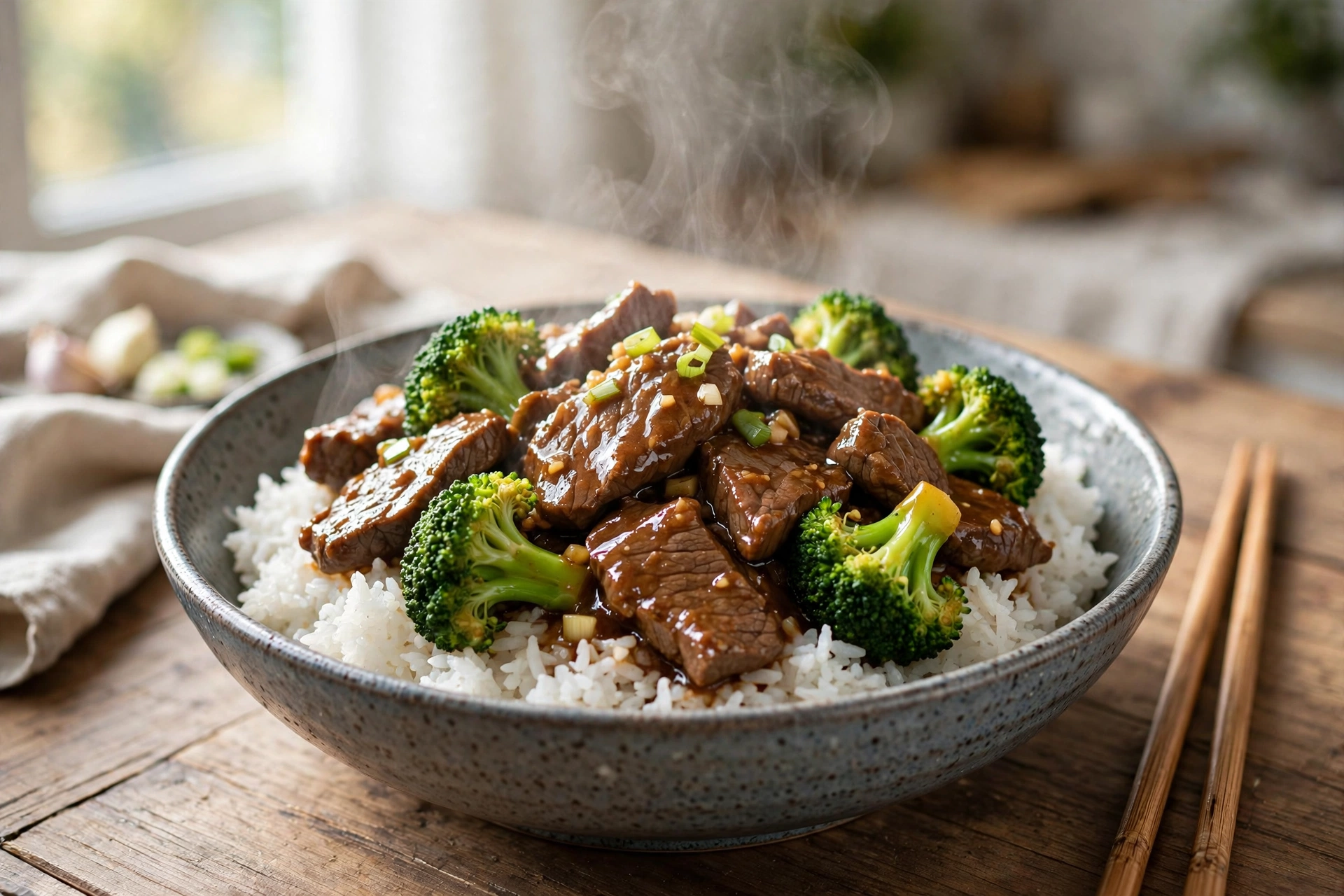
Takeout beef and broccoli has a very specific promise. Tender beef. Bright broccoli. A dark, glossy sauce that coats the rice underneath. At home, that promise is easy to miss by just a little. The beef chews. The sauce runs thin. The broccoli goes from crisp to tired while you are still looking for the serving spoon.
This version closes those gaps. It is fast, yes, about the time a delivery would take, but speed is not the point on its own. The point is the sear, that browned edge on the beef, and a sauce that actually clings. In our kitchen we make it on busy weeknights because everything can be prepped in bowls before the pan gets hot. After that? It moves. And then it is done.
Better Than the Takeout Box
Tenderness is the whole fight with stir-fried beef, and most of it is decided before any heat is involved.
Slice thin. Slice against the grain. That one habit shortens the muscle fibers so each bite chews easily instead of fighting back. Look for the long lines running through the steak and cut across them. It feels fussy the first time. By the third time it is just how you slice steak.
The marinade helps in a different way. Cornstarch coats each slice lightly and protects it from fierce pan heat. The texture comes out silky in that familiar restaurant way, smooth with browned edges. The broccoli gets its own head start: 1 minute in boiling water. That sets the green color and takes off the raw crunch, then it finishes in the sauce.
Beef cooks in two batches for a reason. A crowded pan drops in temperature and steams. An uncrowded pan stays screaming hot and browns. And the sauce is balanced on purpose, salty soy and oyster sauce against a little brown sugar, with beef broth to round it out, thickened by the cornstarch already on the beef.
The Lineup
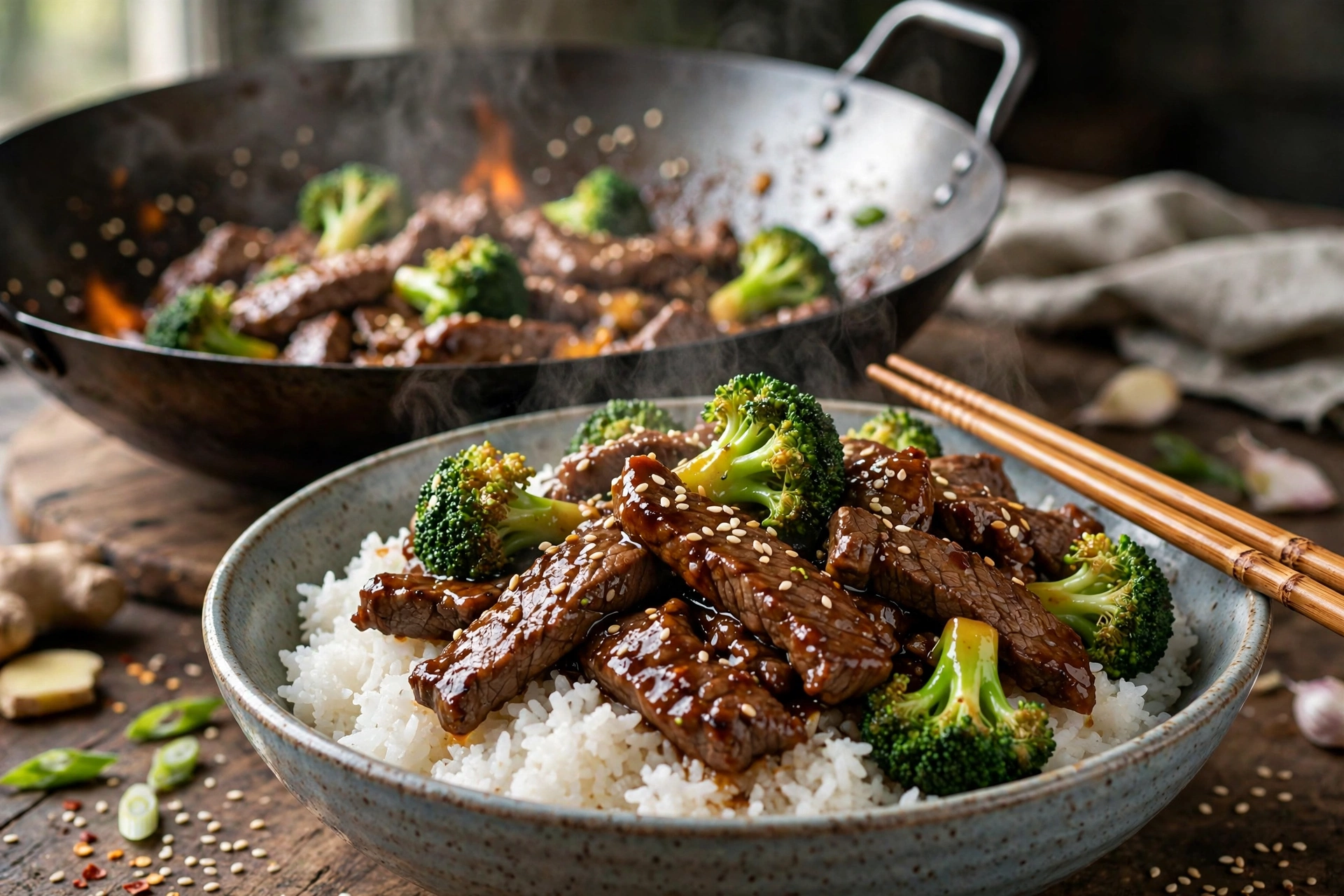
Flank steak is the first choice here, and everything else is a short list of stir fry staples that keep well in the pantry.
- 1 pound flank steak, sliced thin against the grain
- 1 tablespoon cornstarch
- 3 tablespoons low-sodium soy sauce, divided
- 1 teaspoon sesame oil, plus 1 teaspoon for finishing
- 4 cups broccoli florets (about 1 large head)
- 2 tablespoons vegetable oil, divided
- 3 cloves garlic, minced
- 1 teaspoon grated fresh ginger
- 1/3 cup low-sodium beef broth
- 2 tablespoons oyster sauce
- 1 tablespoon brown sugar
- Cooked white rice, for serving
- 1 teaspoon sesame seeds (optional)
Sirloin works in place of flank. So does skirt steak. Slice either one the same way, thin and against the grain. A small trick helps a lot: pop the steak in the freezer for 20 minutes before slicing. It firms up enough that a sharp knife can cut truly thin pieces.
Tamari swaps in for soy sauce one for one if you cook gluten-free, and coconut aminos work too, with a pinch of extra salt at the end. Fresh ginger is worth using. Jarred is fine in a pinch. Dried ginger powder is not a good stand-in; in a fast sauce it can taste dusty.
Frozen broccoli can be used if that is what you have. Add it straight to the pan later and expect a softer result. Fresh gives the crisp-tender bite. Frozen gives convenience.
Stir-Fry, Step by Step
- In a medium bowl, toss the sliced beef with the cornstarch, 1 tablespoon of the soy sauce, and 1 teaspoon of the sesame oil until every piece is lightly coated. Let it marinate on the counter for 15 minutes while you prep the rest.
- Whisk the remaining 2 tablespoons of soy sauce with the beef broth, oyster sauce, and brown sugar in a small bowl until the sugar dissolves. Set the sauce near the stove, because once the pan is hot there is no time to go looking for it.
- Bring a pot of water to a boil and add the broccoli for exactly 1 minute. Drain it right away. This quick blanch sets the bright green color and takes the raw edge off, and the broccoli will finish in the sauce later.
- Heat 1 tablespoon of the vegetable oil in a large skillet or wok over high heat until it shimmers and just begins to smoke. Add half the beef in a single layer and let it sear undisturbed for 1 minute, then stir fry 1 to 2 minutes more until browned. Transfer to a plate and repeat with the remaining oil and beef.
- Reduce the heat to medium-high. Add the garlic and ginger to the same pan and stir for 15 seconds, just until fragrant. Work fast, because minced garlic burns in a hot wok if you look away.
- Add the blanched broccoli to the pan and toss for 1 minute so it picks up the garlicky oil and finishes cooking to crisp-tender.
- Return the beef and all its juices to the pan. Give the sauce one more whisk and pour it in. Stir fry for 1 to 2 minutes, until the sauce thickens to a glossy coating that clings to every piece.
- Take the pan off the heat and drizzle with the remaining teaspoon of sesame oil. Serve immediately over hot rice, sprinkled with sesame seeds if you like.
The Rules of a Good Stir-Fry
- Prep everything first. Stir fry waits for no one. Meat marinated, sauce whisked, broccoli blanched, and garlic minced before the pan heats is the difference between calm and chaos. Once the oil shimmers, there is no pause button.
- Slice against the grain. Look for the long lines running through the steak and cut across them, not along them. This one knife habit matters more than the cut of beef you buy. More than the pan, honestly.
- Do not crowd the pan. Two batches of beef brown properly. One big pile steams in its own juices and turns gray. It is worth the extra three minutes, every single time.
- Keep the heat high. A properly hot pan gives you those browned, slightly crisp edges. A lukewarm pan gives you boiled meat. You can hear the difference, too. You want a loud, steady sizzle, not a quiet simmer.
- Sugar balances salt. If your sauce tastes flat or harsh, it is usually the tablespoon of brown sugar doing quiet work in the background that fixes it. Do not skip it. It does not make the dish sweet, it makes it round.
Change the Protein, Change the Veg
For a chicken version, use boneless skinless chicken thighs sliced thin, with the same marinade and timing, cooked through to 165 degrees F. Thighs stay juicy under high heat. The sauce stays exactly the same.
A mixed vegetable version is a great fridge cleanout. Add sliced bell pepper, snap peas, or mushrooms with the broccoli, keeping the total vegetables near 5 cups so the pan stays hot. Go much beyond that and you are back to steaming.
For heat, whisk 1 teaspoon of chili crisp or a pinch of red pepper flakes into the sauce. To keep it low carb, serve over cauliflower rice or in lettuce cups. And for a sweeter glaze, bump the brown sugar to 2 tablespoons and add a splash of the broccoli blanching water to loosen the sauce.
Rice, Storage, and Round Two
Store leftovers in an airtight container in the refrigerator for up to 3 days, separate from the rice if you can so the rice does not drink the sauce. Reheat in a hot skillet over medium-high heat for 2 to 3 minutes, just until steaming. That brings back a little of the sear.
The microwave works at full power for about 2 minutes, though the broccoli softens more. Skillet for texture, microwave for speed.
The finished dish freezes for up to 2 months, with the understanding that the broccoli will be softer after thawing. The sauce itself freezes beautifully on its own if you ever want a head start.
Stir-Fry Questions
What cut of beef is best for stir fry?
Flank steak is the top pick for its big beefy flavor and the way it slices into wide, thin strips. Sirloin is a close second and often cheaper, and skirt steak is wonderful if you slice it carefully against its very visible grain. Avoid stew meat, which is cut for long cooking and stays chewy in a fast stir fry no matter how hot the pan is.
Why is my stir fry beef tough?
Nine times out of ten it was sliced with the grain, cut too thick, or crowded into the pan so it steamed. Slice thin across the grain, freeze the steak 20 minutes first for easier cutting, and cook in two batches over high heat. The cornstarch marinade also matters more than people expect. Skip it and the difference shows.
Can I use frozen broccoli?
Yes. Skip the blanching step and add the frozen florets straight to the pan after the garlic and ginger, giving them 2 to 3 minutes. They release a little water, so let it cook off before adding the beef back, or the sauce will thin out. The texture will be softer than fresh, but the flavor is still great.
How do I make this gluten-free?
Swap the soy sauce for tamari or certified gluten-free soy sauce, and check your oyster sauce label, since some brands contain wheat; there are good gluten-free oyster sauces at most large grocery stores now. Everything else in the recipe is naturally gluten-free, including the cornstarch coating.
Quick Facts
- Prep time: 15 minutes
- Cook time: 10 minutes
- Total time: 40 minutes, including marinating
- Servings: 4
- Calories: 380 estimated