
The Short Answer
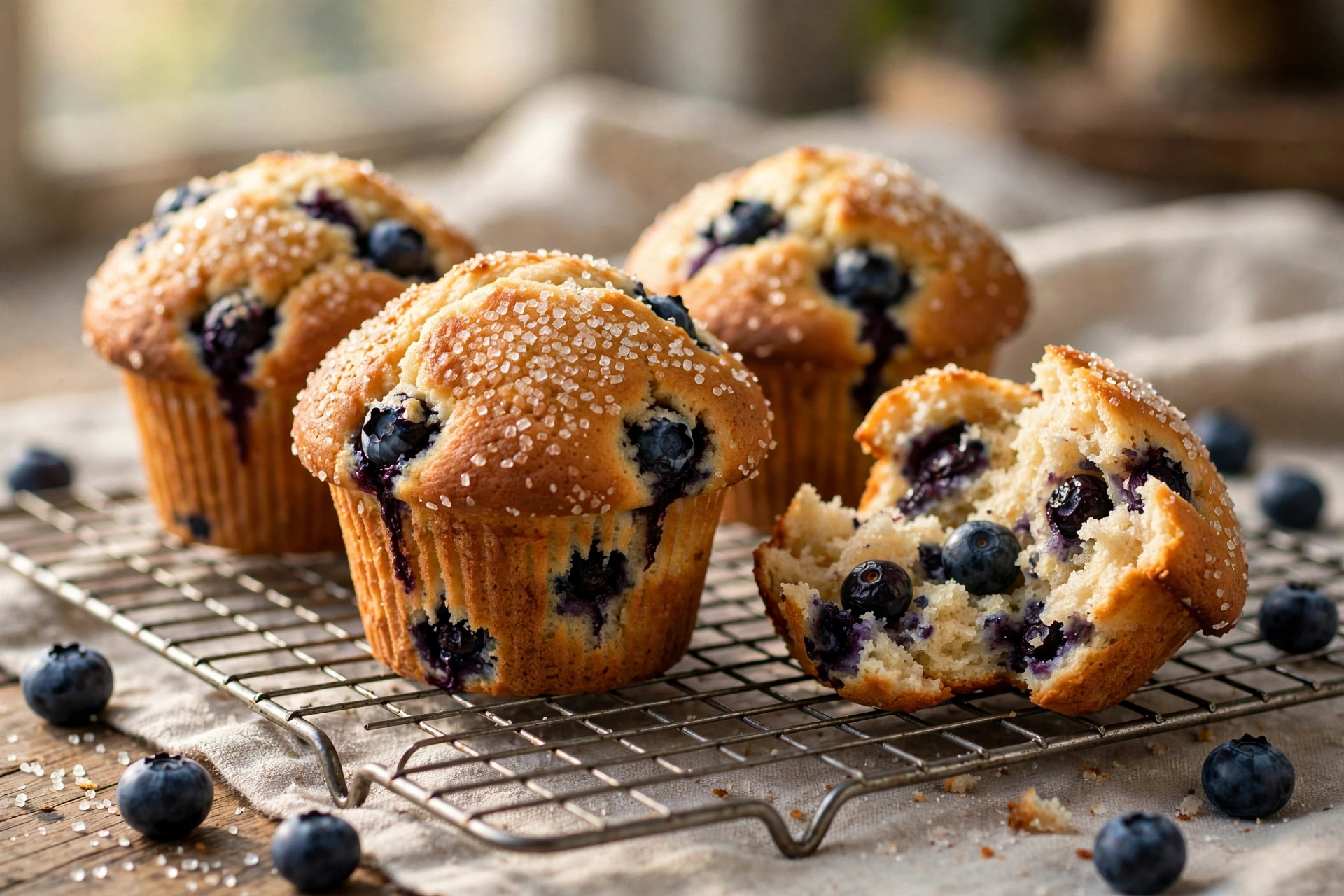
Bakery-style blueberry muffins are tall, golden, and domed, with juicy berries in every bite and a crackly sugar top. The secret is a thick batter, a hot initial oven blast (425°F for 5 minutes, then 350°F), and filling the cups to the very top. This one-bowl recipe takes 10 minutes to mix and 25 minutes to bake — no mixer required.
Why This Recipe Works
Café muffins are tall because of two things: leavening power and oven spring. This batter uses both baking powder and baking soda for maximum lift, and the initial 425°F blast forces the muffins to rise fast before the structure sets — that’s what creates the signature dome. Resting the mixed batter for 15 minutes hydrates the flour for a more tender crumb, and tossing the blueberries in flour keeps them suspended instead of sinking to the bottom. Melted butter (not oil) gives rich flavor, while sour cream keeps the crumb moist for days.
Ingredients
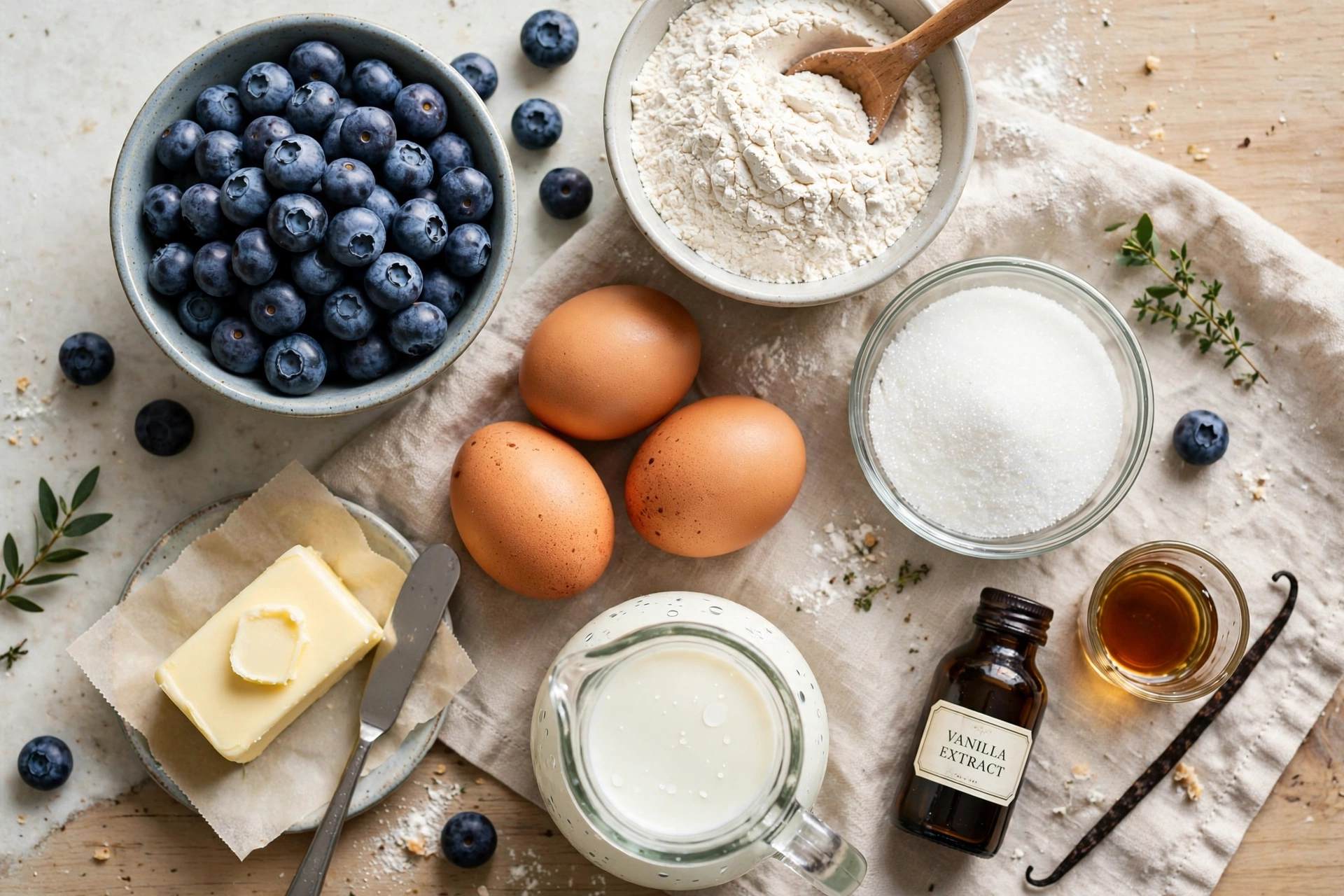
- 2 1/2 cups all-purpose flour, divided
- 1 tablespoon baking powder
- 1/2 teaspoon baking soda
- 1/2 teaspoon kosher salt
- 1/2 teaspoon ground cinnamon (optional but lovely)
- 1/2 cup unsalted butter, melted and slightly cooled
- 1 cup granulated sugar, plus 2 tablespoons coarse sugar for topping
- 2 large eggs, room temperature
- 1/2 cup sour cream (or full-fat Greek yogurt)
- 1/2 cup whole milk
- 2 teaspoons vanilla extract
- 1 1/2 cups fresh blueberries (or frozen, unthawed)
- 1 tablespoon lemon zest (optional)
Instructions
- Prep. Line a 12-cup muffin tin with paper liners. Preheat the oven to 425°F.
- Whisk the dry ingredients. In a large bowl, whisk together 2 1/4 cups of the flour, the baking powder, baking soda, salt, and cinnamon.
- Mix the wet ingredients. In a second bowl, whisk the melted butter and granulated sugar until combined. Whisk in the eggs one at a time, then the sour cream, milk, vanilla, and lemon zest until smooth.
- Combine. Pour the wet ingredients into the dry and fold gently with a spatula just until no dry streaks remain. A few lumps are fine — overmixing makes tough muffins.
- Add the berries. Toss the blueberries with the remaining 1/4 cup flour, then fold them into the batter gently.
- Rest the batter. Let the batter rest at room temperature for 15 minutes. This hydrates the flour and gives you a taller, more tender muffin.
- Fill and top. Divide the batter among the 12 cups, filling each to the very top (an ice cream scoop works perfectly). Sprinkle generously with coarse sugar.
- Bake hot, then lower. Bake at 425°F for 5 minutes, then — without opening the oven — reduce the temperature to 350°F and bake 18 to 20 minutes more, until golden and a toothpick inserted in the center comes out clean or with moist crumbs.
- Cool. Cool in the pan for 5 minutes, then transfer to a wire rack. These are incredible warm.

Pro Tips
- Fill to the top. Bakery muffins are big. Don’t be shy — a full cup gives you the dome.
- The temperature trick is everything. That initial 425°F blast is what creates oven spring. Don’t skip it.
- Room-temperature eggs and dairy mix into a smoother batter and bake more evenly.
- Coarse sugar on top (turbinado or sanding sugar) gives the crackly bakery crust. Regular sugar works in a pinch.
Variations
- Lemon blueberry: Double the lemon zest and add a simple lemon glaze (powdered sugar + lemon juice) drizzled over the cooled muffins. For a savory brunch option, try our Cottage Cheese Alfredo Pasta.
- Streusel topping: Mix 1/3 cup flour, 1/4 cup brown sugar, and 3 tablespoons cold butter into crumbs; sprinkle over the batter before baking instead of coarse sugar. If you love cozy baked dinners, try our Easy Baked Ziti with Ricotta.
- Mixed berry: Swap half the blueberries for raspberries or chopped strawberries.
- Mini muffins: Bake in a mini muffin tin at 350°F for 11 to 13 minutes; makes about 36.
Storage & Reheating
Store in an airtight container at room temperature for up to 3 days (a paper towel in the container absorbs moisture and keeps tops crisp). Freeze for up to 3 months in a zip-top bag; thaw at room temperature or warm in a 300°F oven for 10 minutes.
FAQ
Can I use frozen blueberries?
Yes — use them straight from the freezer (don’t thaw). Thawed berries bleed color into the batter. Expect 1 to 2 extra minutes of bake time.
Why did my muffins come out flat?
Usually old leavening (check your baking powder’s date), overmixed batter, or underfilled cups. Fresh baking powder, gentle folding, and full cups fix it.
Why do my blueberries sink?
Tossing them in flour before folding in creates friction that holds them in suspension. Also, a thick batter (like this one) holds berries better than a thin one.
Can I make the batter the night before?
You can mix the dry and wet separately and refrigerate, then combine in the morning. Don’t mix the full batter ahead — the leavening starts working as soon as liquid hits it.
The Science Bit: Why These Rise Tall
Flat muffins drove us nuts for a long time. Then we figured it out. It really comes down to three things: how thick the batter is, the leavening, and the heat.
This batter is thick on purpose. Almost like soft cookie dough. A thin batter lets the bubbles from the baking powder and baking soda escape, but a thick one holds them in, so the muffin has nowhere to go but up. Outward spread? That’s what thin batter does.
Heat does the rest. You start at 425°F, and that blast makes the leaveners react fast while steam pushes hard from inside. That’s the oven spring, and it’s what forms the dome. Once the top has set, you drop to 350°F so the centers can finish without the tops going dark and bitter. Melted butter is there for flavor. Sour cream brings moisture and just a little tang. And that 15-minute rest? Don’t skip it. The flour drinks up the liquid, hydrates fully, and you get a tender crumb instead of something gummy in the middle.
About the Ingredients
Blueberries: Fresh berries look the cleanest, no contest. Frozen work just as well, though, as long as they go in still frozen, straight from the freezer. Let them thaw and they’ll leak juice everywhere and turn the whole batch purple. If you can find wild blueberries, try them once. They’re smaller, so you get berries in every bite instead of a few big pockets.
Sour cream: Full-fat Greek yogurt swaps in one for one, and honestly you can barely tell the difference. Low-fat versions work too, the crumb just won’t be quite as rich. Stuck without either? Buttermilk can replace both the sour cream and the milk. The batter will be a touch thinner, that’s all.
Butter: Melted unsalted butter tastes best here. A neutral oil will give you a moister muffin, and it’ll stay soft longer, but you lose that buttery flavor, so in our kitchen we stick with butter. Salted butter is fine if that’s what’s in the fridge. Just cut the added salt down to a pinch.
Sugar: The coarse sugar on top is the whole bakery finish. That crackle. Turbinado or sanding sugar are ideal for it. Regular granulated sugar works in a pinch, it just melts in a bit more. Making these gluten-free? A good 1:1 gluten-free flour blend, the kind with xanthan gum already in it, works well, and the thick batter is forgiving. For dairy-free, use a plant-based butter stick, oat milk, and a coconut-based yogurt in place of the sour cream.
Baking Them, in Practice
- Measure flour gently. Spoon it into the cup, level it off. Don’t scoop from the bag. Scooping can pack in up to 25 percent extra flour, and that’s the fastest way to end up with dry, dense muffins.
- Fold. Don’t stir. Once wet meets dry, fold with a spatula for about 12 to 15 strokes, just until the last streak of flour disappears. Lumps are fine. They’re expected, actually. Every extra stroke develops gluten and toughens the crumb.
- Use an ice cream scoop. It portions this thick batter evenly, so all 12 muffins bake at the same rate. Fill right to the top. That’s what builds the dome.
- Keep the oven shut when you drop the temp. Just turn the dial down to 350°F. If you open the door in those first minutes, the steam escapes and the domes can sink.
- Check the center muffin. The middle of the pan bakes slowest, so test there with a toothpick. Moist crumbs clinging to it? Perfect. Wet batter means another 2 to 3 minutes.
- Rest the batter the full 15 minutes. It’s tempting to skip. We know. But that rest is why the texture comes out tender every single time.
Muffin Mistakes We See Again and Again
Old baking powder. It loses its punch after about six months open. Not sure about yours? Drop a spoonful in hot water. It should fizz vigorously. If it just sits there, toss it. Flat muffins in our kitchen almost always trace back to a tired can.
Overmixing. This is the number one muffin killer. A smooth, fully mixed batter looks right, but it bakes up tough, with tunnels running through it. Stop while it still looks a little lumpy. Really.
Underfilling the cups. Half-full cups give you cupcakes, not bakery muffins. This batter is built to be filled to the very top of the liner without spilling over, so fill them.
Thawing frozen berries. Thawed blueberries bleed. They sink, too. Keep them frozen, toss them in flour, and add 1 to 2 minutes to the bake.
Skipping the flour toss. That light coating matters more than it looks. It’s what keeps the berries suspended through the whole muffin instead of puddled at the bottom.
Other Ways to Fill the Tin
Cinnamon streusel top: Rub together 1/4 cup flour, 3 tablespoons brown sugar, 1/2 teaspoon cinnamon, and 2 tablespoons cold butter until you get crumbs. Sprinkle that over the batter instead of the coarse sugar. It eats like coffee cake.
Blueberry lemon glaze: Double the lemon zest in the batter. Then whisk 3/4 cup powdered sugar with 1 to 2 tablespoons lemon juice and drizzle it over the cooled muffins.
Chocolate chip blueberry: Replace half the blueberries with mini chocolate chips. Simple swap, big payoff, and a frequent request for first-day-of-school breakfasts.
Orange cranberry: Swap the berries for fresh cranberries, chopped because they’re tart, and use orange zest instead of lemon zest. Add an extra tablespoon of sugar to balance things out.
Keeping Muffins Fresh (and Freezing Them)
At room temperature these keep well for 3 days in an airtight container. A little trick helps: line the bottom of the container with a paper towel and lay another one on top of the muffins. It absorbs the moisture that would otherwise soften those crackly tops. In the fridge they’ll stretch to 5 days, though the crumb firms up a bit.
Freezing works great. Cool the muffins completely first, wrap each one in plastic wrap, and store them in a zip-top freezer bag for up to 3 months. Thaw on the counter for about an hour, or unwrap one and microwave it for 20 to 30 seconds if you’re impatient. Want that fresh-baked feel back? Warm thawed muffins in a 300°F oven for 8 to 10 minutes. That short oven trip revives the tops in a way the microwave just never will.
What Goes With a Warm Muffin
These are best as the center of a slow weekend breakfast, with soft scrambled eggs and crispy bacon on the side. Salty next to sweet, it just works. For brunch, set them out with a fruit salad, yogurt, and plenty of hot coffee. They travel well, too. A warm muffin and a travel mug of coffee makes a pretty solid road trip breakfast.
More Muffin Questions
Can I bake these without paper liners?
Yes, you can. Just grease the cups very well with butter or baking spray, and get the flat top surface of the pan too, because the domes spread over the rim. Let the muffins cool 10 minutes before easing them out with a thin knife. Liners are easier, no question, but a well-greased pan works fine.
Why did my tops spread out and stick to the pan?
That usually means the batter was a touch thin, or the cups were overfilled past the liner. A little spread is the bakery look, so don’t worry about a bit of it. If it puddles, though, your flour was probably under-measured. Spoon and level next time, and the domes will stand taller.
How do I stop the sugar topping from falling off?
Sprinkle the coarse sugar on right after filling the cups, while the batter surface is still wet and tacky. Be generous with it. If the batter rested and formed a skin, a tiny spritz of water on top before sugaring helps it grip.
Can I bake this batter as a loaf instead?
You can. Pour the batter into a greased 9×5 inch loaf pan and bake at 350°F for 50 to 60 minutes, skipping the high-heat blast at the start, until a toothpick in the center comes out clean. If the top browns too fast, tent it with foil for the last 15 minutes.