
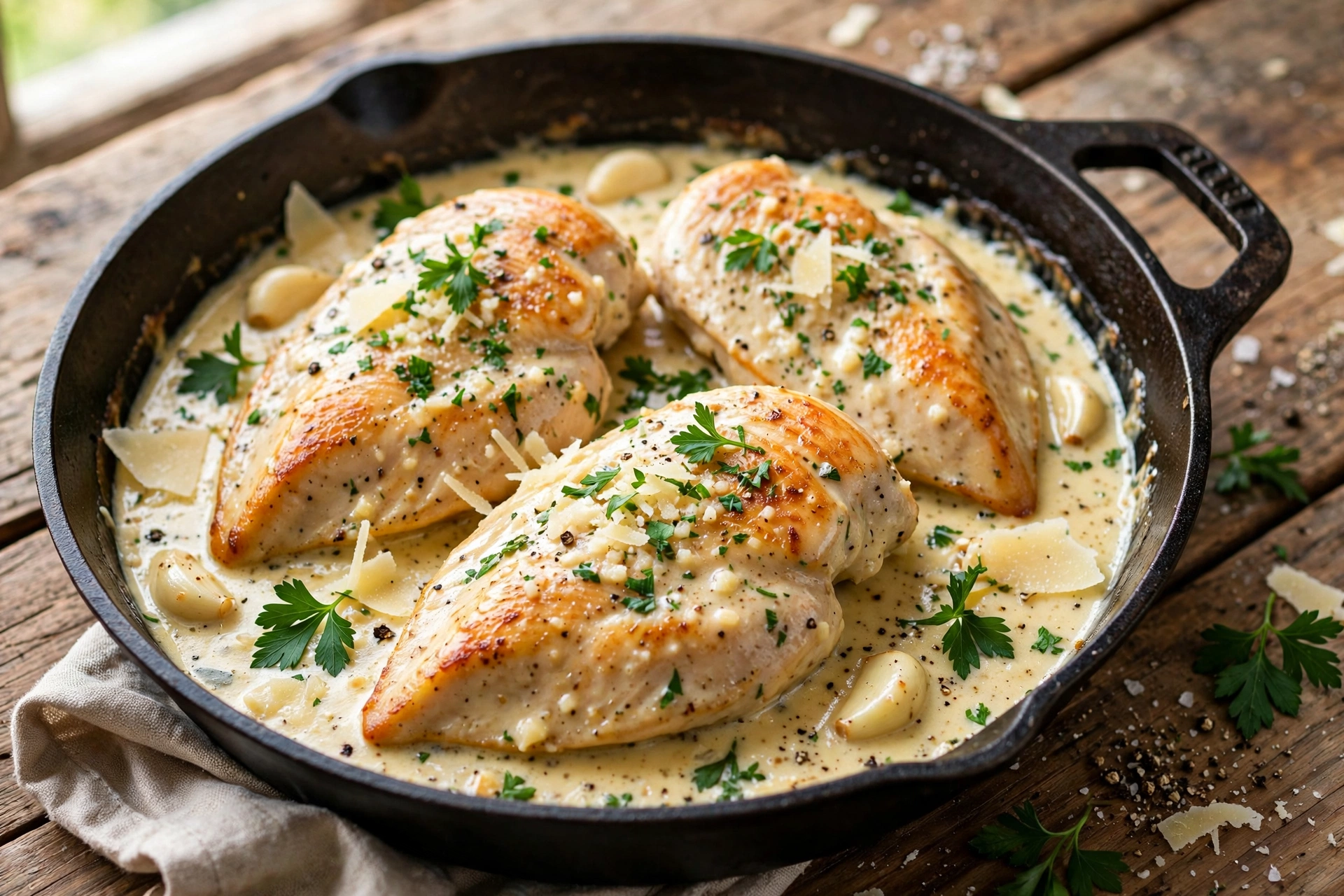
Craving restaurant flavor without the restaurant bill? This creamy garlic parmesan chicken skillet delivers: golden, juicy chicken breasts nestled in a rich, velvety garlic-parmesan cream sauce, all made in one pan in about 30 minutes. It’s the kind of comforting weeknight dinner that makes everyone ask for seconds — and the recipe is simple enough to memorize after one try.
The secret is a proper sear on the chicken first, which builds the flavorful browned bits (fond) that become the backbone of the sauce. Then garlic, chicken broth, and cream simmer together with parmesan into something downright luxurious. Serve it over pasta, mashed potatoes, or rice to catch every drop. Below: the full ingredient list, step-by-step instructions, pro tips, variations, storage, and FAQ.
Why This Recipe Works
- One pan, 30 minutes: Minimal dishes, maximum flavor — dinner is on the table fast.
- Restaurant-quality sauce: Real garlic, real parmesan, and cream reduce into a silky sauce that clings to the chicken.
- Juicy chicken, guaranteed: Searing then gently simmering keeps the chicken tender instead of dry.
- Endlessly versatile: Serve over anything starchy, add veggies, or spice it up — it adapts beautifully.
- Family favorite: Creamy, cheesy, garlicky — the flavor trifecta kids and adults both love.
Ingredients
- 4 boneless, skinless chicken breasts (about 1 1/2 lbs), pounded to even thickness
- 1 teaspoon kosher salt, divided
- 1/2 teaspoon black pepper
- 1 teaspoon Italian seasoning
- 2 tablespoons olive oil
- 3 tablespoons unsalted butter, divided
- 6 cloves garlic, minced
- 1 tablespoon all-purpose flour
- 1 cup chicken broth
- 1 1/2 cups heavy cream
- 1 cup freshly grated parmesan cheese
- 1 teaspoon lemon juice (optional, to brighten)
- 2 tablespoons chopped fresh parsley, for garnish
Instructions
- Season the chicken: Pat the chicken dry and season both sides with 1/2 teaspoon salt, the pepper, and Italian seasoning.
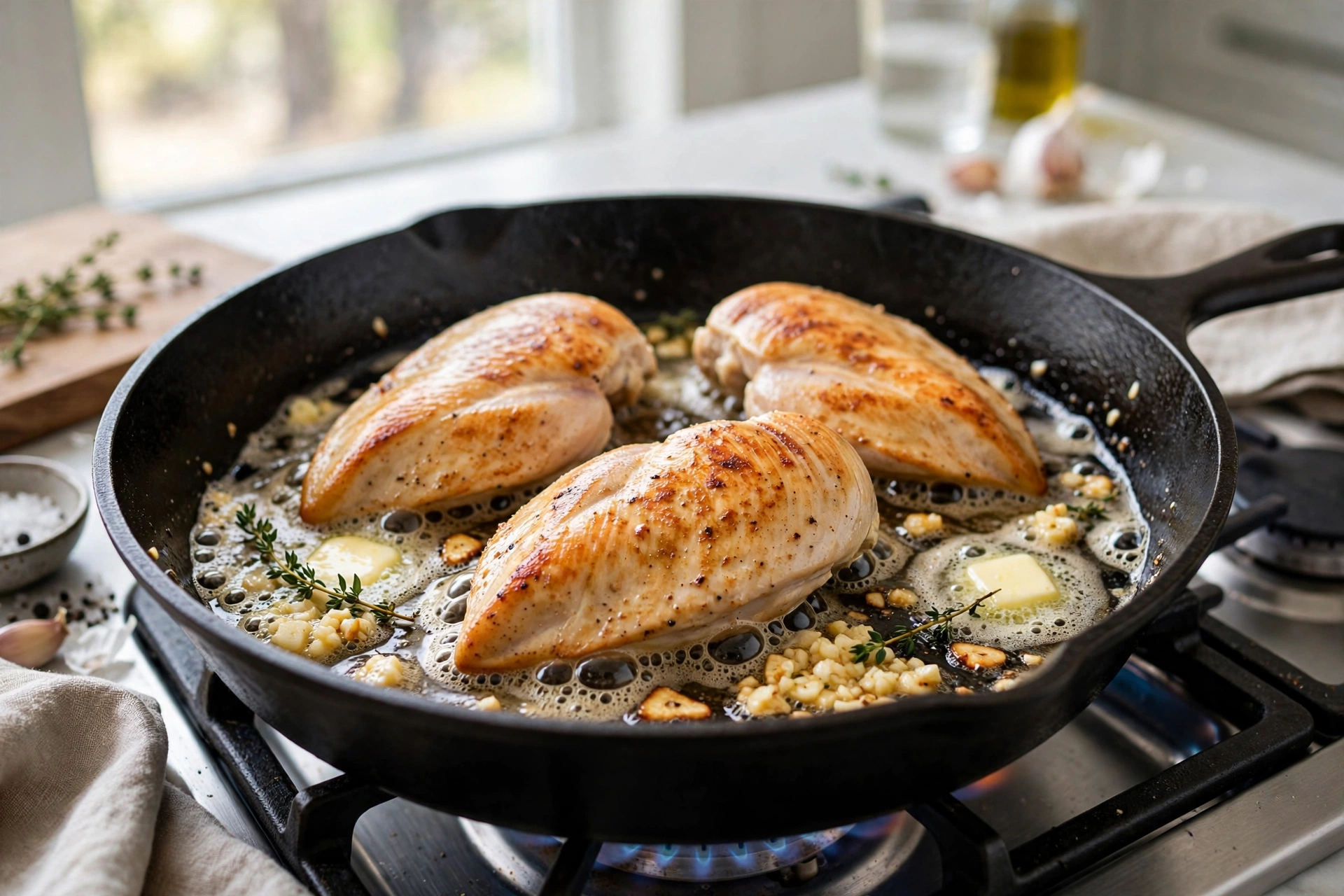
- Sear: Heat the olive oil and 1 tablespoon butter in a large skillet over medium-high heat. Sear the chicken 5-6 minutes per side until deeply golden and cooked through (165°F internal). Transfer to a plate and tent with foil.
- Sauté the garlic: Reduce heat to medium. Add the remaining 2 tablespoons butter and the garlic; cook 30-60 seconds until fragrant.
- Make a roux: Sprinkle the flour over the garlic and stir 1 minute — this thickens the sauce so it coats beautifully.
- Build the sauce: Slowly whisk in the chicken broth, scraping up the browned bits from the pan. Whisk in the heavy cream and simmer 3-4 minutes until slightly thickened.
- Add the parmesan: Reduce heat to low and stir in the parmesan a handful at a time until melted and smooth. Stir in the lemon juice if using, and season with the remaining 1/2 teaspoon salt to taste.
- Finish: Return the chicken (and any juices) to the skillet. Spoon sauce over the top and simmer 2-3 minutes until heated through.
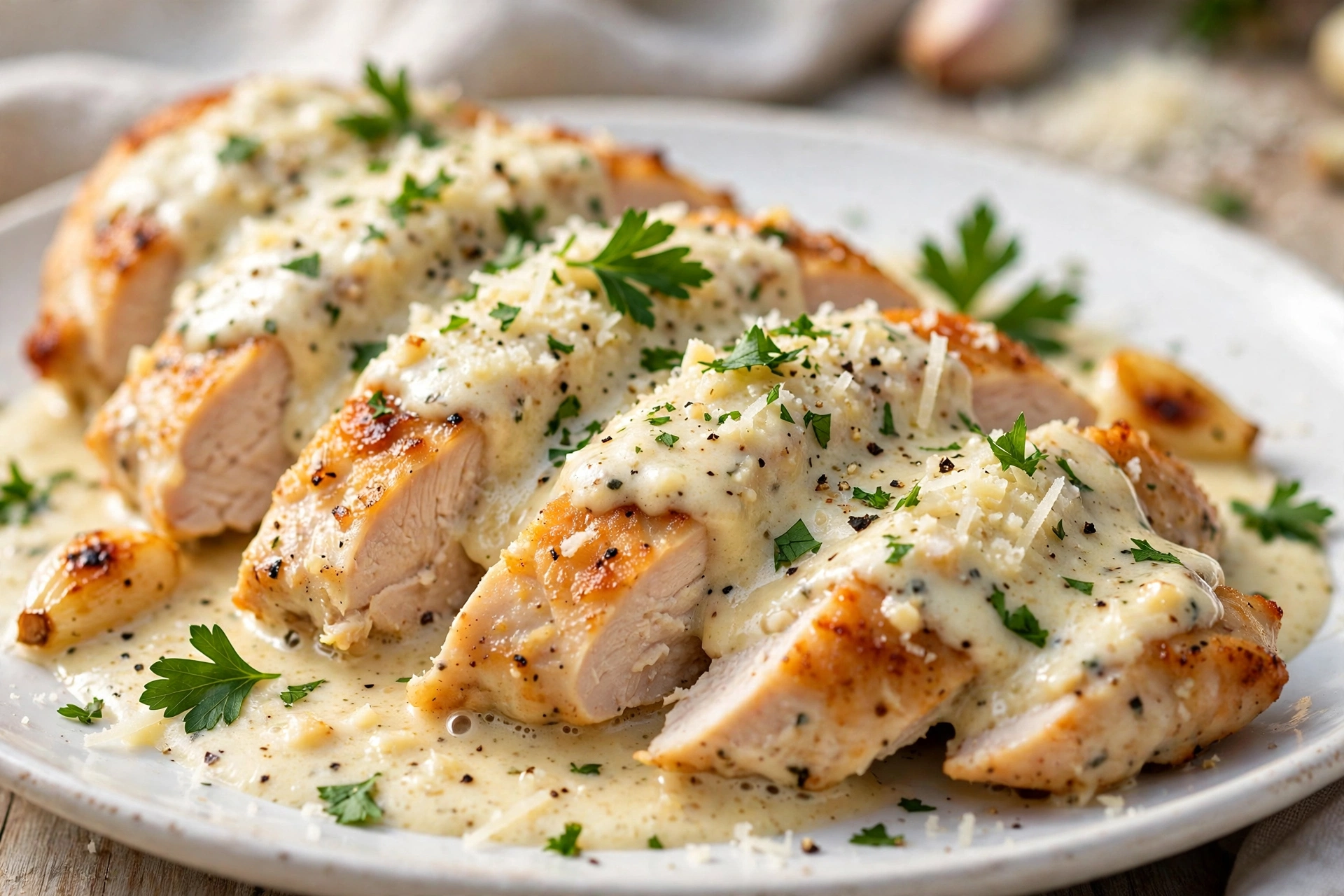
- Serve: Garnish with parsley and extra parmesan. Serve over pasta, mashed potatoes, or rice.
Pro Tips
- Even thickness matters: Pound chicken to 3/4-inch even thickness so it cooks through without drying out the thin end.
- Don’t burn the garlic: It goes from fragrant to bitter in seconds — keep the heat moderate and stir constantly.
- Grate your own parmesan: Pre-shredded cheese contains anti-caking agents that make sauces grainy. Freshly grated melts silky-smooth.
- Low heat for cheese: Add parmesan off the boil or on low heat to prevent the sauce from breaking or turning gritty.
- Thin it if needed: The sauce thickens as it sits; loosen with a splash of broth or cream when reheating.
Variations
- Add mushrooms: Sauté 8 oz sliced mushrooms after the chicken and before the garlic.
- Spinach: Wilt in 2-3 cups baby spinach at the end for color and nutrition.
- Sun-dried tomatoes: Stir in 1/3 cup chopped sun-dried tomatoes with the cream for tangy sweetness.
- Spicy: Add 1/2 teaspoon red pepper flakes with the garlic.
- Chicken thighs: Swap breasts for boneless thighs — even juicier, just add a few minutes to the sear.
Storage
Store leftovers in an airtight container in the fridge for up to 3 days. Reheat gently in a skillet over medium-low heat with a splash of cream or broth, stirring until smooth — high heat can make cream sauces separate. Freezing is possible but the sauce may turn slightly grainy; if you freeze, thaw overnight and reheat low and slow, whisking well. For best results, enjoy fresh.
FAQ
Can I use milk instead of heavy cream?
You can, but the sauce will be thinner and more prone to curdling. Half-and-half is a better compromise; keep the heat low.
Why did my sauce turn grainy?
Usually the heat was too high when the cheese went in, or pre-shredded parmesan was used. Low heat + freshly grated cheese = silky sauce.
Can I make this ahead?
The sauce reheats well, but the chicken is juiciest fresh. If making ahead, slightly undercook the chicken and finish it in the sauce when reheating.
What should I serve with it?
Pasta (fettuccine or penne), creamy mashed potatoes, or rice — plus a green veggie like broccoli or asparagus.
Can I make it gluten-free?
Yes — swap the flour for a gluten-free blend or 1 1/2 teaspoons cornstarch whisked into the broth.
For more cozy chicken dinners, try our Crispy Air Fryer Chicken Thighs, a comforting bowl of Instant Pot Chicken Noodle Soup, or our creamy Cottage Cheese Alfredo Pasta.
Why the Sauce Stays Silky
People blame the cream when this goes wrong. Usually it is not the cream at all.
It is the fond. That deep gold crust on the chicken, and the browned bits stuck to the pan after it lifts out, that is where the real flavor lives. Searing seasoned chicken over medium-high heat gets you the Maillard reaction, and no shake of garlic powder can fake what that browning does. Later, when broth hits the hot pan and you whisk, those bits melt straight into the sauce. Simple ingredients. Bistro-level taste. That is the trade.
The sauce needs a little structure too, or it will pool thin around the edges instead of clinging. A tablespoon of flour cooked in butter makes a light roux. Small amount, big job. It gives the cream body and keeps it stable once everything comes together.
Parmesan goes in last, and not at a rolling boil. Hard cheese wants gentle heat. Boil it and it turns gritty, fast. A tiny squeeze of lemon right at the end? That lifts the whole pan. The sauce stops tasting heavy and starts tasting bright, which is a much better place to be.
Ingredient by Ingredient
Chicken breasts: Pound them to an even 3/4 inch. Not busywork. If one end is thick and the other is thin, they will never finish at the same time, and the crust will be ready long before the center is. Boneless, skinless thighs work beautifully here too, and they stay even juicier. Give them 6 to 7 minutes per side.
Parmesan: Grate it yourself from a wedge if you can. Pre-shredded cheese is coated with anti-caking starches, and those starches melt into a grainy sauce. Pecorino Romano is a good swap. Saltier, sharper, a little more assertive, so pull back a bit on the added salt.
Heavy cream: Cream is what makes this sauce forgiving. Silky, too. Half-and-half can replace it if you keep the heat low, though you should expect a slightly thinner result. Whole milk alone tends to curdle, so in our kitchen we do not use it as a straight swap here. Need dairy-free? Full-fat coconut cream plus a dairy-free parmesan-style shred that actually melts well is the closest match we have found.
Garlic: Fresh cloves only for this one. Six sounds like a lot. It is not, once it has cooked in butter and mellowed out. Jarred garlic carries a tinny edge, and a cream sauce will show it.
Flour: For gluten-free, skip the flour completely. Whisk 1 1/2 teaspoons of cornstarch into the cold broth before it hits the pan. The sauce sets a touch glossier. Just as thick, though.
Cooking Notes That Matter
- Start with bone-dry chicken. Pat the breasts with paper towels until the surface looks matte. Moisture steams. It does not sear, and wet chicken will never give you that deep golden crust.
- Leave the chicken alone in the pan. Once it goes down, do not nudge it for the first 4 minutes. The crust needs uninterrupted contact. When it is ready to flip, it will release on its own.
- Watch the garlic like a hawk. Thirty to sixty seconds in the butter is plenty. Fragrant, pale gold, move on. Browned garlic turns bitter and it perfumes the whole sauce in the wrong way.
- Pour the broth in slowly. A slow stream while you whisk lets the roux absorb liquid smoothly instead of clumping. It also buys you time to scrape every browned bit off the floor of the pan.
- Add parmesan in small handfuls. Let each addition melt before the next one goes in. Dump it all at once into hot cream and you are asking for a stringy sauce.
- Return the chicken juices too. That liquid pooled on the resting plate is concentrated flavor. Pour it into the sauce. Never down the sink.
Cream Sauce Mistakes
Crowding the skillet. Four breasts squeezed edge to edge will steam in their own juices. Sad, pale chicken. If your pan is not a full 12 inches, sear in two batches and keep the first batch warm on a plate.
Boiling the sauce after the cheese goes in. This is the number one cause of grainy, split cream sauces. Keep it at the gentlest simmer you can manage, or pull the pan off the heat entirely while the parmesan melts.
Skipping the pounding step. A thick, uneven breast cooks through at the thin end long before the thick end is safe. Then you are stuck choosing between dry edges and an undercooked center. Neither is a good dinner.
Overcooking the chicken on the sear. Remember, it simmers again in the sauce for 2 to 3 minutes. Pull it at 160°F and let carryover heat plus the sauce finish the job to a juicy 165°F.
Using cold cream. Ice-cold cream hitting a hot pan can shock the sauce. Let it sit on the counter while the chicken sears and it will blend in smoothly.
Variations on the Theme
Creamy mushroom version: After the chicken comes out, saute 8 ounces of sliced cremini mushrooms in the same pan until deeply browned, then build the sauce around them. The mushrooms double down on the savory depth. In a good way.
Tuscan-style: Stir in 1/3 cup of chopped sun-dried tomatoes and 3 big handfuls of baby spinach with the cream. Let the spinach wilt for the final minute.
Cajun kick: Swap the Italian seasoning for 2 teaspoons of Cajun seasoning and add a pinch of smoked paprika. Warm spice against cool cream. It works better than you might expect.
Lemon herb bright: Double the lemon juice, add the zest of one lemon, and finish with torn basil instead of parsley. It eats lighter. It loves a side of asparagus, too.
Leftovers and Food Safety
Leftovers keep in an airtight container in the fridge for up to 3 days. The sauce will thicken considerably as it chills. Normal. It loosens again with gentle heat and a splash of broth.
Reheat in a skillet over medium-low heat, stirring often, for 6 to 8 minutes until the chicken is hot through. Add broth or cream a tablespoon at a time until the sauce returns to its original pour. The microwave works in a pinch at 50 percent power in 1-minute bursts, but the stovetop protects the texture far better.
Freezing is the weak spot here, honestly. Cream sauces can turn slightly grainy after thawing, though the flavor stays good. If you freeze it anyway, thaw overnight in the fridge and reheat low and slow, whisking constantly.
What to Put Next to It
Anything that can carry the sauce deserves a spot on the plate. Buttered fettuccine and creamy mashed potatoes are the two favorites in our kitchen, with jasmine rice close behind. Then add something green and simple to cut the richness: roasted broccoli, garlic green beans, or a crisp salad with a lemony dressing. Warm crusty bread for the last of the sauce? Never a mistake.
More Questions, Answered
How can I tell the chicken is done if I do not cut into it?
An instant-read thermometer is the surest answer: 165°F at the thickest point. No thermometer handy? Press the center of the breast with tongs. It should feel firm with a slight spring, and any juices that escape should run clear, not pink. Resting for a few minutes before slicing keeps those juices in the meat where they belong.
My sauce came out too thin. How do I fix it?
Simmer it a few minutes longer before the chicken goes back in. Cream reduces and concentrates as it bubbles gently, so give it time first. Still loose? Whisk 1 teaspoon of cornstarch with 1 tablespoon of cold water, stir it in, then simmer 1 more minute. A final handful of parmesan also tightens it up.
Can I cook chicken that is still partly frozen?
In our kitchen we do not recommend it. Frozen spots cook unevenly and release water into the pan, which kills the sear and thins the sauce. Thaw the chicken fully in the fridge overnight, or in a sealed bag under cold running water for about an hour, then pat it very dry before seasoning.
Is there a lighter version that does not taste like a compromise?
Yes. Use half-and-half in place of the cream, cut the butter to 2 tablespoons total, and lean on the lemon and parsley to keep the flavor bright. The sauce will be a little thinner, but still glossy and satisfying, especially served over pasta that helps it cling.