
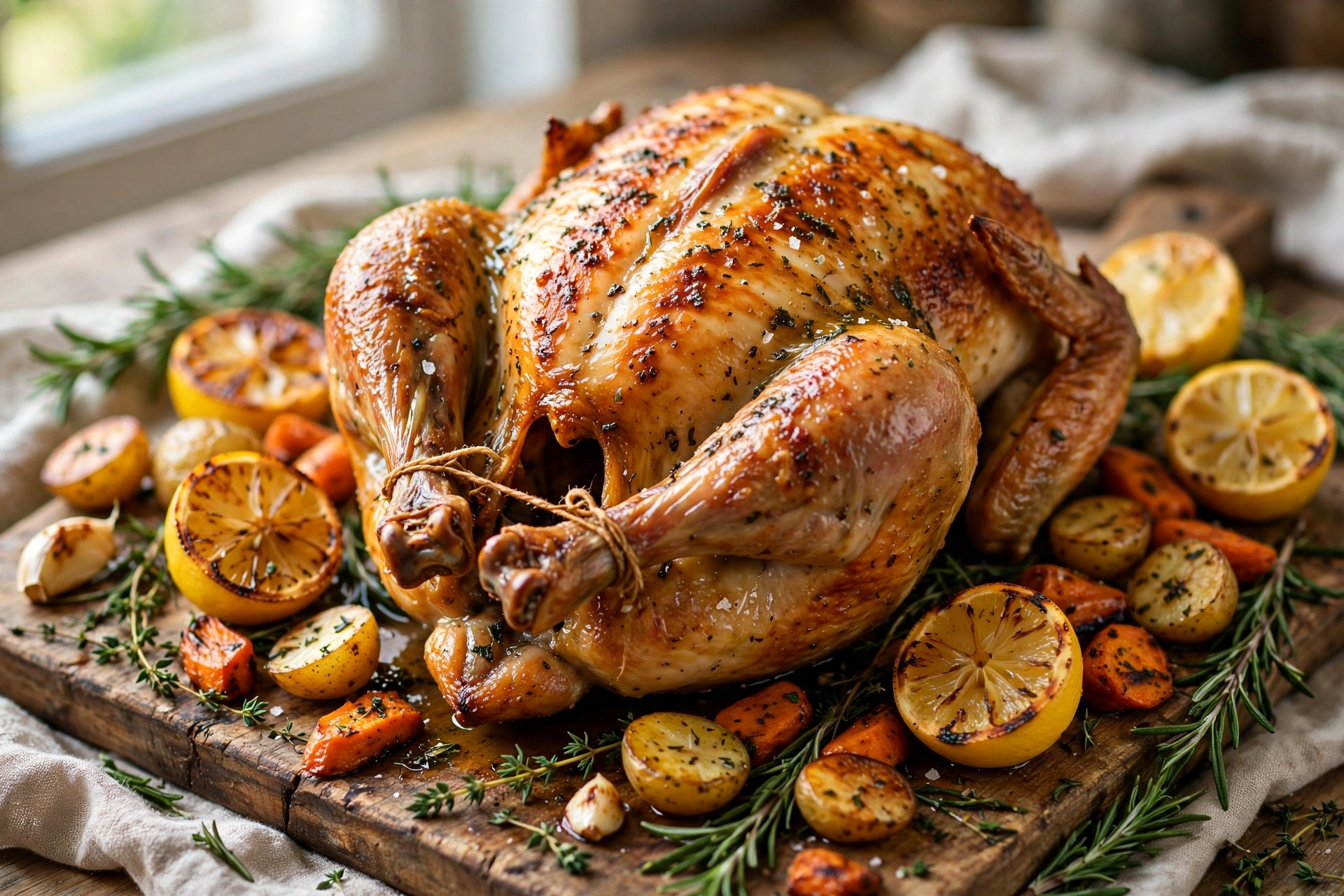
Nothing says Sunday dinner quite like a juicy lemon herb roast chicken with shatteringly crispy, golden-brown skin. This easy whole roasted chicken is rubbed with garlic, fresh rosemary, thyme, and lemon, then roasted until the meat is tender and succulent and the pan juices beg to be spooned over everything. It’s a timeless centerpiece that looks impressive but asks very little of you — mostly, the oven does the work.
Roasting a whole chicken intimidates a lot of home cooks, but it shouldn’t. With the right temperature, a simple herb butter, and a reliable thermometer, you’ll get juicy meat every single time. Below you’ll find the full ingredient list, step-by-step instructions, pro tips for crispy skin, easy variations, storage directions, and answers to the most common roast chicken questions.
Why This Recipe Works
- Guaranteed juicy: A garlic-herb butter tucked under and over the skin bastes the meat as it roasts.
- Crispy skin: Patting the bird dry and roasting at high heat first gives you that crackly golden crust.
- Bright flavor: Lemon and fresh herbs cut through the richness and perfume the whole bird.
- One-pan meal: Toss potatoes and carrots around the chicken and dinner cooks itself.
- Leftovers for days: Roast once, eat for days — soups, sandwiches, salads, and tacos all start here.
Ingredients
- 1 whole chicken (3 1/2 to 4 lbs), giblets removed
- 1 tablespoon kosher salt, plus more to taste
- 1 teaspoon black pepper
- 6 tablespoons unsalted butter, softened
- 4 cloves garlic, minced
- 1 tablespoon chopped fresh rosemary
- 1 tablespoon chopped fresh thyme leaves, plus 4 sprigs
- 1 teaspoon lemon zest
- 1 whole lemon, halved
- 1 tablespoon olive oil
- 1 onion, quartered
- 4 sprigs fresh rosemary, for the cavity
- Optional vegetables: 1 1/2 lbs baby potatoes and 3 carrots, cut into chunks
Instructions
- Prep the chicken: Remove the chicken from the fridge 30-45 minutes before roasting. Pat it completely dry inside and out with paper towels — dry skin is the secret to crispiness. Season the cavity generously with salt and pepper, then stuff with the halved lemon, onion quarters, rosemary sprigs, and thyme sprigs.
- Make the herb butter: In a small bowl, mash together the softened butter, garlic, chopped rosemary, thyme leaves, lemon zest, 1 tablespoon salt, and the pepper.
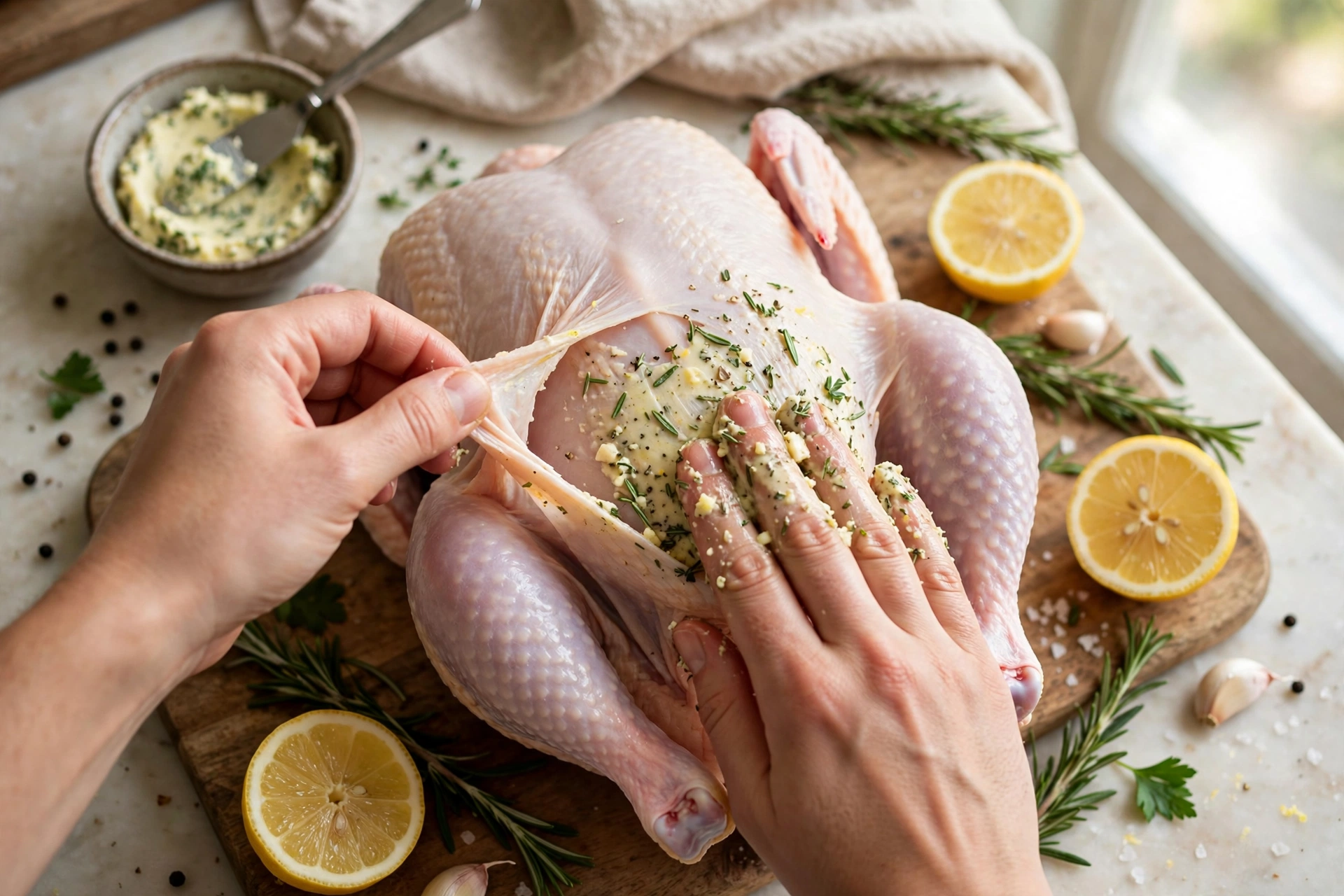
- Butter the bird: Gently loosen the skin over the breast and thighs with your fingers. Push about two-thirds of the herb butter under the skin, spreading it evenly. Rub the remaining butter all over the outside of the chicken, then drizzle with olive oil.
- Truss (optional but helpful): Tie the legs together with kitchen twine and tuck the wing tips under the body for even cooking.
- Roast hot, then lower: Place the chicken breast-side up on a rack in a roasting pan (or on top of the potatoes and carrots tossed with oil and salt). Roast at 425°F (220°C) for 15 minutes, then reduce to 375°F (190°C) and roast 1 hour to 1 hour 15 minutes more, until the thickest part of the thigh reads 165°F (74°C) on an instant-read thermometer and the juices run clear.
- Rest: Transfer the chicken to a cutting board and rest for 15-20 minutes. This redistributes the juices — don’t skip it.
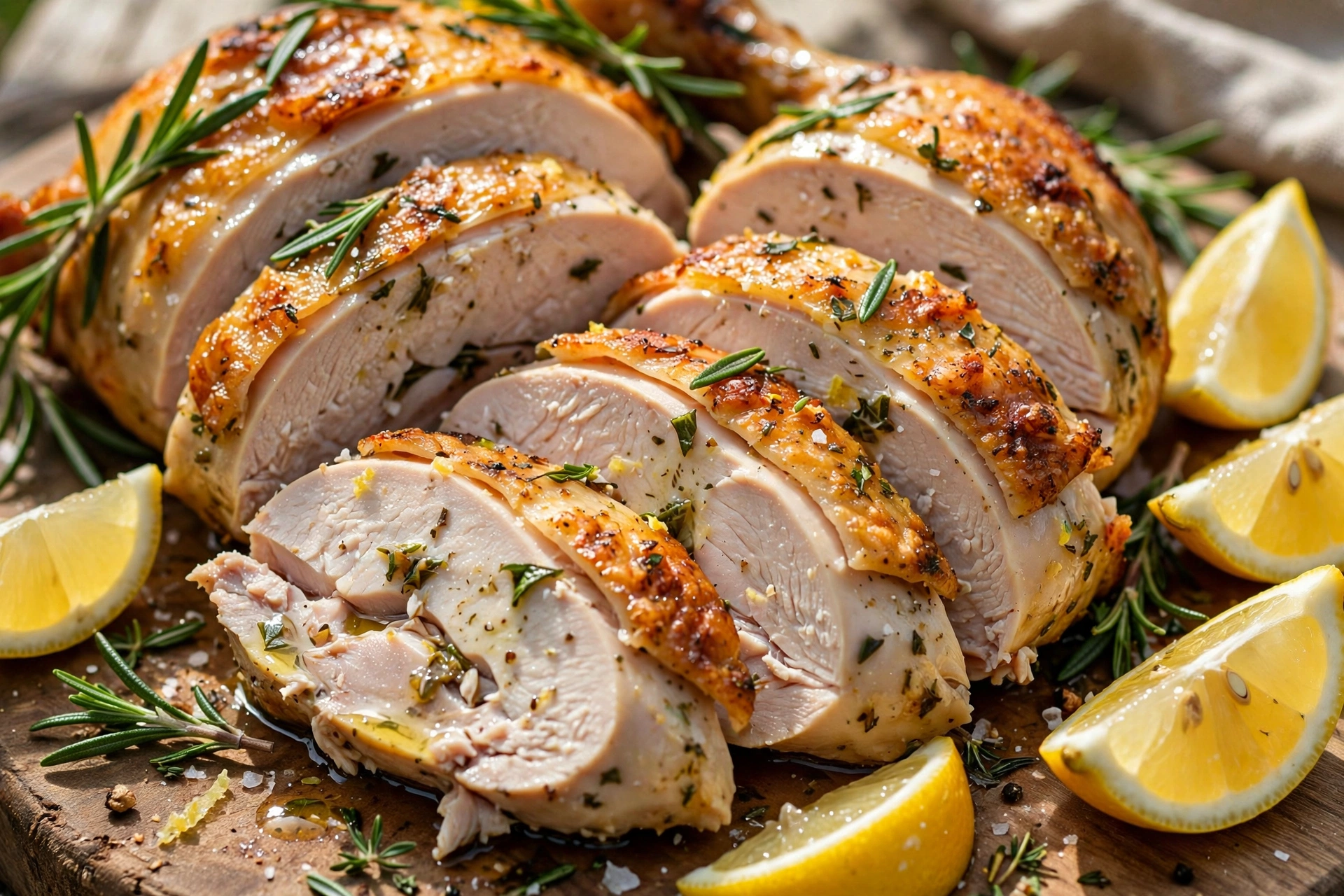
- Carve and serve: Carve the chicken, spoon the pan juices over the meat, and serve with the roasted vegetables.
Pro Tips
- Dry brine for extra flavor: Salt the chicken up to 24 hours ahead and refrigerate uncovered — the skin dries out for maximum crispiness and the meat seasons deeply.
- Trust the thermometer: Color lies; temperature doesn’t. Pull the bird at 165°F in the thigh (the breast will be around 160°F and coast up as it rests).
- Don’t baste constantly: Opening the oven drops the temperature. The herb butter under the skin does the basting for you.
- Save the carcass: Simmer it with the leftover bones for a rich homemade stock — liquid gold for soups.
- Let it rest: Cutting too soon lets all the juices run out onto the board instead of staying in the meat.
Variations
- Mediterranean: Add oregano, sun-dried tomatoes, and olives to the pan.
- Spicy: Mix 1 teaspoon smoked paprika and 1/2 teaspoon cayenne into the herb butter.
- Garlic lover’s: Double the garlic and add a whole head, halved, to the roasting pan — the cloves turn sweet and spreadable.
- Citrus swap: Use orange or a mix of lemon and lime for a different bright note.
- Herb garden: Sage, marjoram, or tarragon all work beautifully in place of rosemary and thyme.
Storage
Refrigerate leftover chicken in an airtight container for up to 4 days. Reheat gently in a 325°F oven covered with foil, with a splash of broth to keep it moist. Shredded leftovers freeze well for up to 3 months — perfect for quick soups, enchiladas, or chicken salad. The carcass can be frozen too, ready for your next batch of stock.
FAQ
How long does it take to roast a 4-lb chicken?
About 1 hour 15 minutes to 1 hour 30 minutes at the temperatures above. Always go by internal temperature (165°F in the thigh), not the clock.
Should I rinse the chicken first?
No — rinsing spreads bacteria around the sink without making the chicken any safer. Patting dry is all you need.
Why is my roast chicken dry?
Usually overcooking. Use a thermometer, don’t skip the rest, and try the herb-butter-under-the-skin method — it makes a huge difference.
Can I roast vegetables with the chicken?
Yes! Potatoes, carrots, and onions tossed in oil and salt around the bird soak up the drippings and become the best part of the meal.
What temp is chicken done?
165°F (74°C) in the thickest part of the thigh, per food safety guidelines. The temperature will rise a few degrees as it rests.
Love easy chicken dinners? Try our Crispy Air Fryer Chicken Thighs for a faster weeknight option, our cozy One Pan Chicken and Rice, or the ultimate comfort food: Slow Cooker Chicken and Dumplings.
Why This Bird Comes Out Juicy
A roast chicken has three jobs. Juicy breast meat. Thighs cooked all the way through. Crisp skin. Fail one and the whole bird feels like a letdown, even if the other two are perfect.
This method gets all three, mostly because of how the heat and the butter are arranged. The herb butter tucked under the skin is basically a self basting system. As the chicken roasts, that butter melts slowly and runs down through the meat. It doesn’t just sit on the surface and burn, which matters, because the breast finishes cooking before the thighs do and needs that protection to stay moist.
Then there’s the two stage temperature. Fifteen minutes at 425°F renders fat and sets the skin so it can crisp properly. Dropping to 375°F after that lets the interior come up to temperature gently, without squeezing the juices out of the meat. Dry skin is the third piece, and people underestimate it badly. Salt and air pull moisture from the surface, and a dry surface browns and crackles. A wet one steams. Simple as that. The lemon halves inside the cavity perfume the meat with gentle steam as they heat, adding brightness without making anything sour. Resting ties it together at the end, letting the juices redistribute so they stay in the slices instead of flooding the board the second you carve.
Notes on the Chicken and the Herbs
The chicken: A 3 and a half to 4 pound bird is the sweet spot for even cooking in a home oven. Much bigger and the breast overcooks before the thighs finish. If all you can find is a 5 pounder, add about 15 minutes and lean on your thermometer, not the clock. Air chilled chickens, when you can get them, have drier skin and roast up noticeably crisper.
Kosher salt: Use kosher salt, not table salt, and season more boldly than feels natural at first. A whole chicken is a lot of meat. A full tablespoon across the bird and cavity is right. Only have table salt? Cut the amount by about a third, because it packs denser and you’ll overshoot without meaning to.
Butter: Real unsalted butter, softened to a spreadable paste, is what you want here. For dairy-free roasting, olive oil or a plant based butter works; the skin will be a shade less rich but still crisp. Ghee is another good option. It browns beautifully.
Fresh herbs: Rosemary and thyme are sturdy enough to survive a long roast without turning bitter or disappearing. If fresh herbs aren’t around, use one teaspoon each of dried rosemary and dried thyme in the butter, and skip the cavity sprigs. Sage, tarragon, and marjoram all trade in happily too.
Lemon: The zest goes in the butter and the halves go in the cavity, so one lemon does double duty. Orange or lime halves change the perfume in a good way. A halved head of garlic tucked in alongside the lemon is a lovely addition as well.
Pan vegetables: Potatoes and carrots under the bird are optional but smart. They catch the drippings, season themselves while they roast, and save you making a separate side dish altogether.
Roasting Notes From Practice
- Dry the bird twice. Pat it dry when it comes out of the package, then again right before the butter goes on. Even an hour uncovered in the fridge between those two pats makes a visible difference in the skin. Visible. Not subtle.
- Keep your fingers gentle under the skin. Work from the cavity end over the breast and slide your hand in slowly, loosening the membrane without tearing it. A small tear is fine. Big rips let the butter escape, and then you’ve lost the whole point.
- Spread the butter evenly. Push the softened butter around with your fingers from outside the skin once it’s tucked in, aiming for a thin, even coat over the breast and down toward the thighs.
- Truss simply. Cross the legs and tie them snugly with kitchen twine. Tucked legs protect the breast from direct heat and help the thighs cook at the same pace as the rest of the bird.
- Place the thermometer in the right spot. Slide it into the thickest part of the thigh, angled toward the body, without touching bone. Bone contact reads hot and will fool you into pulling the bird early every time.
- Let the pan juices work for you. While the chicken rests, tilt the roasting pan and spoon off the clear fat. The dark juices underneath are liquid gold for spooning over carved meat or whisking into a quick gravy.
- Carve with a bit of confidence. Find the breastbone, slice down along it, then cut the breast into thick slices. Remove the thighs whole at the joint. Big, clean pieces stay juicier than shredding everything at once.
Roast Chicken Mistakes
- Roasting straight from the fridge. A fridge cold bird roasts unevenly, overcooked on the outside and slow in the centre. Thirty to forty five minutes on the counter takes the chill off and evens everything out.
- Skipping the rest. Carve immediately and the juices run straight across the board. Fifteen to twenty minutes tented with foil keeps that moisture in the meat, where it belongs.
- Judging doneness by colour or by wiggling a leg. Golden skin doesn’t mean cooked thighs, and clear juices are unreliable too. A thermometer reading of 165°F in the thigh is the only test that never lies.
- Basting every fifteen minutes. Every door opening dumps heat and adds steam, which fights your crisp skin the whole way. The butter under the skin is already basting for you. Set the timer. Trust the method.
- Drowning the pan in vegetables. A mountain of vegetables around the bird traps steam and softens the bottom skin. A single layer is plenty, and chunks should be big so they roast instead of dissolving.
Variations Through the Year
Spatchcocked chicken: Cut out the backbone, press the bird flat, and season it the same way. It roasts in about 45 to 50 minutes at 425°F with incredibly even cooking and crisp skin everywhere. Once we learned this cut in our kitchen, it became the weeknight default.
Cajun roast chicken: Swap the herbs in the butter for two teaspoons of Cajun seasoning and a teaspoon of brown sugar. Skip the lemon in the cavity and use a halved onion instead. The skin comes out deep mahogany and gently spicy.
Garlic parmesan chicken: Double the garlic, stir a quarter cup of finely grated parmesan into the butter, and scatter extra garlic cloves in the pan. The cheese in the butter browns into savoury, crispy flecks on the skin.
Provençal style: Add a teaspoon of herbes de Provence and some fennel slices and cherry tomatoes to the pan. It smells like a French farmhouse while it roasts, and the tomatoes collapse into the drippings for a built in sauce.
Leftovers and the Fridge
Get leftovers into the fridge within two hours of serving. Don’t leave the bird sitting out while the evening drifts on.
Carved chicken keeps in an airtight container for up to 4 days, and it stays juicier stored in larger pieces with a spoonful of pan juices over the top. To reheat, place pieces in a baking dish with a splash of chicken broth, cover tightly with foil, and warm at 325°F for 15 to 20 minutes. The microwave works for sandwiches and salads, but the oven is kinder, it really is. Shredded leftover chicken freezes very well: portion it into freezer bags with a little broth, press out the air, and freeze flat for up to 3 months. Thaw overnight in the fridge. Save the carcass in a freezer bag too. Simmered with an onion, a couple of carrots, and water to cover, it makes about two quarts of rich stock for soups and rice dishes.
Sides That Make Sense
The pan vegetables may already have your sides covered, but a few classics make this feel like a full Sunday spread. Creamy mashed potatoes are born to catch the pan juices. Buttered green beans or a simple green salad with a lemony dressing keep the plate from feeling heavy. Warm dinner rolls or a crusty loaf handle the rest of the drippings, because someone will want to mop them up. For dessert, something light like lemon bars echoes the chicken’s citrus note nicely without weighing anyone down.
Roast Chicken Questions, Continued
Can I use chicken pieces instead of roasting a whole bird?
Yes, and the herb butter works exactly the same way. Use bone-in, skin-on thighs and breasts, get the butter under the skin, and roast at 425°F for 35 to 45 minutes, until the pieces read 165°F. Pieces are a great training ground if a whole bird feels intimidating, and dark meat lovers can just do all thighs.
Why did my skin come out soggy instead of crisp?
Nine times out of ten the skin went into the oven wet, or the bird sat in its own juices in a crowded pan. Pat it thoroughly dry, use a rack or a vegetable bed, and give the skin a head start at high heat. If the skin is cooked but soft, a two minute blast under the broiler at the end crisps it back up.
Should I cover it with foil while it roasts?
Not during the main roast, because foil traps steam and undoes your crisp skin. Foil earns its place in two moments: tented loosely over the bird while it rests, and laid over the breast for the last stretch if the skin is browning much faster than the thighs are cooking.
Is dry brining really worth planning a day ahead?
It’s the single biggest upgrade we know for roast chicken. Salting the bird and refrigerating it uncovered for up to 24 hours seasons the meat all the way through and dries the skin so it roasts shatteringly crisp. Only have a few hours? Even four hours of dry brining helps more than skipping it.


1 thought on “Juicy Lemon Herb Roast Chicken”